An unfinished concrete basement containing a metal HVAC air handler, exposed wooden ceiling joists with sheet-metal ducts, a hanging bare bulb, copper pipes, and stacked cardboard boxes.

Furnace Repair in Branson, MO

Tell us about the job

Takes about a minute. No obligation.

RepairFurnace or heatingTaney County, MO
Step 1 of 2

What ZIP code is the job in?

This county sees serious storms

Taney County recorded 253 severe weather events between 2015 and 2024. That includes 136 damaging wind events, 94 hail events, and 11 tornadoes. Ten winter storms brought heavy snow, ice or blizzard conditions in that same span.

A furnace can take a hit and still run

A furnace tied to an outdoor heat pump unit can get hit by hail or debris and keep working for a while before it fails. If a storm has come through, it's worth having the unit checked even if the heat still comes on.

7 months
October through April, your furnace is on duty
27°F
the average winter night it heats against
10 winter storms
in ten years, the nights a failure hurts most
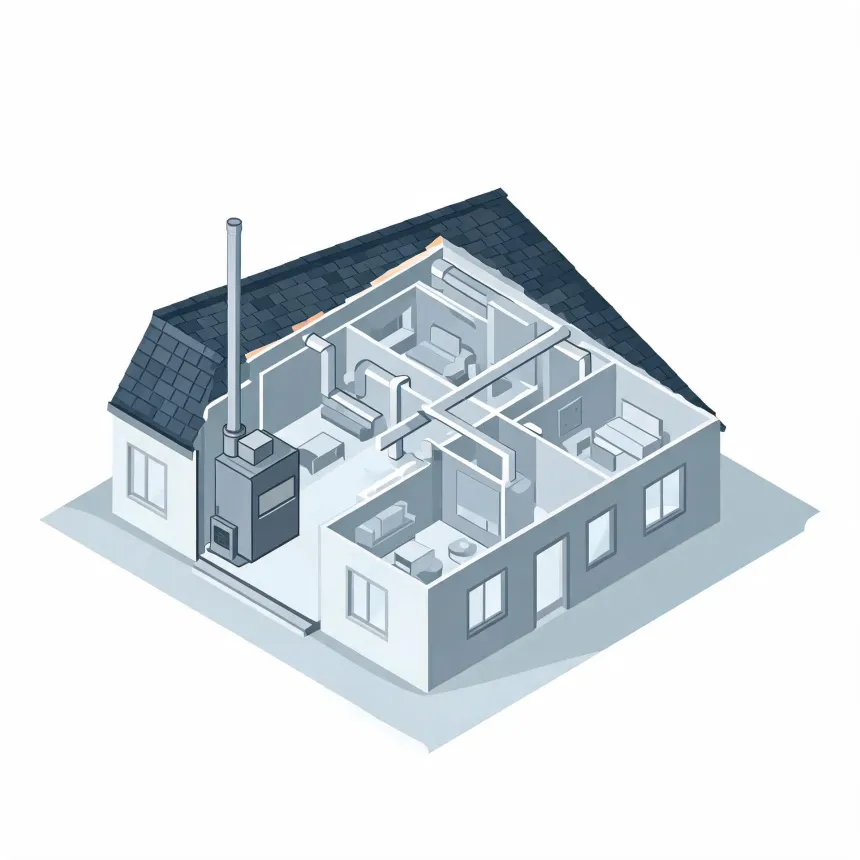
Isometric cutaway illustration of a single-story house showing interior rooms, ductwork, and a dark furnace unit with a tall flue pipe rising past the shingled roof.
Your furnace works hardest from November through March.

NOAA nClimDiv, 1991–2020 normals

A furnace that short cycles or blows cool air before shutting off is already failing, even if it still comes on.

Waiting it out usually means it quits for good on the coldest night, not a mild one.

Half the homes here were built in 1995 or later, so your furnace is probably worth fixing

Half the homes here were built by 1995
Heat runs October through April
Winter nights average 27°F
October is when a weak furnace shows itselfHeat runs here from October through April, and the first cold nights after months off are when a bad part finally gives out.

A furnace that came with a newer build hasn't had to fight as many winters yet. Get a repair quote before you assume you need a new unit. A tech can tell you in a few minutes whether what's wrong is a worn part or something bigger, and most of the time it's the former. That holds whether the system runs on electricity or gas. The one case worth a closer look is a mobile home, since those make up about one in eight houses here and the furnace setup can be different from what's in a standard build.

If a storm hit your unit, don't wait for it to fail

Hail and debris don't always stop a furnace right away. If a storm has come through recently, get the outdoor unit looked at now, while the heat is still working, instead of after it quits.

Find a contractor
A gray high-efficiency gas furnace installed in an unfinished basement, surrounded by gas lines, a condensate drain, and sheet-metal ductwork.

What actually wears out inside a furnace

A furnace fails the same few ways over and over. The igniter wears out from switching on and off thousands of times and eventually stops glowing hot enough to light the gas. The flame sensor coats over with a thin layer of residue until it can't tell the burner is lit, so the system shuts itself down as a safety measure. Blower motor bearings wear and the motor either grinds or seizes. A clogged filter starves the system of airflow, which makes the heat exchanger run hotter than it should and can crack it over time. Draft inducer motors fail and the furnace won't start at all, since it can't prove it's venting properly. Thermostats and their wiring go bad too, and that can look like a dead furnace when the furnace itself is fine. None of these wear out on a schedule. They wear out from hours run and cycles completed, so a system that's barely used ages slower than one running hard every day.

Check the simple things first

Make sure the thermostat is set to heat and the temperature is actually above room temperature. Check the furnace switch, the one that looks like a light switch near the unit, and make sure it's on. Look at the breaker panel for a tripped breaker. If the furnace runs on gas, check that the gas valve is open and that any shutoff switch hasn't been bumped.

Know what not to touch

Don't open the burner compartment or try to relight a pilot unless you know the exact sequence for that unit. Don't pull the blower motor or touch the heat exchanger. If you smell gas, leave the house and call the gas company from outside, don't flip any switches on your way out. A filter is fair game to check and swap yourself, almost everything past that needs a tech.

A cracked heat exchanger almost always starts as something smaller the furnace kept running through. A flame sensor coated in residue makes the burner shut off and relight over and over instead of staying lit, and each of those cycles stresses the exchanger a little more. A dirty filter chokes airflow, so the exchanger runs hotter than it was built to and the metal fatigues faster. A blower motor with worn bearings can slow down without quitting outright, which means less air moving across a part that depends on steady airflow to stay cool. The furnace doesn't know any of this is happening. It just keeps firing because the safety switches that would stop it haven't tripped yet. By the time one of those switches does trip, the part behind it has usually been failing for a while.

A repair is worth doing when the part that failed is a part on its own, something that bolts in or wires in without touching the rest of the system. An igniter, a flame sensor, a blower motor, a draft inducer: each of those can be swapped without asking anything about the furnace around it. Replacement starts to make sense when the heat exchanger is cracked, since that's the part that can't be serviced on its own and failure there usually means the cabinet and controls around it have logged the same hours. Age by itself doesn't decide it. A furnace that's been run hard for a few winters can be in worse shape than one that's sat lightly used much longer. Ask what broke and whether it broke because something else wore it down first. If the answer is just the one part, fixing it is usually the right call.