A illuminated two-story red brick house on a quiet residential street at dusk, flanked by mature trees under a deep blue evening sky.

Furnace Repair in Arnold, MO

Tell us about the job

Takes about a minute. No obligation.

RepairFurnace or heatingJefferson County, MO
Step 1 of 2

What ZIP code is the job in?

Your furnace earns its keep here

Furnaces in Arnold run from October through April, and overnight lows average 25°F through December, January and February. That is a normal Missouri winter, not a strain that wears equipment out faster than it should.
So a breakdown points to one cause

When a furnace in a normal climate quits, the reason is usually a specific part failing, not the weather asking too much of it. A dead igniter, a tripped limit switch, a clogged filter choking airflow. Find that part and the repair holds.

7 months
October through April, your furnace is on duty
25°F
the average winter night it heats against
11 winter storms
in ten years, the nights a failure hurts most
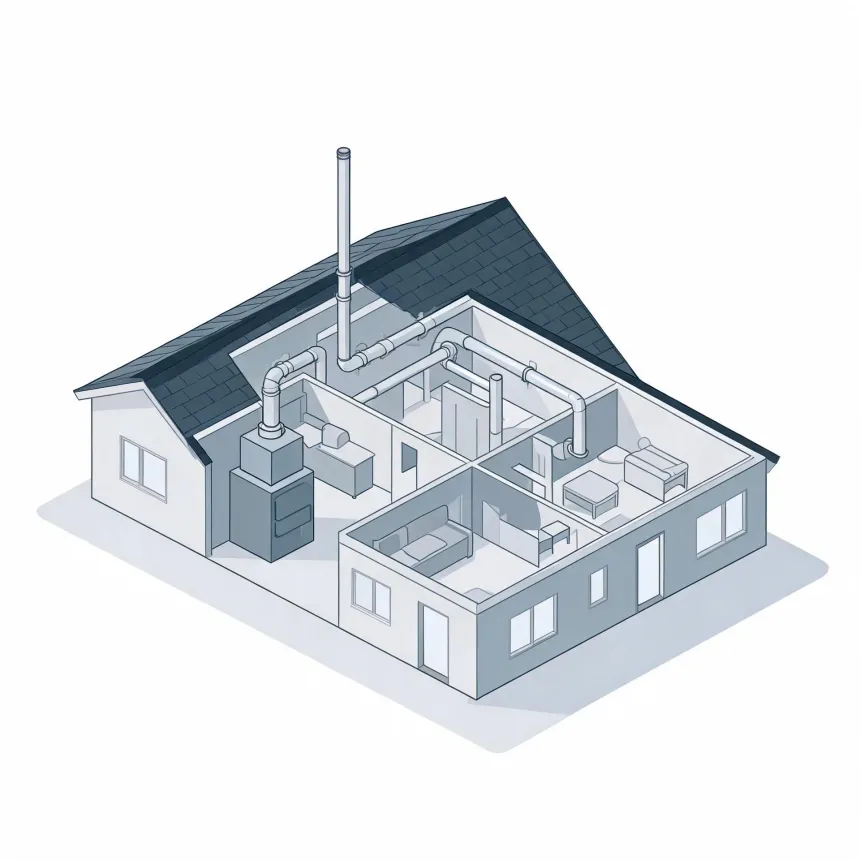
Isometric cutaway illustration of a single-story house showing interior rooms with furniture, a furnace unit connected to ductwork and a tall flue pipe extending through the roof.
Your furnace works hardest from November through March.

NOAA nClimDiv, 1991–2020 normals

Furnaces in Jefferson County start up in October.

A part that was already failing in September usually shows itself in the first cold snap.

A furnace that's struggling costs you every month it runs, at $37.84 per million Btu

Heat runs October through April
Winter nights average 25°F
Climate zone 4A

Jefferson County sees its share of rough weather. Damaging wind, hail, even tornadoes touch down here most years. None of that is what wears out a furnace. Wind and hail hit the roof and the siding, not the heat exchanger or the igniter sitting in your utility closet. Power is the one place weather actually reaches your furnace. A furnace that cuts out when the lights flicker and comes back once power is restored isn't broken. One that stays dead after the power's been back for a while has a problem that was there before the storm.

Your furnace is likely newer than you think

Half the homes in Jefferson County were built in 1987 or later. If that includes yours, your furnace hasn't been fighting an old duct system or decades of wear. A repair on a system that age usually holds.

Find a contractor
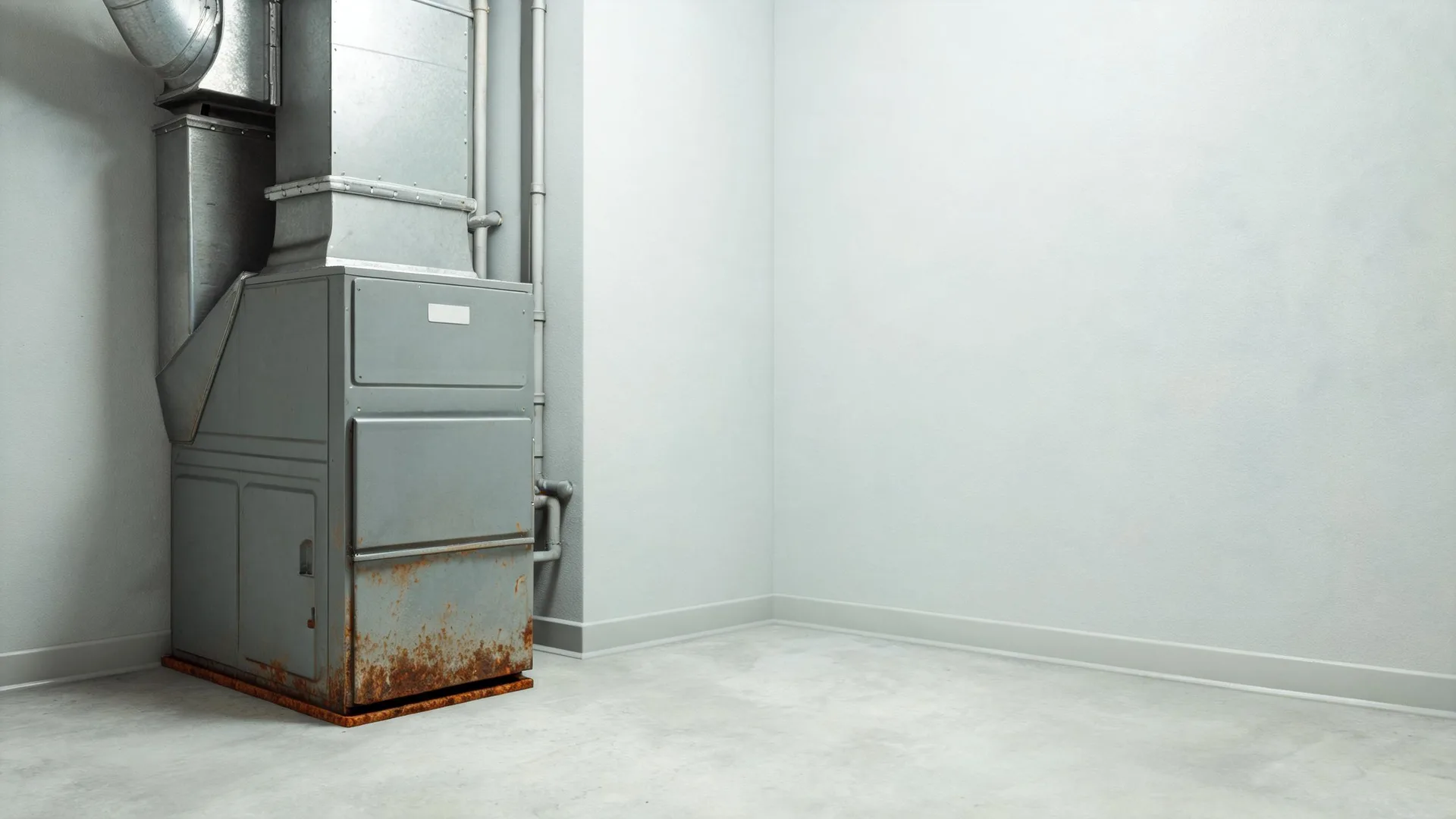
A gray residential gas furnace installed in an unfinished basement, surrounded by ductwork, a metal flue pipe, and a gas supply line.

Know the age before you decide anything

If your furnace is original to a newer build, don't let someone talk you into replacing it before you've had it looked at. A failed igniter or a bad flame sensor doesn't mean the furnace is done, it means that part is done. Get the actual cause diagnosed first.

What you can check yourself

Look at the filter and change it if it's gray or packed with dust. Check that the thermostat is set to heat and not just fan. Go to the breaker panel and see if the furnace breaker has tripped. If it's a gas furnace, check that the valve on the gas line is turned to on. All of this rules out the simplest causes before anyone comes out.

What to leave alone

Don't open the burner compartment or touch the igniter or flame sensor yourself. If a limit switch trips once, you can reset it, but if it trips again that's airflow trouble upstream and resetting it again won't fix that. And if you smell gas, don't flip a switch or light anything. Get out of the house and call the gas company from outside.

Most furnace trouble shows up the same few ways. The air coming out of the vents is cold or barely warm, and the furnace either won't fire at all or it fires and shuts off again a minute later. Short cycling like that is usually a sign the furnace is overheating and shutting itself down to protect the heat exchanger, often because airflow is restricted or a flame sensor isn't reading the flame right. A furnace that clicks like it's trying to start but never lights is usually down to the igniter. One that's suddenly louder than normal, banging or rattling on startup, is worth getting looked at before you run it again. And if you're setting the thermostat higher just to get the same warmth you used to, something is already wearing out even if the furnace still runs.

A diagnostic starts before any panel comes off. The furnace gets run through a cycle, start to finish, while the tech watches how it behaves. Does it ignite on the first try. Does it hold flame. Does it shut off clean or trip out early. That behavior points to a system, and then the cover comes off and the tech checks the part that system points to, the igniter, the flame sensor, the pressure switch, whatever matches what the furnace just did in front of them. Airflow gets checked too. A furnace that's overheating because air can't move through it will burn out a new part as fast as the old one. The last step is confirming the fix held, not just that the part looks right but that the furnace ran a full cycle without the problem coming back.