



A nighttime view of a tree-lined residential street with illuminated two-story brick houses and street lamps.

Furnace Maintenance in Washington, MO

Tell us about the job

Takes about a minute. No obligation.

Tune-up, service, or cleaningFurnace or heatingFranklin County, MO
Step 1 of 2

What ZIP code is the job in?

Most houses around Washington heat with electricity, and Missouri homes paid $37.84 per million Btu in 2024. A furnace that has to work harder to push out the same heat pulls more of that power, every hour it runs. A dirty filter, a clogged blower wheel, a flame sensor coated in residue, any of these make the furnace run longer to reach the temperature on your thermostat. None of that shows up as a breakdown. It shows up on the bill at the end of the month.

Most furnaces around Washington run on electricity.

But some homes here burn gas or propane, and that furnace needs its burner and venting checked, not just a filter swap.

Seven cold months start in October. Get the furnace looked at in September.

Heat runs October through April
Winter nights average 24°F
Climate zone 4A

Half the homes around Washington were built in 1984 or later, so there's a good chance your furnace isn't old. A newer furnace still depends on yearly care to run the way it did when it was installed. Dust builds up on the blower wheel, the flame sensor picks up residue, and small wear adds up whether the unit is five years old or twenty five. Catching that early is cheaper than catching it late, because a furnace that strains to heat the house keeps pulling electricity at that higher rate all winter. A yearly check is what keeps a newer system working like one.

A tune-up now keeps the furnace from costing you more all winter

A furnace that's working clean uses less power to hit the same temperature, and that's where a tune-up pays you back. Checking the filter, the blower wheel, and the flame sensor now means the furnace isn't straining through all seven cold months on your dime.

Find a contractor
A man in a cap, gray long-sleeve shirt and tan work pants carries a worn canvas tool bag up wooden porch steps toward a blue front door, with a potted shrub to the left.
A gray residential gas furnace installed in an unfinished basement, surrounded by ductwork, a metal flue pipe, and a gas supply line.

A furnace that runs all winter wears the same way every year

A furnace that never gets looked at doesn't fail all at once. The blower wheel picks up a layer of dust and moves less air with every rotation. The flame sensor builds up a coating until it stops reading the flame right and starts shutting the burner down early. The igniter weakens a little more each season until one morning it just doesn't light. None of this trips a breaker or throws a code right away. It just means the furnace runs longer to do the same job, cycling on and off more than it should, pushing air that takes longer to warm the house. By the time you hear a bang on startup or notice the air coming out lukewarm, those parts have been working wrong for months.

Your furnace tells you before it quits

A furnace rarely fails without warning. It cycles on and off more than it used to, or runs longer to reach the same setting. The air coming out feels cooler than it should. You hear a rattle from the blower compartment, or a delay before the burner lights. Any of these is the furnace saying something inside it is working harder than it needs to.
A check catches what you can't see

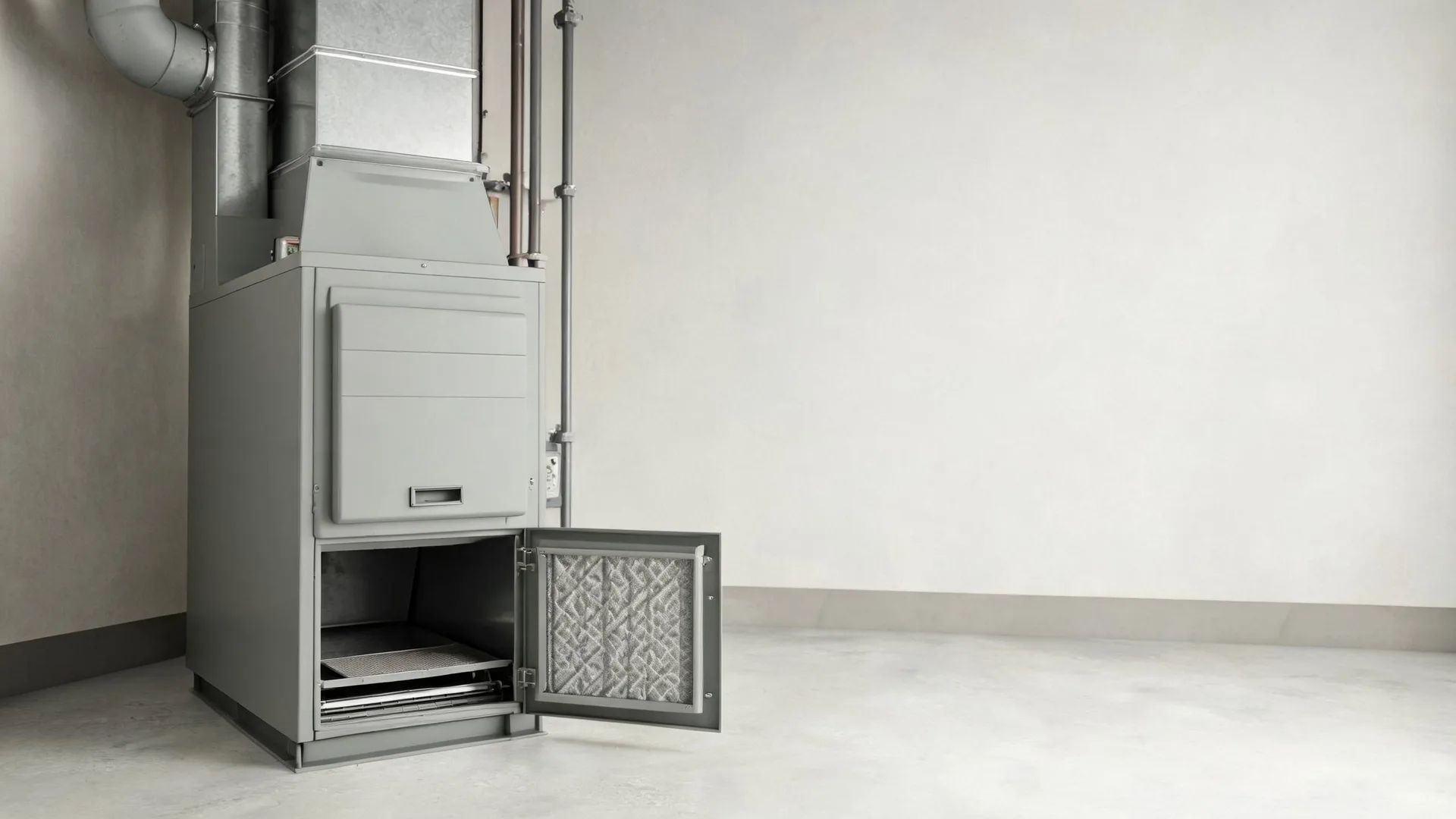
Some of what wears out is hidden behind the panel. A technician checks the flame sensor for a coating that keeps it from reading the flame. They check the igniter for the weak glow that means it's close to failing. They clean the blower wheel so it moves the air it was built to move. None of that is visible from the thermostat, which is why it has to be looked at, not just listened for.

Between visits, the filter is the one thing worth checking yourself. Pull it out, hold it up to a light, and if you can't see light through it, swap it. A clogged filter starves the furnace of airflow, and that shows up as longer run times and a blower working harder than it should. While you're at the furnace, look at the area around it. Keep boxes, paint cans, and laundry baskets away from the cabinet, since the furnace needs open air around it to draw and breathe right. Check that the vents in each room are open and not blocked by furniture or rugs, because closing too many off puts strain on the system even though it feels like you're saving heat. Past that, leave the inside of the cabinet alone. The blower wheel, the flame sensor, the igniter, those need a trained hand, and opening the panel yourself risks more than it fixes.

A tune-up is a sequence, not a glance. The technician pulls the panel and starts with the heat exchanger, checking for cracks or rust spots, since that's the part separating the flame from the air moving through your house. They check the gas pressure at the valve and adjust it if it's running rich or lean, because the wrong pressure means an uneven flame that can scorch the flame sensor faster than it should wear. They test the limit switch, which shuts the burner off if the furnace overheats, and the pressure switch, which confirms the inducer motor is pulling exhaust the way it should before the burner ever lights. The blower motor gets checked for end play and noise in the bearings. The wiring and connections at the control board get a look too, since a loose connection can make a furnace short cycle in a way that looks like something else is wrong. Each of these checks exists because that part fails in a particular way, and catching it before it fails is the whole point of doing this every year.