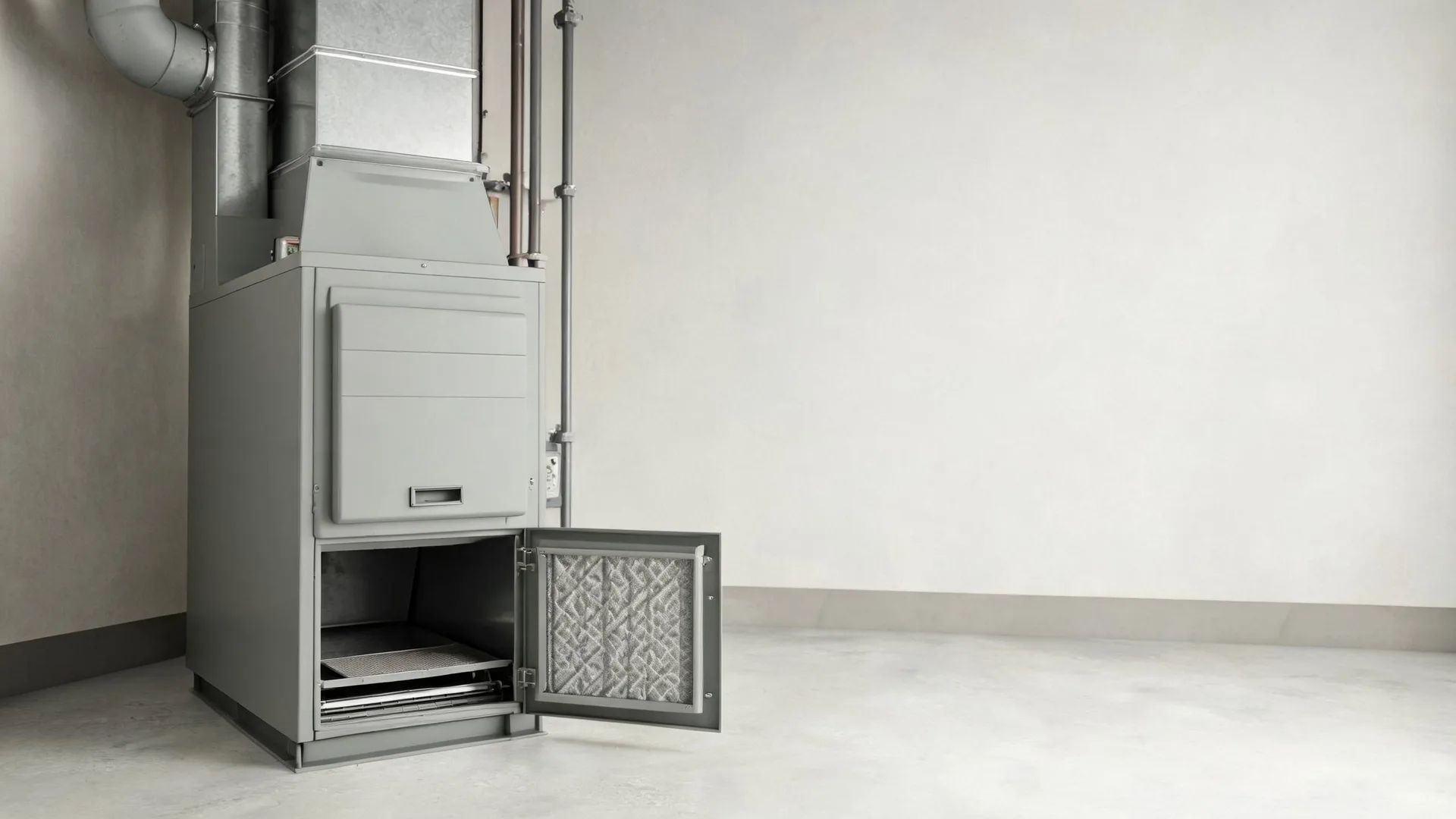
Electric heat here isn't cheap to waste
Missouri electricity ran $37.84 per million Btu in 2024. A furnace with a dirty filter or a worn part pulls more power to put out the same heat, and that difference shows up on the meter all winter.
Takes about a minute. No obligation.
Missouri electricity ran $37.84 per million Btu in 2024. A furnace with a dirty filter or a worn part pulls more power to put out the same heat, and that difference shows up on the meter all winter.
Checking a furnace before it fails is really about keeping it running the way it did when it was new. A furnace working harder than it should costs you every month it runs, not just the month it quits.
Just under half the homes in Johnson County heat with electricity, and about a third heat with gas.
A gas furnace needs its burner, venting and safety controls checked, not just a new filter.


Furnaces here start working in October and keep at it through April. That is seven months of straight use, longer than most places see. September is the month to get a furnace looked at, right before it has to carry the house every day. A furnace that starts the season with a clean filter and a good igniter runs that way for all seven months. One that starts the season struggling just struggles longer here than it would somewhere with a shorter winter.
Have the furnace checked before it has to run every day. A technician can catch a dirty filter or a worn part before it spends the winter pulling extra power at $37.84 per million Btu.
Find a contractor
A filter is the one part meant for the homeowner's hands. Pull it out, hold it up to a light, and if you can't see through it, swap it. A dirty filter chokes airflow, and a furnace starved for air runs its blower harder and its heat exchanger hotter than it should. Beyond that, there isn't much to touch. Keep the area around the furnace clear so it can pull in air the way it's built to. Keep vents and registers open and unblocked around the house, even in rooms nobody uses. Watch for that yellow flame instead of blue, or a burner that cycles fast without finishing its run. If you smell something burning past the first few minutes of a cold start, shut it down and call someone. Past the filter, the rest is a technician's job. The blower motor, the ignitor, the heat exchanger, the switches that decide whether the furnace fires at all, none of those are meant to be opened by anyone but a tech, and checking them wrong can do more harm than leaving them alone.
A burner flame that's yellow instead of blue means it's not burning clean. A furnace that clicks on and off before it finishes a cycle has a limit switch or airflow problem. Rooms that heat unevenly, a rise in dust, or a burning smell that doesn't clear after the first few minutes of a cold start are all worth a look. None of these stop the furnace cold, so it keeps running while the problem sits underneath.
A cracked heat exchanger doesn't smoke or smell most of the time, but it can let exhaust mix with the air moving through the house. A worn blower motor can still spin while drawing more current than it should. A flame sensor coated in residue can let the burner shut off early without ever throwing an error. These sit inside the cabinet, not in anything the homeowner sees day to day, which is the reason to have them checked before the furnace is asked to run every day.
A pressure switch hose can crack where it's folded and still let the furnace fire some of the time, which makes the fault easy to miss until it quits on the coldest morning. Static pressure inside the ductwork runs high or low for reasons a filter change alone won't fix, and a technician checks it with a gauge, not by eye. The ignitor can read as working and still draw weak current, enough to light the burner some mornings and not others. Amp draw on the blower motor climbs months before the motor actually fails, and that number only means something if someone's been checking it right along. None of this shows up as a smell or a sound. It shows up as a furnace that runs fine until the day it doesn't.
Johnson County sees its share of rough weather, 148 severe weather events logged over the past ten years. Most of that is wind and hail, 61 damaging wind events and 73 hail events in that span, plus a couple of tornadoes passing through. An outdoor unit sits through all of it, catching hail and getting its coils and fins knocked around. Hail can dent a cabinet or bend fins enough to choke airflow without the unit ever stopping, so the damage sits there until it adds up. Statewide, close to one in five households lost power for a day or more in 2024, and a furnace with electric ignition doesn't run without it. A check before winter is a chance to look the unit over for what the last storm season left behind.