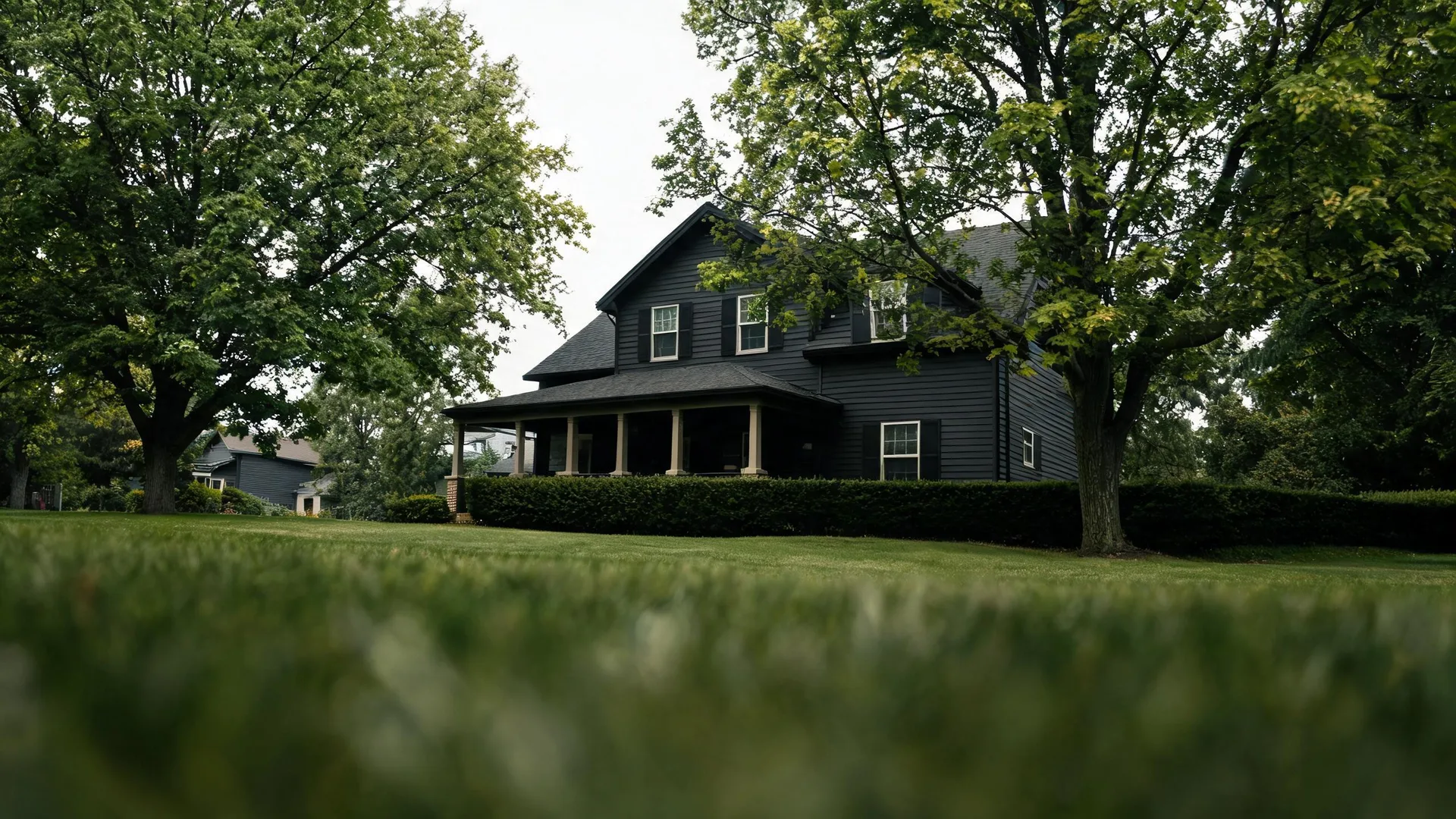





A two-story dark-painted house with a covered front porch, white-trimmed windows and a trimmed hedge, framed by large deciduous trees, photographed from ground level across a lawn with blurred grass in the foreground.

Furnace Maintenance in Poplar Bluff, MO

Tell us about the job

Takes about a minute. No obligation.

Tune-up, service, or cleaningFurnace or heatingButler County, MO
Step 1 of 2

What ZIP code is the job in?

A furnace can run every day and still be hiding a problem the owner has no way to see. A tech pulls the panel and checks the flame itself. A weak, uneven flame or a yellow tip instead of blue points to a burner that needs cleaning or a gas mix that's off. The flame sensor gets checked too, since a coated or worn sensor can shut the whole unit down without any warning beyond the furnace refusing to stay lit. Inside the heat exchanger, a tech looks for cracks that let combustion gases mix with the air moving through your home, something you'd never spot without taking the furnace apart. The inducer motor and the blower wheel get checked for wear that shows up as noise or weak airflow long before either one fails outright. None of this shows up by looking at the thermostat or feeling the vents.

Most homes in Butler County heat with electricity, not gas.

Where gas furnaces do run here, the burner and venting need a trained eye every year, not just a fresh filter.

Half these furnaces are still young enough that a yearly check is what keeps them that way

Half the homes here were built by 1981
Heat runs October through April
Winter nights average 29°F
Book the Tune-Up Before OctoberFurnace here starts working in October. Have it looked at in September.

A furnace that's only a few years old still needs that yearly look, not because it's likely to fail, but because small problems are cheap to fix while they're small. A cracked heat exchanger or a worn inducer motor costs a lot less to catch at year three than year twelve. Skipping the checks on a newer unit doesn't save you from needing them later, it just means whatever's starting to go wrong has more time to get worse. If your furnace came with a newer build, a yearly check is what keeps it running the way it did on day one, for as long as it's built to.

Get the burner and venting checked

Gas and oil systems need the burner, venting and safety controls checked, not just a new filter.

Find a contractor
A gas furnace with attached ductwork, gas piping, and condensate lines installed in a concrete-block basement.

Between Visits, the Filter Is Yours to Watch

The filter is the one thing that's on you, and it matters more than people think. A dirty filter chokes airflow, and a furnace starved for air runs hotter than it should and works harder to push heat through the house. Check it monthly and swap it when it's gray, not when it's black. Keep the area around the furnace clear too. Boxes or laundry piled against the cabinet block the air it needs to breathe and can scorch if they sit too close to the vents. Walk past it now and then and listen. A new rattle, a bang when it kicks on, or a burning smell that doesn't fade after a few minutes are all reasons to call someone before the next scheduled visit. Beyond that, leave the cabinet closed. The burner, the flame sensor and the heat exchanger aren't things to check yourself, and opening up a gas furnace without training is how people get hurt.

Furnaces Don't Have a Drain Problem

A furnace moves heat, it doesn't make water, so there's no condensate line to clog and no coil fighting moisture the way an air conditioner does. The one exception is a high-efficiency condensing furnace, which does produce condensate and drains it through a small tube to a floor drain or pump. If that line clogs, the furnace locks out rather than let water back up into the cabinet.

The Filter Still Runs the Show

Every furnace pulls air through a filter before it ever reaches the burner compartment or the blower wheel. A clogged filter doesn't just mean dusty air, it means less air moving across the heat exchanger, and that makes the furnace run hotter than it's built to. Over time that heat stress is what cracks a heat exchanger years before it should fail.

Skip enough tune-ups and a furnace doesn't just quit, it drifts. The burner flame goes a little uneven, the blower wheel picks up a coat of dust, and the unit starts working harder to do the same job. Nothing about that shows up as a sudden breakdown. It shows up as a furnace that runs longer to hit the same temperature, and a flame sensor that eventually gets coated enough to shut the whole thing down. A cracked heat exchanger is the one that matters most, because it doesn't announce itself. It's the kind of failure that's cheap to catch with a yearly look and expensive, sometimes dangerous, to find on your own.

A tune-up follows a set order because each step checks something the last one can't. Static pressure gets tested across the filter and the duct system, since a furnace pushing air against too much resistance runs hot no matter how clean the burner is. The gas valve and manifold pressure get checked against the furnace's rating, because too much gas pressure stresses the heat exchanger and too little leaves you with a furnace that can't keep up. Electrical connections get tightened, since a loose wire at the blower motor or control board is a common reason furnaces fail months after everything looked fine. The limit switch gets tested too, the control that shuts the burner off if the furnace overheats. A tech checks that it trips when it should, because a limit switch that doesn't work no longer protects the heat exchanger from the heat stress that cracks it.