


Low-angle view across a mown green lawn toward a dark-sided building at left and a cream-colored single-story house with trees in the background under an overcast sky.

Furnace Maintenance in Eldon, MO

Tell us about the job

Takes about a minute. No obligation.

Tune-up, service, or cleaningFurnace or heatingMiller County, MO
Step 1 of 2

What ZIP code is the job in?

A furnace loses efficiency as it goes without service, long before it breaks down outright. Dust caked on the blower wheel, a dirty flame sensor, a clogged filter, all of it makes the burner run longer to push out the same heat. In Missouri, electricity ran $37.84 per million Btu in 2024, so a furnace working harder than it needs to shows up directly in what you pay to heat the house. A unit that's been serviced burns less fuel for the same warmth. That difference holds all winter, every time the furnace kicks on.

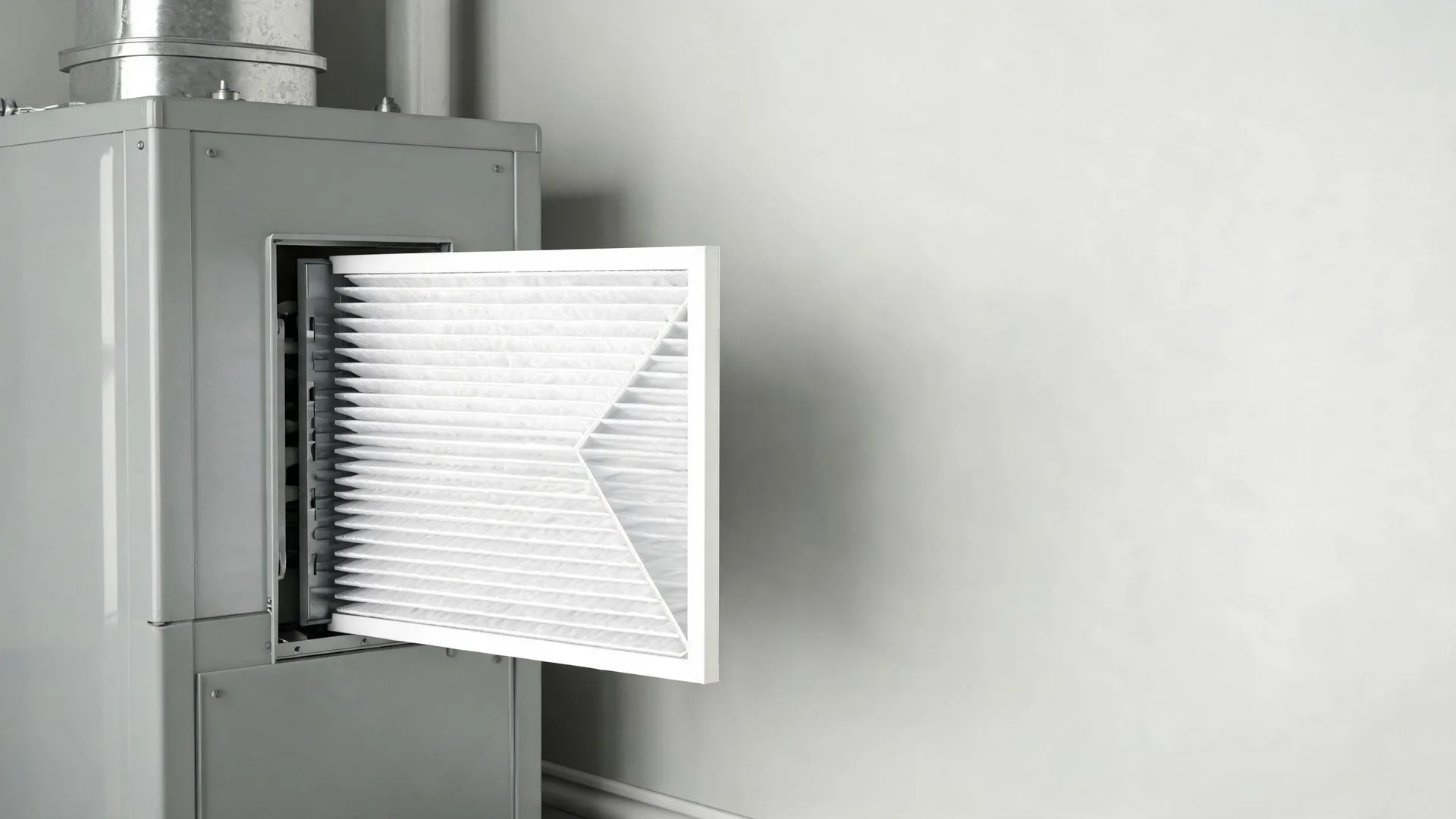
A filter clogged with dust makes the blower work harder for the same airflow.

Checking it every month and swapping it when it looks gray is the one job that's yours between visits.

Most of Miller County heats with electricity, but if yours runs on gas or propane, the furnace needs more than a filter

68.4% of homes heat with electricity
Heat runs October through April
Winter nights average 26°F
Half the furnaces here haven't hit their first decadeHalf the homes in Miller County were built in 1985 or later.

Furnace season starts here in October, not partway through. September is when it's sitting idle, so that's the month to have it checked before the burner has to carry the full load. Wait until it's already running and any problem has had time to show itself. Have it looked at in September instead and whatever needs fixing gets found before the cold sets in. Miller County runs its furnace about seven months straight, October through April, so a unit that starts the season running clean stays ahead of it for all seven.

A tune-up now costs less than a furnace working harder all winter

A furnace that's been checked over burns less to put out the same heat, and at $37.84 per million Btu that difference adds up over a Miller County winter. A tune-up before the cold sets in is the cheaper way to run it until spring.

Find a contractor
A gray residential gas furnace installed in an unfinished basement, surrounded by ductwork, a metal flue pipe, and a gas supply line.

Skip a service and the furnace doesn't fail. It just starts wearing out faster.

A furnace doesn't fail the first time something goes wrong inside it. It fails after that small thing gets ignored through enough heating seasons that it turns into a big thing. A flame sensor coated with a thin layer of oxidation still reads a flame, just weaker, so the furnace starts short cycling instead of quitting outright. Run it that way long enough and the igniter is cycling more often than it should, which is what wears one out. The same goes for a blower wheel caked with dust. It still spins, just unbalanced, and that extra strain on the motor bearings is what turns a part that should last for years into one that fails in its third or fourth winter. None of this shows up as a breakdown right away. It shows up as a furnace quietly asking its parts to work harder than they were built to, for as long as nobody checks.

The cabinet comes off or it doesn't

A thorough visit has the technician pull the panel, check the flame through the viewing port, and measure the temperature rise across the heat exchanger. A quick visit is someone swapping the filter and listening for a minute before they leave. The difference is whether anyone actually looked at the parts that fail.
The gas pressure and the flue are what get skipped

A cracked heat exchanger or a flue drafting wrong doesn't make noise or smell different right away. Checking the manifold gas pressure and inspecting the exchanger for cracks is what catches it before it does. Leave those steps out and the furnace only got looked at on the easy side.

A furnace usually gives some warning before it quits outright. It takes longer to warm the house than it used to, or it runs longer stretches to get there. The burner flame should be steady and blue. If it's flickering, yellow, or you hear popping and rattling from the cabinet, that's the metal or the burner telling you something's off. A furnace that short cycles, shutting off before the house gets warm and kicking back on a few minutes later, is usually struggling with airflow or a sensor that's reading wrong. Any burning smell that doesn't fade after the first run of the season is worth a look, not a wait.

A proper tune-up starts before the panel even comes off. The technician checks the thermostat calls for heat correctly, then pulls the burner compartment apart to look at what's actually burning. The flame sensor gets cleaned or replaced if it's worn thin, since a weak signal there is what causes short cycling later. The igniter gets checked for cracks. Inside the blower compartment, the wheel gets inspected for dust buildup heavy enough to throw it out of balance, and the motor bearings get checked for wear. The condensate line gets checked for algae or blockage on furnaces that have one, since a clogged line will shut the unit down on its own. None of this is optional if the goal is catching trouble before it becomes a breakdown.