



A mowed lawn bordered by a tall trimmed hedge, with single-story houses and large leafy trees under an overcast sky.

Furnace Maintenance in Dexter, MO

Tell us about the job

Takes about a minute. No obligation.

Tune-up, service, or cleaningFurnace or heatingStoddard County, MO
Step 1 of 2

What ZIP code is the job in?

Stoddard County sees its share of rough weather. Between 2015 and 2024 the county logged 110 damaging wind events, 13 hail events and 8 tornadoes, with 143 severe weather events total over that stretch. Statewide, almost one in five Missouri households went at least a day without power in 2024. A furnace does not take a direct hit from wind or hail the way an outdoor AC unit does, but a long outage still leaves a house without heat in the middle of winter. A tune-up is a good time to ask whether the system is ready to hold up through the next one.

A furnace that short cycles, turning on and off in quick bursts, is already working harder than it should.

A technician can trace that to a dirty flame sensor or a clogged filter before it leaves you without heat on the coldest night of the year.

Electric heat, and nights near freezing all winter

50.6% of homes heat with electricity
Heat runs October through April
Winter nights average 29°F

Furnaces here start running in October and stay on through April, seven months straight. September is the month to get a tune-up done, right before that stretch begins. Wait until the first cold snap and you're asking a technician to find problems on a system that's already working, with a house counting on it. A furnace that's been sitting idle since spring can have a stuck igniter or a dirty flame sensor that only shows up once it's asked to run. Catching that in September means it gets fixed on a mild day, not a cold night.

Get the furnace checked before the power does

A tune-up is also when a technician can tell you whether the furnace itself would ride out a long outage, or at least come back on clean once power is restored. With storms knocking out power for a day or more in plenty of Missouri homes, that's worth knowing before winter, not after the lights go out.

Find a contractor
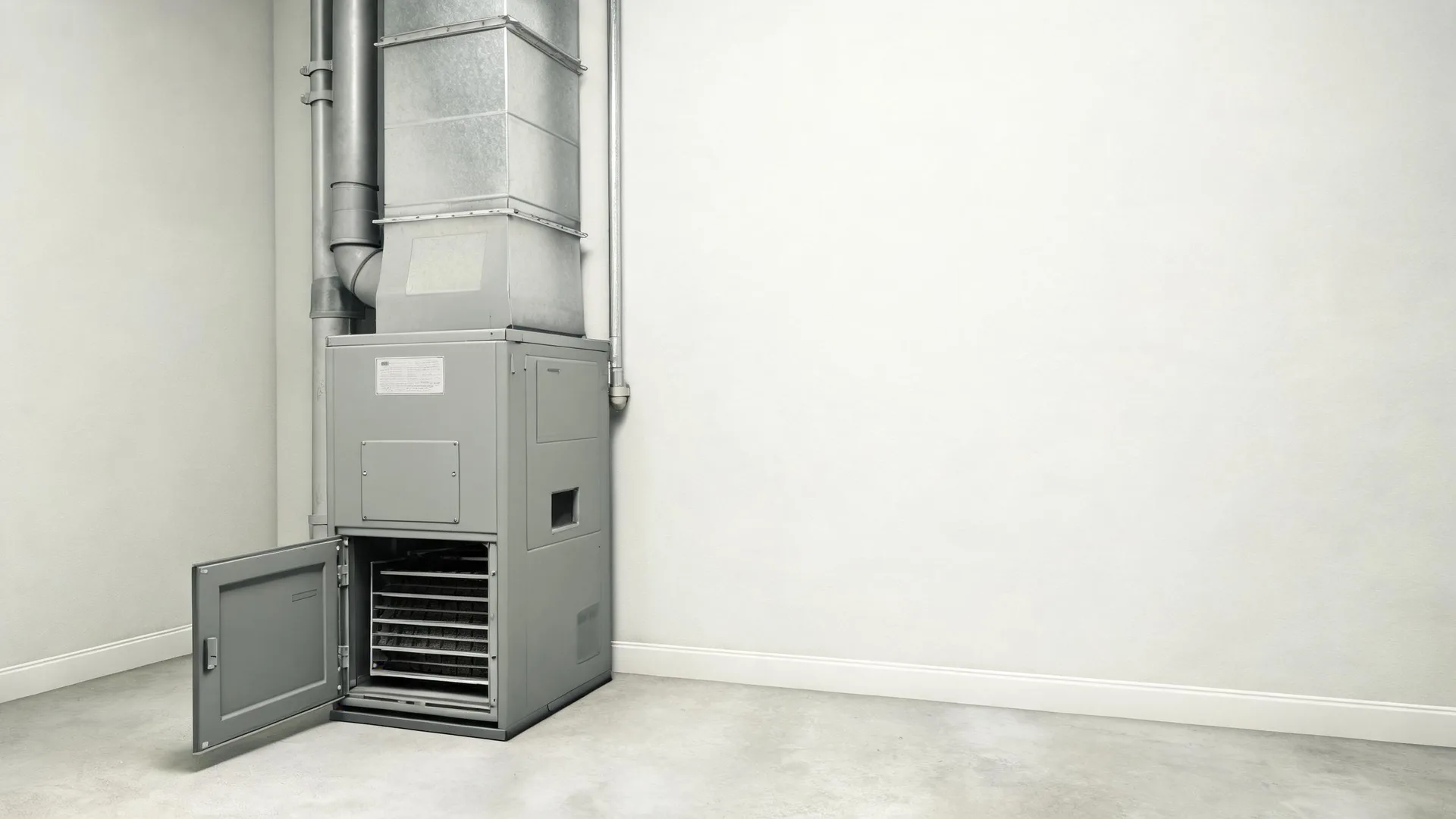
A gas furnace with attached ductwork, gas piping, and condensate lines installed in a concrete-block basement.

A real tune-up takes longer than ten minutes

A quick visit gets the furnace blowing warm air and calls it done. That's not the same as checking whether it will still be doing that in the dead of winter. A thorough tune-up has the technician pull the burners and look at the flame itself, not just listen for the whoosh of ignition. A flame that's uneven or burning yellow instead of blue points to a burner that needs cleaning before it fouls the heat exchanger. The technician should check that exchanger directly, since a crack in it can leak exhaust into the air the furnace is blowing through the house. A real visit includes testing the limit switch and the flame sensor, not just wiping them down, because a sensor that reads dirty but tests fine is still good for the season. It means checking the draft, making sure exhaust is actually leaving through the vent and not backing up. Gas pressure gets measured against what the furnace is built to run on, not eyeballed. The blower motor and its bearings get checked for wear, since a motor straining to turn is a motor that fails on the coldest night, not a mild one. A short visit skips most of this and moves on. A long one works through the system in order and tells you what it found, not just that it's running.

The furnace can't show you its own wear

A cracked heat exchanger, a worn blower bearing, a pressure switch that's starting to stick: none of it changes how the air coming out of the vents feels. The furnace keeps running and the house stays warm right up until the part fails outright. A technician checks these things directly because there's no other way to know.
What that means for a tune-up

The point of a tune-up isn't to confirm the furnace turns on. It's to find the part that's wearing out quietly, while it's still cheap and easy to deal with. That means pulling covers, testing switches, and measuring things the homeowner has no way to check, instead of just watching the furnace run for a few minutes.

Skip maintenance long enough and a furnace doesn't fail all at once. Dust builds up on the burners first, and the flame starts burning uneven instead of steady. That uneven flame puts more soot and heat stress on the heat exchanger than it was built for. A dirty flame sensor will eventually stop recognizing that the furnace has lit at all, and the system shuts itself down as a safety measure rather than risk running without one. Bearings in the blower motor wear slowly, with no warning sound until the motor is already struggling to turn. None of this shows up in how warm the house feels, right up until the part that was quietly failing finally quits.

A tune-up has a specific order to it, not just a once-over. The technician starts outside the cabinet, checking the thermostat calls for heat and the furnace actually responds. Inside, the filter gets checked and changed if it's clogged, since restricted airflow is behind a lot of the strain a furnace takes on over a season. The igniter gets tested under load, not just looked at, because an igniter can glow and still fail to light the burners reliably. Electrical connections get checked for looseness, since a connection that's slightly loose runs hotter than it should and wears out faster. The condensate line, if the furnace has one, gets checked for a clog, because a blocked line can shut the system down or back up into the cabinet. None of these parts are the ones that make headlines when they fail, but they're the ones most likely to leave a furnace not starting at all.