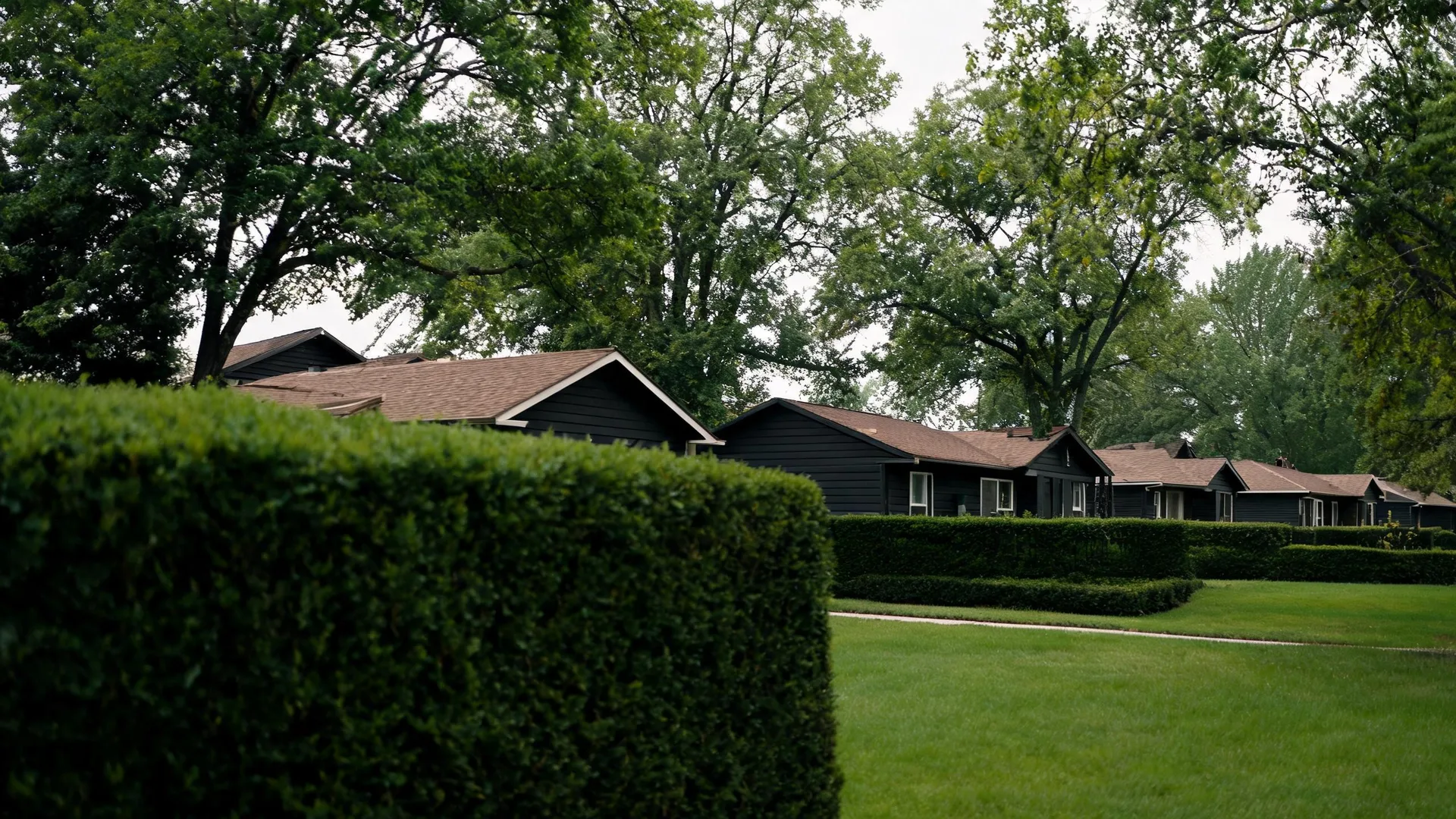
A row of dark-sided single-story cottages with brown shingled gable roofs behind trimmed hedges, mown lawn and a light-colored path, surrounded by large deciduous trees under an overcast sky.

Furnace Maintenance in Branson, MO

Tell us about the job

Takes about a minute. No obligation.

Tune-up, service, or cleaningFurnace or heatingTaney County, MO
Step 1 of 2

What ZIP code is the job in?

Weather here takes a toll on equipment

Taney County recorded 253 severe weather events between 2015 and 2024, including 136 damaging wind events, 94 hail events and 11 tornadoes. A furnace tucked in a basement or closet is shielded from most of that, but the wind and hail still matter for the system as a whole.

Power doesn't always stay on through it

Close to one in five Missouri households went at least 24 hours without power in 2024. A furnace that runs on electricity, including the blower and the ignition, stops working the moment the power does, no matter how well it was running before.

Most furnaces in Taney County run on electricity, not gas.

A tune-up here is about the blower, the igniter and the control board, not a burner and a flue.

Half the homes here were built in 1995 or later, so a lot of furnaces still have years left in them

Half the homes here were built by 1995
Heat runs October through April
Winter nights average 27°F

Furnaces here start working in October and stay on through April, seven months out of the year. Get the tune-up done in September, before that first cold stretch, not after it. A technician can catch a weak igniter or a control board issue while the system is sitting idle, when there's no rush and no cold house waiting on the repair. Wait until October and you're booking the check at the same time everyone else is, right when the furnace is already carrying the load. By December and January, overnight lows here average 27°F. That's not the week to find out the blower motor was already struggling.

Get the furnace checked before the next storm rolls through

A tune-up has a technician checking the furnace itself, but it's worth having them look over the outdoor parts of the system too, and clearing any debris that built up over storm season. If a tune-up turns up a weak igniter or blower motor now, that's one less thing to go wrong if a storm knocks the power out this winter.

Find a contractor
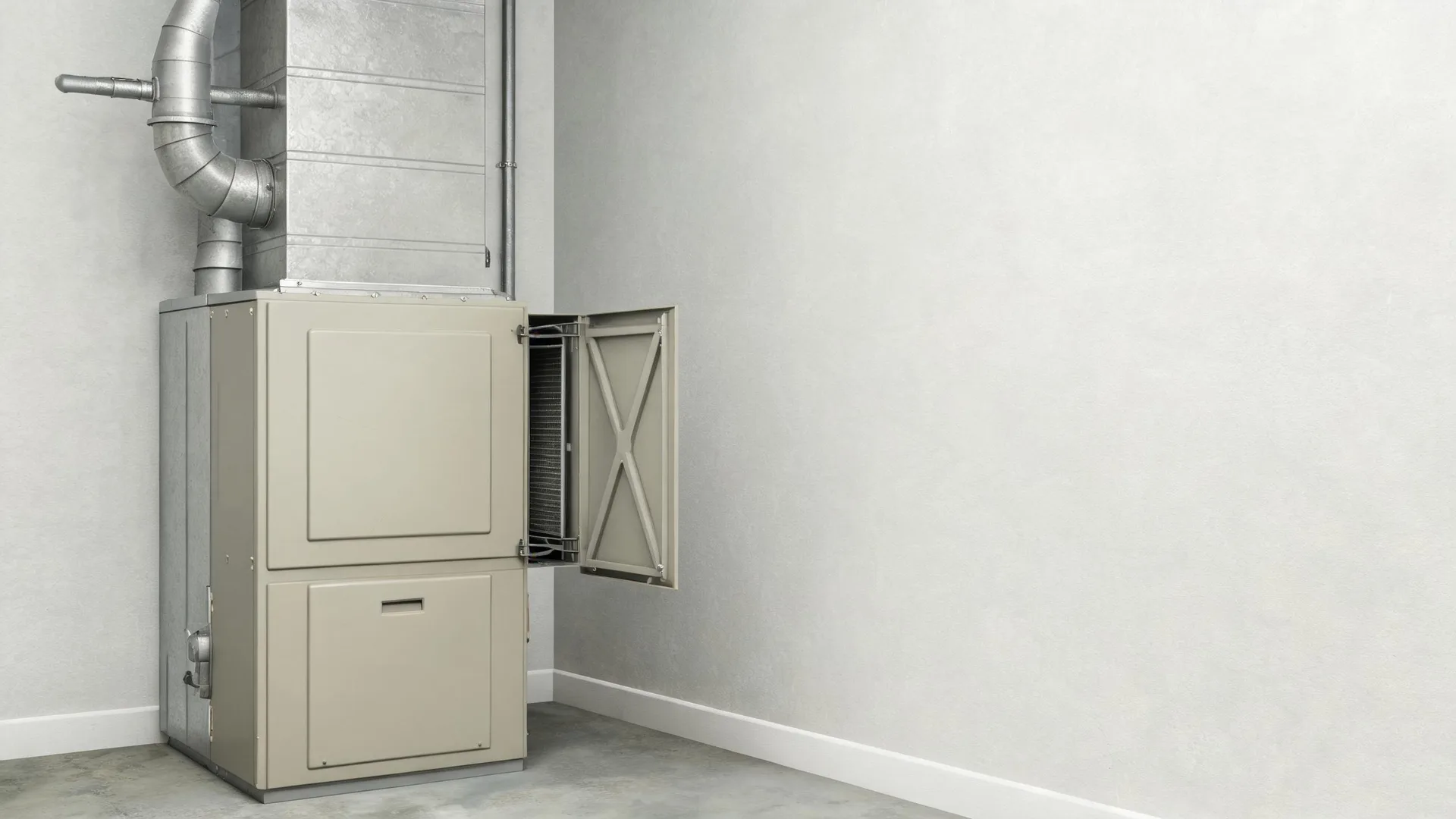
A gray gas furnace with attached ductwork and piping installed in an unfinished concrete basement.

The filter, the coil, and the drain line nobody checks

The filter sits right in the path of the air the blower pulls in. Let it clog and the blower has to pull harder to move the same amount of air through the house, and that strain doesn't go away on its own. The coil on the indoor side depends on that airflow too. When air can't move past the filter the way it should, dust has an easier time settling on the coil, and a dusty coil can't hand off heat the way a clean one does. That's a furnace running longer than it needs to, just to get the house to the same temperature. The drain line is the one nobody thinks about once the weather turns cold, because a furnace running alone doesn't use it. That's exactly why it gets missed. A cracked or clogged line sits there unnoticed through a long stretch of cold months, and the first sign of trouble is water where it shouldn't be. None of these parts fail out of nowhere. A filter left too long, a coil losing airflow, a drain line nobody checked, each one is a small thing that was easy to catch and easy to ignore. A tune-up is the point in the year where somebody actually looks.

The flame sensor coated with residue

A flame sensor only needs a thin layer of buildup on it before it starts misreading the flame and shutting the furnace down. It looks fine to anyone glancing at the burner compartment. A technician pulls it and cleans it by feel and by sight, not by guessing.

A pressure switch that's barely holding on

The pressure switch checks that the inducer motor is actually pulling exhaust the way it should before it lets the burners light. One that's failing intermittently still lets the furnace run most of the time, so nothing seems wrong until the day it doesn't. Testing it under load is part of the check, not something a homeowner can see from across the room.

Between tune-ups, the filter is the one thing worth checking yourself. Pull it out, hold it up to a light, and if you can't see light through it, swap it. A dirty filter makes the blower work harder and lets dust settle where it shouldn't. Keep anything stacked near the furnace or the vents a few feet back so air can move freely. Past that, leave the cabinet closed. The igniter, the pressure switch and the control board aren't things to test or clean yourself, and opening up the burner compartment does more harm than good. If the furnace is making a new noise or short cycling, that's worth a call rather than a wait.

On an electric furnace, the tune-up centers on the parts doing the work of starting and moving heat rather than a burner. The heating elements get checked for a cracked or burned connection, since a bad one can mean part of the furnace isn't heating at all while the blower keeps running. The igniter and control board get tested the same way every time, because a board that's intermittently bad still lets the furnace run most cycles normally. Electrical connections get tightened throughout, since a loose one is a common reason a furnace cuts out mid-cycle with no warning. The blower motor and wheel get inspected and cleaned if they're carrying dust, because a dirty wheel moves less air even when the motor itself is fine. The whole system gets run through a full cycle at the end, start to shutdown, so anything that only shows up under real operation has a chance to show up while a technician is there to catch it.