A row of dark-sided single-story houses with gray shingled roofs behind trimmed hedges and a mown lawn, framed by overhanging tree branches under an overcast sky.

Furnace Maintenance in Arnold, MO

Tell us about the job

Takes about a minute. No obligation.

Tune-up, service, or cleaningFurnace or heatingJefferson County, MO
Step 1 of 2

What ZIP code is the job in?

Electricity here isn't cheap to waste

Missouri electricity ran $37.84 per million Btu in 2024. A furnace that's lost its edge, a clogged filter, a dirty blower wheel, dirt on the heat exchanger, pulls more power to put out the same heat. Every month that goes by without a look costs something real.


A tune-up catches what's draining power

A technician checking a furnace can find the buildup and wear that make it work harder than it should. On a system running most of the winter in an electric-heat home, that waste adds up fast.

Furnaces in Jefferson County start working in October.

Book the tune-up in September, before the cold hits and the load does.

Half the homes here were built in 1987 or later, so most furnaces have years left to protect

Half the homes here were built by 1987
Climate zone 4A
Heat runs October through April
Gas Furnaces Need Their Burner and Vents Checked TooUtility gas heats 32.4% of homes here, bottled and LP gas another 7.1%.

A furnace that still has years ahead of it is worth keeping that way. Half the homes in Jefferson County went up in 1987 or later, which means a lot of furnaces here aren't old or worn out, just due for attention. A yearly check is what keeps a newer system running like one. A technician can catch a cracked heat exchanger, a failing igniter, or a blower motor losing strength before any of it forces an early replacement. Skip enough tune-ups and a furnace that had a decade left might not get there.

Get your furnace running on what it needs, not more

A furnace that's working harder than it needs to is spending your money to do it, every day the thermostat calls for heat. A tune-up gets it back to pulling only what the job actually takes.

Find a contractor
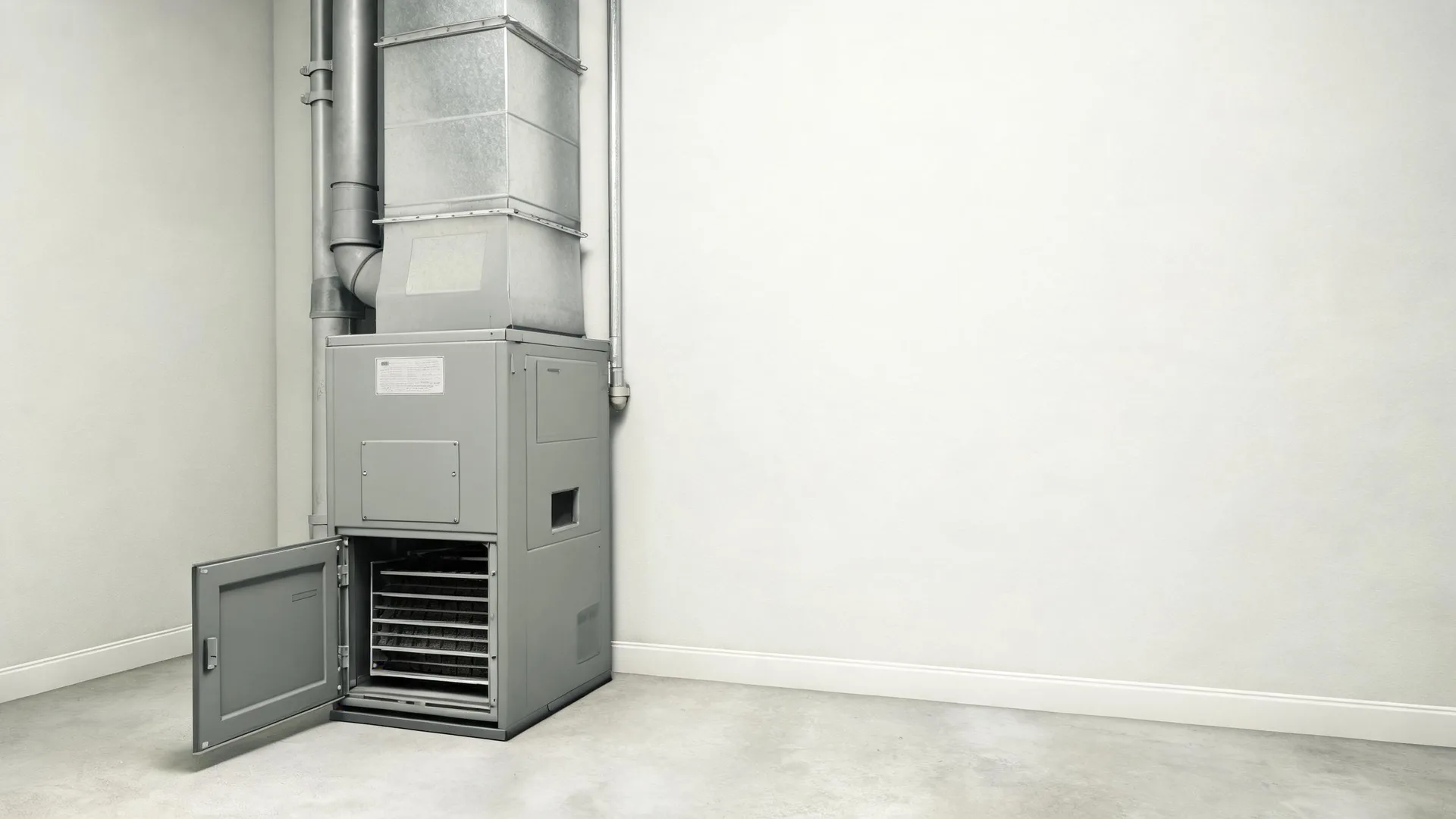
A gray gas furnace with attached ductwork and piping installed in an unfinished concrete basement.

Thorough Looks Like Panels Off, Not Panels On

A quick visit gets the furnace running. A thorough one gets it checked. Anyone can swap a filter and listen for the burners to light. A real tune-up means the panels come off. The flame sensor gets cleaned, not just glanced at. The blower wheel gets inspected for the dust and grime that build up on the blades and throw it off balance. The igniter gets tested, not just looked at, since one can glow and still fail under load. The heat exchanger gets inspected for cracks or corrosion, because that part failing is a safety issue, not just a performance one. Amp draw on the blower motor gets checked against what it should be pulling. The flue and venting get looked at to make sure exhaust is actually leaving the house. None of that shows up on the bill a quick check leaves behind, but it's the difference between a furnace that's been glanced at and one that's actually been gone through.

A Skipped Tune-Up Doesn't Show Up Right Away

A furnace with a dirty flame sensor or a slipping blower belt doesn't quit on the spot. It keeps running, just worse. The burners cycle longer to reach the same temperature, the blower strains to push air through a dirty wheel, and nothing about that trips an alarm. The homeowner only notices once it fails outright, on the coldest night it's asked to work the hardest.

Small Problems Don't Stay Small

A cracked heat exchanger starts as a hairline. A failing igniter starts as one that's slow to catch. Left alone, both get worse every time the furnace cycles on, and a furnace left unchecked can run for a full winter without anyone touching it. By the time it fails outright, the part that could have been cleaned or adjusted now has to be replaced.

Between visits, the filter is the one thing worth checking without waiting for a technician. A dirty filter chokes airflow, and the blower works harder to push air through it, which stresses the motor and can shorten its life. Hold it up to a light. If light barely gets through, swap it. Keep registers and return vents clear of furniture and rugs, since blocked airflow puts the same strain on the system as a dirty filter does. Listen for new noises too, a rattle, a squeal, a bang on startup, and if one shows up, shut the furnace off and get it looked at rather than letting it run. Past that, leave the panels alone. The blower wheel, the flame sensor, the heat exchanger all need a trained eye and the right tools, and opening up a gas furnace without knowing what you're looking at is how small problems turn into dangerous ones.

A tune-up has a set order because each step depends on the one before it. Combustion gets checked first, since that tells a technician whether the furnace is burning clean or running rich and sooting up. The burners come out and get brushed off, because a partly blocked burner throws an uneven flame and burns hotter in some spots than others. Pressure switches get tested to confirm they're reading the draft correctly, not just that they click. Gas pressure gets measured at the manifold and set to spec, since too high or too low both cause problems, just different ones. Wiring and connections get a visual pass for anything loose or scorched, because a loose connection generates heat right where it shouldn't. Then the whole thing gets run through a full cycle, start to shutdown, watching how it actually behaves rather than just whether it turns on. A furnace can look fine sitting still and still show a problem the moment it's asked to run.