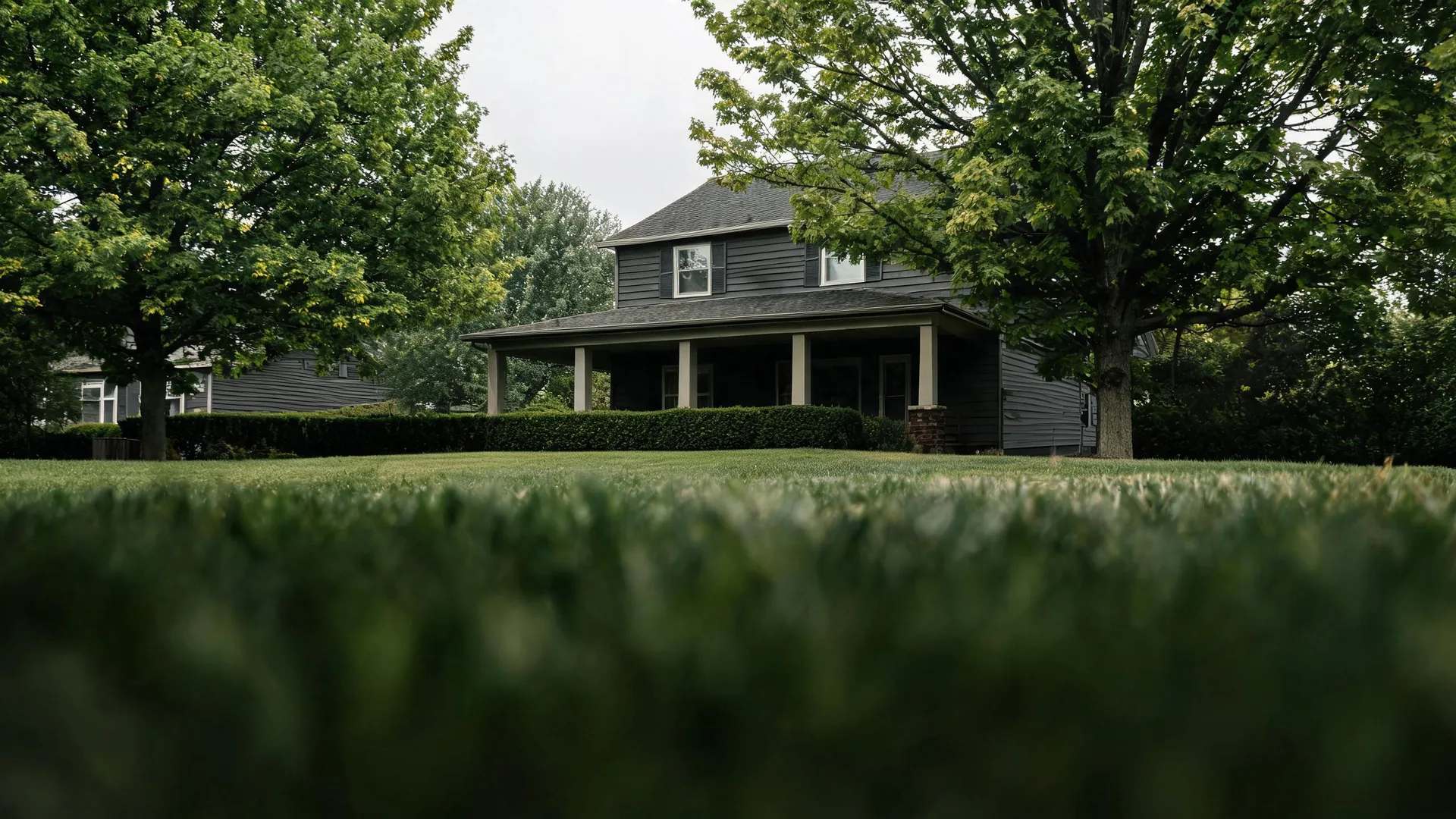






A two-story dark-sided house with a covered front porch behind a trimmed hedge, framed by large green trees, photographed from ground level with blurred grass in the foreground.

Heat Pump Repair in Kansas City, MO

Tell us about the job

Takes about a minute. No obligation.

RepairHeat PumpJackson County, MO
Step 1 of 2

What ZIP code is the job in?

Before you call, check a few things yourself. Go outside and look at the outdoor unit. If the fan isn't spinning but you can hear it humming, that's electrical, not a blockage. Check if ice has built up on the coil or the lines. Some frost in defrost mode is normal, but a thick coat of ice means something's wrong. Go inside and check your thermostat is set to heat and the temperature is actually above room temp, not just holding. Change the filter if it's been a while. A clogged filter starves the system of airflow and can cause a lot of the symptoms people call about. Last, check the breaker for the outdoor unit. If it's tripped, don't just reset it and walk away. That's usually a sign something else is pulling too much current.

7 months
October through April, your system heats
5 months
May through September, it cools
23°F
the average winter night it heats against
86°F
the average summer afternoon it cools against
Isometric illustration of a cutaway single-story house showing interior ductwork and vents connected to an outdoor condenser unit beside the building, on a white background.
Your system heats October through April and cools May through September.

NOAA nClimDiv, 1991–2020 normals

Half the homes in Jackson County were built in 1970 or earlier.

A heat pump that came with a house that old is probably on its last few years of life.

Heat pumps break in the first cold snap, not the middle of winter

Cooling runs May through September
Heat runs October through April
212 damaging wind events from 2015 to 2024

Ask how much life it has left

If your system came with an older house, it may be near the end of its life. Ask how much life it has left before paying for a big repair.

Find a contractor
A man in a beanie, dark jacket and tan work pants climbs porch steps toward a blue front door, carrying a canvas tool bag, with a potted shrub in a blue planter beside him.
A gray heat pump outdoor unit mounted on a concrete pad next to the stone-accented exterior wall of a house.

It runs all year, and that's what wears it down

A heat pump runs in both directions, heating in the cold months and cooling in the hot ones. There is no off season where it just sits idle. The reversing valve takes the brunt of that. It is the part that switches the system between heating and cooling, and every switch shifts it back and forth. The seals inside wear down over thousands of cycles until it sticks or starts leaking. The compressor rarely fails on its own. It fails because something else made it work harder than it should. Low refrigerant. A restricted coil. A motor that's failing. Any of those forces the compressor to run longer and hotter than it was built for. The outdoor unit also sits outside in the weather all year. Contactors pit. Capacitors weaken. Control boards corrode a little more with each passing year. None of this ends a system in one day. It shows up first as longer run times and a house that takes a little longer to catch up, long before anything quits outright.

Blowing air that isn't warm

A heat pump in heating mode should feel warm at the vents, not just moving air. If it runs and runs but the house never catches up, the system could be low on refrigerant or stuck in the wrong mode. Air movement alone doesn't mean it's working.
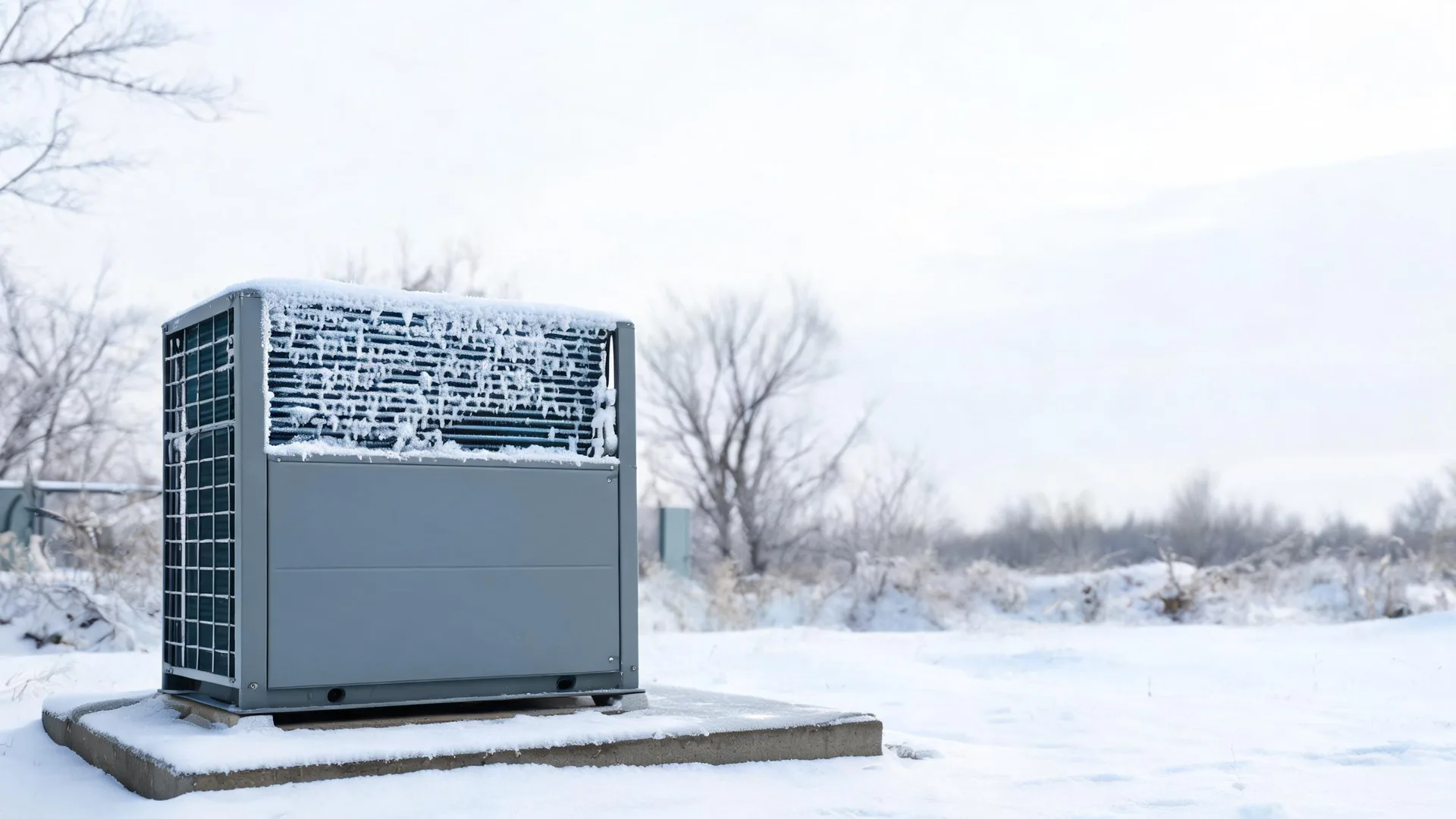
Short cycling or constant running

A heat pump that shuts off shortly after starting is short cycling, usually a sign of a bad sensor or a control board issue. One that never shuts off and can't keep up is struggling to move heat at all. Either pattern means the compressor is working harder than it should, and that wears it out faster.

A heat pump that's struggling doesn't fail cleanly. A low refrigerant charge means less of what's left is doing the work of carrying heat, so the compressor runs longer and hotter to make up for it. Ice on the coil blocks airflow the same way, forcing the system to push against something it can't move. Run it long enough in that state and you're not looking at the original problem anymore. You're looking at a compressor that overheated and failed. A system that's struggling needs to be shut off, not pushed through.

Not every call ends in a repair, and a good contractor will tell you that before pulling anything apart. Compressor and reversing valve work is expensive because of what it takes to get to those parts, not just the part itself. If the compressor itself has failed, you're often better off putting that money toward a new system instead. Smaller things are a different story. A capacitor, a contactor, a blower motor, a defrost sensor, these are routine swaps that bring a system right back to where it should be. The question isn't just what's broken. It's whether what's broken is a part the system depends on completely, or one it can live another decade with once it's replaced.