




A quiet suburban street at twilight featuring two-story brick homes with illuminated windows and large trees lining the sidewalk.

Heat Pump Repair in Columbia, MO

Tell us about the job

Takes about a minute. No obligation.

RepairHeat PumpBoone County, MO
Step 1 of 2

What ZIP code is the job in?

A heat pump in Boone County earns its keep from October through April, close to seven months of straight work. The first cold snap in September or October is when a weak part usually gives out, because that is the first time it has to carry real heat load since spring. Same with the switch back in May, when it starts pulling cooling duty after sitting idle. If yours is struggling right when the season turns, that timing is not a coincidence. A contractor who hears when it started acting up already knows where to look.

7 months
October through April, your system heats
5 months
May through September, it cools
24°F
the average winter night it heats against
86°F
the average summer afternoon it cools against
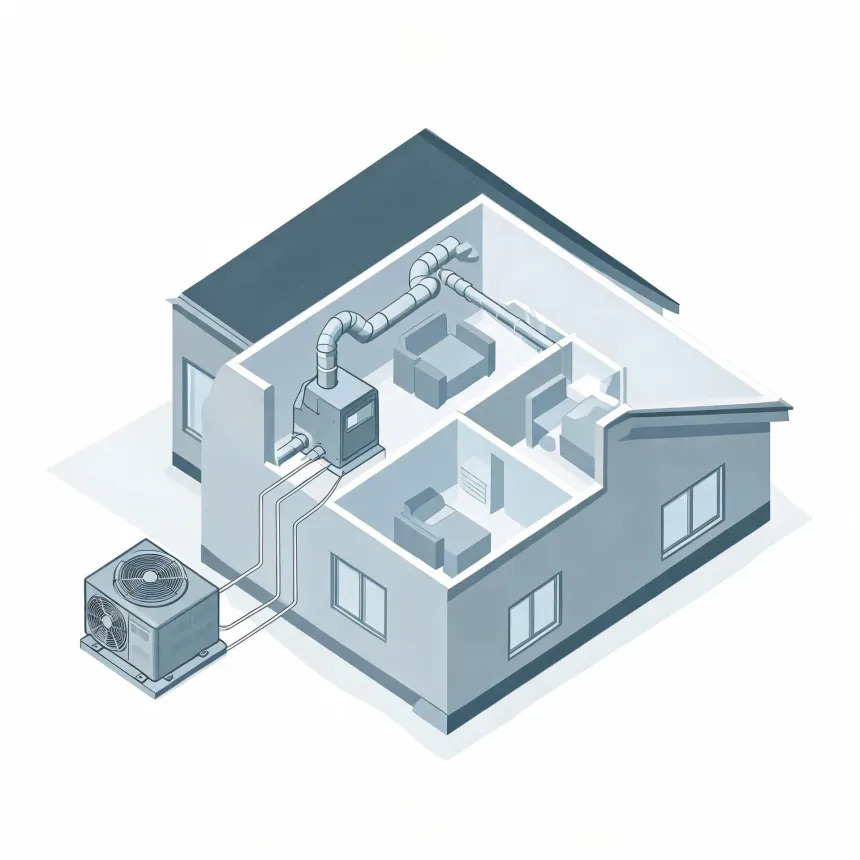
Isometric cutaway illustration of a two-room house showing an indoor air handler with ductwork connected by lines to an outdoor condenser unit on a pad.
Your system heats October through April and cools May through September.

NOAA nClimDiv, 1991–2020 normals

Columbia doesn't put any unusual strain on a heat pump.

So the problem is almost always a known one, and a contractor who's seen it before can find it fast.

Half the homes here were built in 1991 or later, so a heat pump that came with one likely has years left

Half the homes here were built by 1991
Power costs 12.91 cents a kWh statewide
Climate zone 4A

If your heat pump came with the house and the house is newer, repair is almost always worth it over replacement. A unit that age has not used up what it has to give. Call in a contractor to find out what actually failed rather than assuming the whole system is done. If the house changed hands since it was built, or the heat pump was swapped out at some point, the age of the house won't tell you the age of the unit. Check the nameplate on the outdoor unit or ask whoever sold you the house, and go from there.

Get it looked at early

Problems tend to show up in the first weeks of the season, when the load hits a part that was already weak.

Find a contractor
A gray heat pump outdoor unit mounted on a concrete pad next to a residential house with lap siding and stone accents.

What a failing heat pump sounds and feels like before it quits

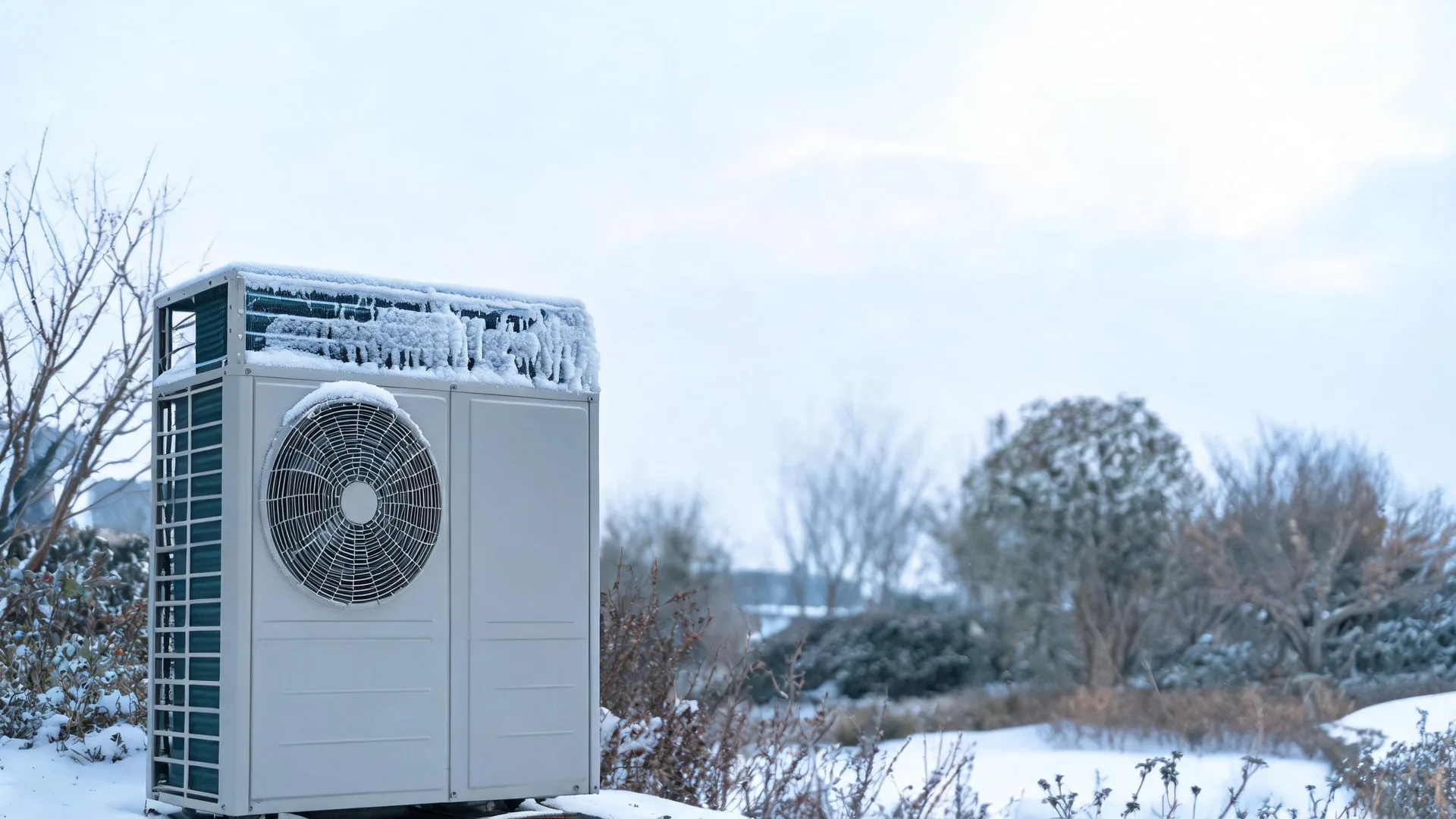
A heat pump does not sit quiet when it fails. It runs longer to make the same heat, so the first sign is usually the thermostat setting and the room temperature drifting apart. Air comes out of the vents that feels barely warm, or barely cool, instead of stopping that behavior might mean the reversing valve is stuck between modes. Short cycling, where it kicks on and off every few minutes instead of running a full stretch, points to a different problem, often in the thermostat signal or a safety switch cutting it short. Ice on the outdoor unit in defrost mode is normal for a few minutes at a time. Ice that stays, or builds up across the whole coil, means the defrost cycle itself has quit working. Outdoor fan that won't turn, or turns but makes a grinding or clicking sound, is a motor or capacitor problem and won't get better by waiting. Any of this is worth a call before the next cold stretch, since a part already struggling tends to fail outright the next time it has to work hard.

A weak part doesn't get a rest

A heat pump that's struggling still has to meet the thermostat setting, so it just works harder to get there. A failing capacitor makes the compressor pull harder to start. A low refrigerant charge makes the compressor run longer and hotter to move the same heat. Neither problem fixes itself by running more. It just pushes whatever was already weak closer to the point where it quits.
One bad part can take others with it

A compressor is built to run with a full refrigerant charge cooling it as it works. Keep it running low on charge and it runs hotter than it should, which wears at the windings every hour it's on. A motor pulling against a failing capacitor is drawing more current than it was built for. What starts as one part worth replacing can end as a compressor or motor failure instead, and that's a different job.

Most heat pump failures trace back to a handful of parts, and they fail for ordinary reasons. The capacitor that kicks the compressor and fans into motion loses its charge over years of heat cycles, and once it's weak, the motor it's supposed to start strains every time it tries. The reversing valve, which is what lets the same unit heat and cool, can stick in one position after enough cycles, and when it does the system keeps running without doing what the thermostat told it to do. Refrigerant doesn't get used up, so a low charge almost always means a leak somewhere in the line set or coil, and that leak doesn't heal on its own. Outdoor fan motors wear out like any motor that runs for years, especially if dirt and debris have made the bearings work harder than they should. None of these fail because of one bad day. They fail because something was already weak and finally got asked to work hard.

Repair versus replacement comes down to what's actually broken, not how the system is acting. A capacitor, a contactor, a fan motor, a stuck reversing valve, these are routine swaps on a system that's otherwise sound. The compressor is different. It's sealed, it's the most expensive part in the unit, and when it fails the labor to replace it often isn't worth it next to putting that money toward a new system. A refrigerant leak sits in between. A leak at a fitting or a coil can be repaired. A leak from corrosion spreading through the coil itself tends to show up again somewhere else a year later. A contractor who finds the failure can tell you which kind it is. That answer matters more than how old the unit is.