




A row of dark-sided single-story houses behind a long trimmed hedge, with mown lawn, a paved path and large leafy trees under an overcast sky.

Heat Pump Installation in Springfield, MO

Tell us about the job

Takes about a minute. No obligation.

New system or replacementHeat PumpGreene County, MO
Step 1 of 2

What ZIP code is the job in?

Greene County saw 474 severe weather events between 2015 and 2024. Most of that was wind and hail: 302 damaging wind events and 140 hail events, with 14 tornadoes mixed in. A heat pump's outdoor unit sits outside year-round, so it takes whatever comes through. Nearly one in five Missouri households went at least a full day without power in 2024. That matters more with a heat pump than with a furnace, since the heat pump needs power to run at all. Where the outdoor unit goes, and what backs it up when the grid goes down, are worth deciding before installation, not after a storm.

7 months
October through April, your system heats
4 months
June through September, it cools
25°F
the average winter night it heats against
87°F
the average summer afternoon it cools against
Isometric line illustration of a cutaway house showing interior rooms with furniture, a furnace or air handler with overhead ductwork, and an outdoor condenser unit connected by lines outside the wall.
Your system heats October through April and cools June through September.

NOAA nClimDiv, 1991–2020 normals

Greene County logged 302 damaging wind events and 140 hail events between 2015 and 2024.

A heat pump runs outside through all of it, summer heat and winter storms both, so this is harder duty than most climates ask of one.

Cooling stops in September, heat starts in October: this machine barely gets a break

Cooling runs June through September
Heat runs October through April
302 damaging wind events from 2015 to 2024

Gas heats just over half the homes in Greene County, and electricity heats most of the rest. A heat pump runs on electricity, so anyone switching from a gas furnace is adding a system the house wasn't built around, not swapping one box for another. That means a new electrical circuit sized for the unit, and in some homes a panel that needs checking before the outdoor unit goes in. If your home already heats with electricity, the path is simpler: the wiring and panel capacity may already be there, since a straight electric furnace or baseboard heat draws on the same service a heat pump needs. Either way, a contractor checking the panel before installation catches this early, not after the unit shows up.

Plan for the outage before you need it

Decide where the outdoor unit goes before it's installed, not after the first storm rolls through. A spot with some shelter from wind-driven hail beats one out in the open. Ask what happens to your heat and hot water if the power drops for a day, since this system runs on electricity and a furnace backup won't help you there.

Find a contractor
A dark gray heat pump unit mounted on a concrete pad next to a house with gray siding and a stone veneer wall.

Running outside, year-round, into whatever comes through

This machine runs outside, all day, every day, for as long as it's installed. Over a year that's thousands of hours of a compressor and a fan sitting out where wind and hail can reach them. A system sized right for this house carries that load without the outdoor unit straining on the hottest or coldest days, and that matters more here than in places where the weather stays calm. Ask what capacity the contractor is installing and why, not just what model is on sale.

Ask what the backup heat source is and when it kicks in

Most heat pumps pair with a backup, either electric resistance coils or a furnace kept in place for a hybrid setup. Ask what triggers the switch, outdoor temperature or the thermostat sensing it can't keep up. A unit sized wrong will lean on backup heat constantly, and that backup is usually the most expensive way to heat the house.
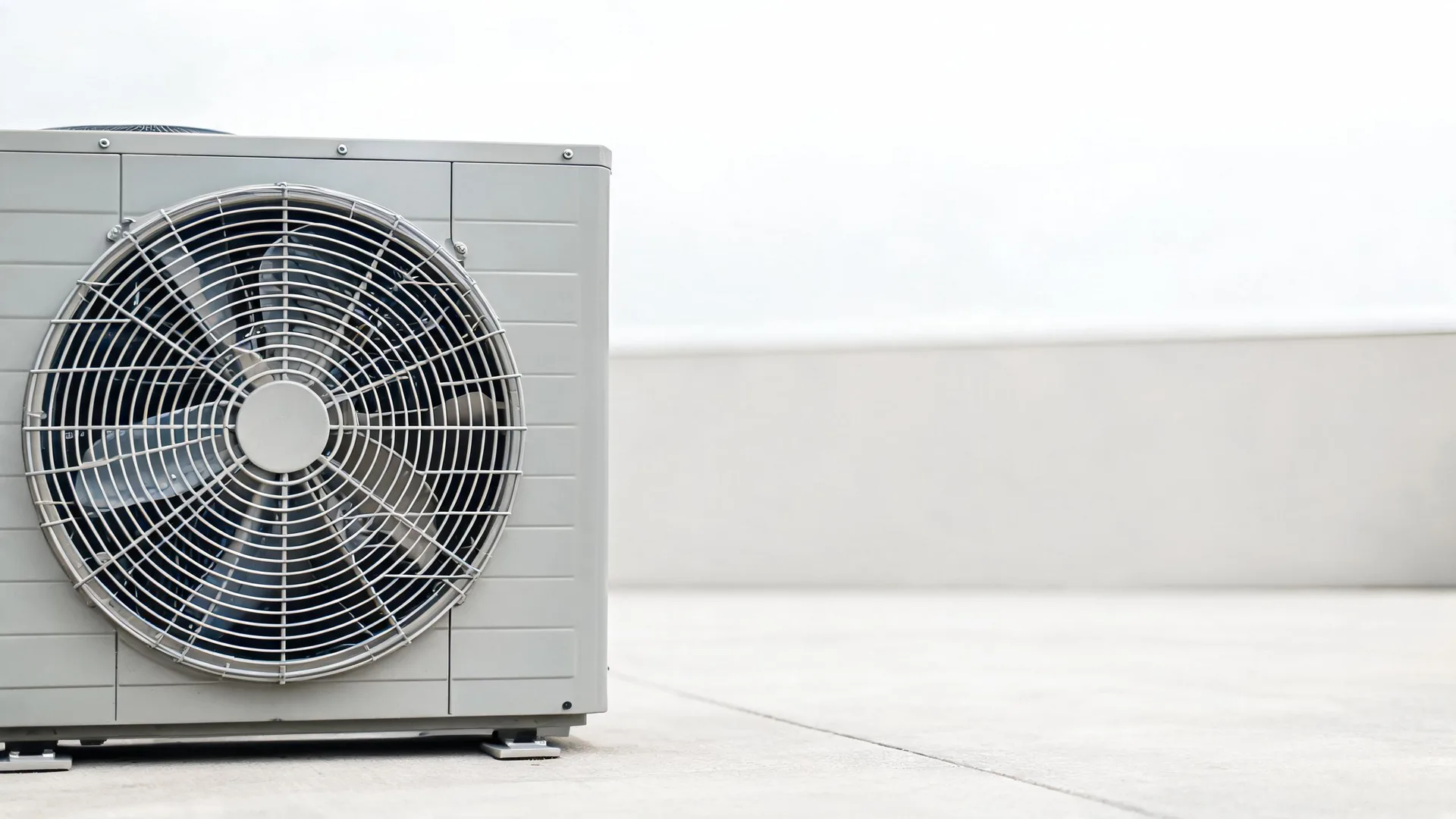
Ask how the unit is rated for its lowest-temperature output

Every heat pump loses capacity as the air outside gets colder, and the rate of that loss varies by model. Two systems can carry the same label and perform differently once the temperature drops. A contractor should be able to show the capacity at low outdoor temperatures, not just the standard rating, since that number tells you what the house actually gets on the coldest night, not the easiest one.

Sizing a heat pump means working out how much heat the house loses in winter and gains in summer, then matching the equipment to that number, not to the unit that was already there. A contractor does this with a room by room load calculation, counting windows, insulation, and square footage, not by eyeballing the old system's label. Too big and the unit short cycles, running in bursts that cool or heat the air fast but never run long enough to pull moisture out or settle into a steady temperature. Too small and it runs constantly, leaning on backup heat more than it should and still struggling to keep up on the hardest days. Either mistake also means more starts and stops for the compressor and fan outside, and more wear over time. The right size is the one worked out from the house, not picked off a shelf.

Greene County falls under zone 4A in the 2021 energy code, a mixed climate that asks real work of a system in both directions. That rating sets a floor for any new split-system heat pump installed here. Since January 2023, federal rules require these systems to deliver at least 14.3 Btu of cooling for every watt-hour of electricity over the summer, and at least 7.5 Btu of heat for every watt-hour over the winter. Those are minimums, not targets, so a unit sold today has to clear them before it can be installed at all. Ask a contractor how the model they're proposing is rated against those two numbers, not just whether it passes.