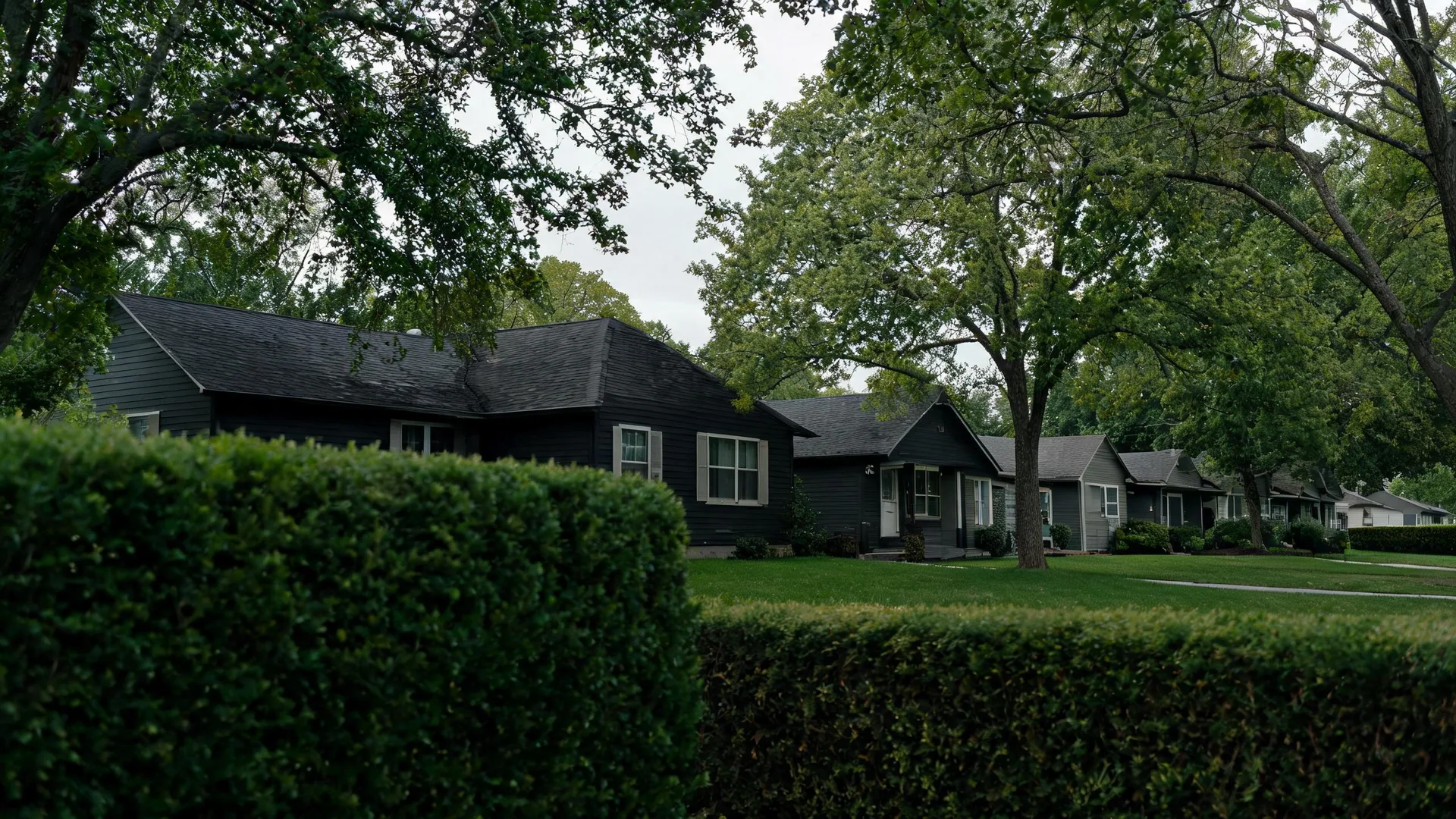






A row of dark-painted single-story houses with lawns and large deciduous trees, seen behind a tall trimmed hedge.

Heat Pump Installation in Sikeston, MO

Tell us about the job

Takes about a minute. No obligation.

New system or replacementHeat PumpScott County, MO
Step 1 of 2

What ZIP code is the job in?

Scott County saw 144 severe weather events between 2015 and 2024. Most of that was wind, 112 events, with 12 hail events, 6 tornadoes, and 13 winter storms mixed in. That outdoor unit sits outside through all of it, exposed to hail and flying debris. And statewide, 19% of Missouri households lost power for a day or more in 2024. A heat pump that can't run doesn't heat your house or your water, so the installation has to account for outages, not just degree days.

7 months
October through April, your system heats
5 months
May through September, it cools
29°F
the average winter night it heats against
88°F
the average summer afternoon it cools against
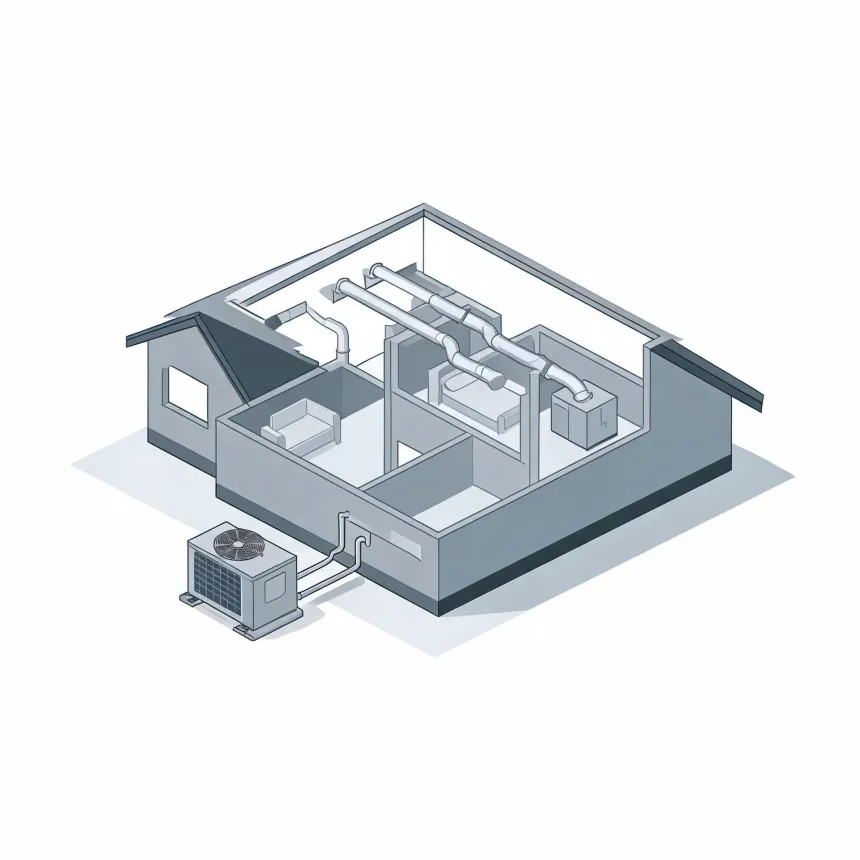
Isometric grayscale illustration of a cutaway house showing interior rooms, ceiling ductwork and an air handler, connected by lines to an outdoor condenser unit on a pad outside.
Your system heats October through April and cools May through September.

NOAA nClimDiv, 1991–2020 normals

Electricity already heats 57% of homes in Scott County, more than any other fuel.

A heat pump installer here is working with a setup most homes already have, not against it.

The air here sits heavier than most of the country, and the wind doesn't let up

112 damaging wind events from 2015 to 2024
Climate zone 4A
Power here costs 12.11 cents per kilowatt-hour
Get it installed before the season needs itHeat runs October through April here, so September is the month to have a heat pump in and running.

Electricity here runs 12.11 cents a kilowatt-hour, cheaper than most of the country pays. That changes the math on which heat pump makes sense. A top-tier efficient model costs more up front and it will take longer to earn that back when the power underneath it is already cheap. Reliability is where the money is better spent here, on a unit and an install that hold up through wind and hail and keep running when the grid doesn't. A contractor who knows Scott County can tell you what fits your home and your budget, not just what's rated highest on paper.

Plan the install around the outages, not just the weather

Where the outdoor unit sits and how it's protected matters as much as the model you pick. Ask the contractor about placement away from debris, a pad that keeps it clear of runoff and ice, and what it takes to keep heat and hot water running when the power drops. That's part of the install, not an extra step after it.

Find a contractor
A man in a dark long-sleeve shirt and tan pants climbs porch steps toward a blue front door, carrying a worn canvas tool bag with tools in its side pockets, beside a potted shrub in a blue planter.
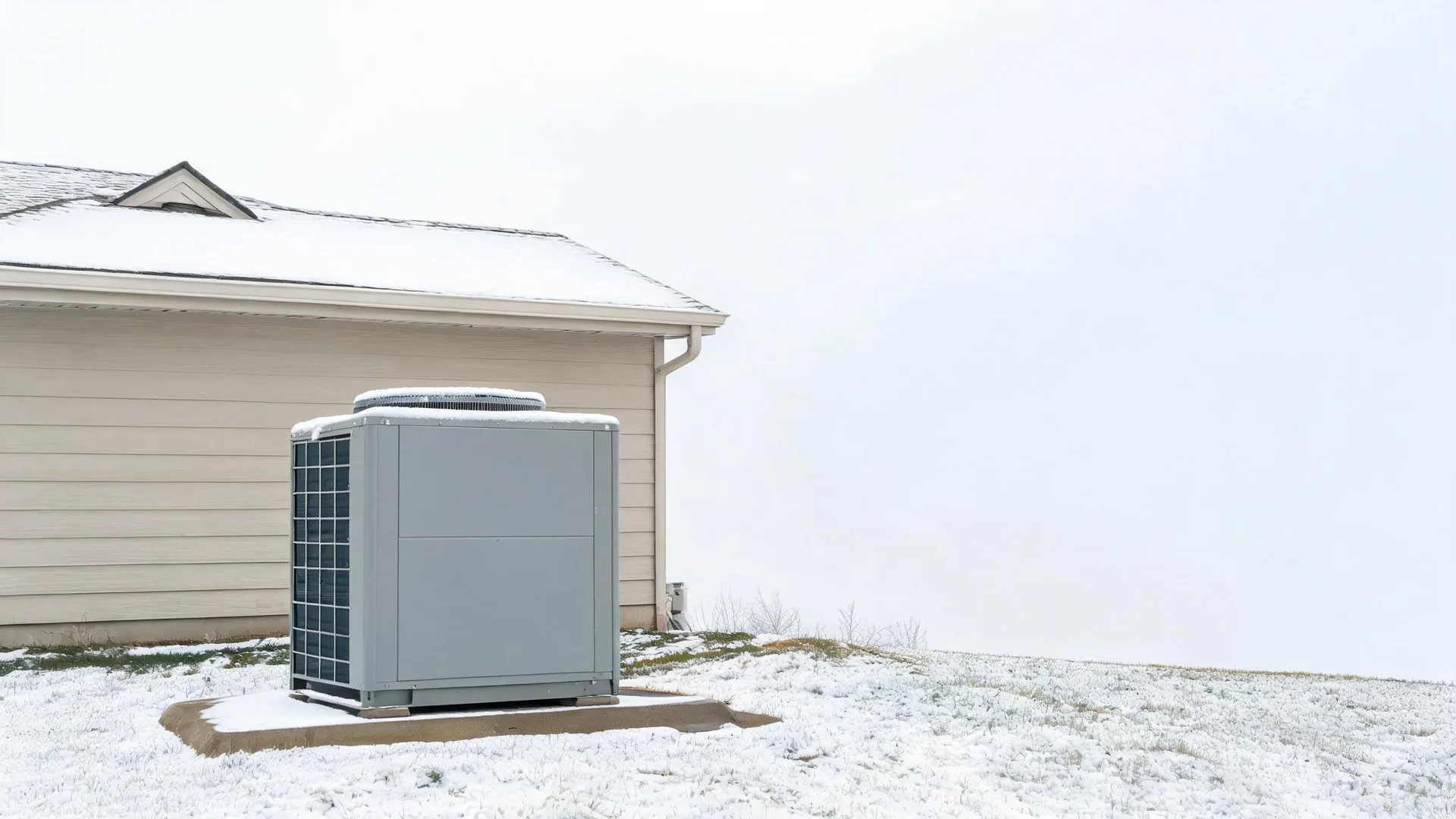
A gray heat pump outdoor unit mounted on a concrete pad next to a residential house with lap siding and stone accents.

Running this long, the differences between units start to show

Two systems can carry the same rating and still perform differently once they're running the long hours this job asks of them. Ask what stage the compressor runs at. A single-stage unit is either on at full output or off. A two-stage or variable-speed unit can throttle down and run longer at a lower output, which is easier on the compressor than starting and stopping all the time. Ask what happens at the extremes, the coldest mornings and the hottest afternoons, since that's when a heat pump leans on backup heat or struggles to keep up, and some handle that handoff better than others. Ask about the sound rating too, since a unit running near a bedroom window for hours matters more than one that only kicks on now and then. And ask what the warranty actually covers on the compressor and the coil, not just the number of years printed on the brochure, because labor often isn't included even when parts are.

Sizing comes from a load calculation, not the old unit's label

A heat pump's size should come from a room by room load calculation that looks at square footage, insulation, window area and ductwork, not from matching whatever was there before. The old unit may have been wrong from day one, or wrong now because something about the house changed. The calculation is what tells the installer how much heat the house loses in winter and gains in summer, and that number is what the new equipment gets matched to.
Oversized or undersized, the house loses either way

A heat pump too large for the house cools or heats the air fast and shuts off before it pulls the moisture out, so the house feels clammy even at the right temperature. It also cycles on and off more, which wears the compressor harder over time. One too small runs constantly and never quite catches up on the coldest or hottest days, leaning on backup heat strips more than it should. The right size keeps the system running in long steady cycles, which is what keeps both comfort and the equipment itself in good shape.

A heat pump installation is really two jobs priced together: the equipment and the work to put it in. The unit itself varies by size and by how much it can modulate, since a single-stage compressor costs less than one that runs at variable speeds. Then there's the line set connecting the outdoor unit to the indoor coil, the refrigerant charge, and the electrical work to run power to both. If the home's ductwork wasn't built for a heat pump, sealing or modifying it adds to the job, and a system with no ductwork at all means pricing out a ducted setup versus running mini-split lines instead. A disconnect switch, a new thermostat, and a pad or mount for the outdoor unit are part of it too. None of this is optional scope added on later. It's what a correct installation includes, and it's why two quotes for what looks like the same heat pump can come in different.

Scott County falls in climate zone 4A, which asks real work of both heating and cooling. Any split-system heat pump installed here now has to meet the federal minimum: at least 14.3 Btu of heat moved per watt-hour over the summer, at least 7.5 over the winter. That's not a target, it's the floor, and it narrows the field before you even start comparing brands. A unit that clears that bar can still qualify for the federal tax credit, which is worth checking before you sign anything. The number to ask for is the one on the spec sheet, not the one on the sticker in the showroom.