A nighttime street view of several illuminated two-story red brick homes with front porches, flanked by a large tree.

Heat Pump Installation in Rolla, MO

Tell us about the job

Takes about a minute. No obligation.

New system or replacementHeat PumpPhelps County, MO
Step 1 of 2

What ZIP code is the job in?

Most homes here run on electricity

Electricity heats 62.1% of occupied homes in Phelps County, more than any other fuel. Utility gas covers 17.0%, and bottled or LP gas another 13.2%. A heat pump fits into a home already wired for electric heat without adding a fuel line.


That makes this an easier swap

If the home already heats with electricity, a heat pump replaces equipment that was doing the same job, through the same wiring and the same ductwork. There is no gas line to cap or combustion venting to remove.

7 months
October through April, your system heats
5 months
May through September, it cools
25°F
the average winter night it heats against
87°F
the average summer afternoon it cools against
Isometric cutaway illustration of a single-story house showing interior rooms with ductwork, an indoor air handler unit, and an outdoor condenser unit connected by lines along the exterior wall.
Your system heats October through April and cools May through September.

NOAA nClimDiv, 1991–2020 normals

Missouri homes paid 12.91 cents per kilowatt-hour in 2024.

A standard-size heat pump sized correctly for the house is enough. There's no local reason to pay more for a bigger or higher-efficiency unit here.

A standard heat pump handles what Rolla weather brings

56 damaging wind events from 2015 to 2024
55 hail events from 2015 to 2024
Winter nights average 25°F

Phelps County sits in climate zone 4A, a mixed climate that asks real work of a system in both directions, summer heat and winter cold. Any split-system heat pump installed here has to meet a federal minimum of 14.3 SEER2 for cooling and 7.5 HSPF2 for heating. That floor applies everywhere, not just here, so it's already built into what a contractor can sell you. A system that clears it is built to handle what this climate asks of it. There's no local reason to look for a higher rating than the minimum requires.

Get it in before October

Heat here runs October through April, seven months of the year. Install before September and the new system is already in and tested when it has to start carrying the house. Wait until the first cold morning and you're choosing a heat pump while the house is already cold.

Find a contractor
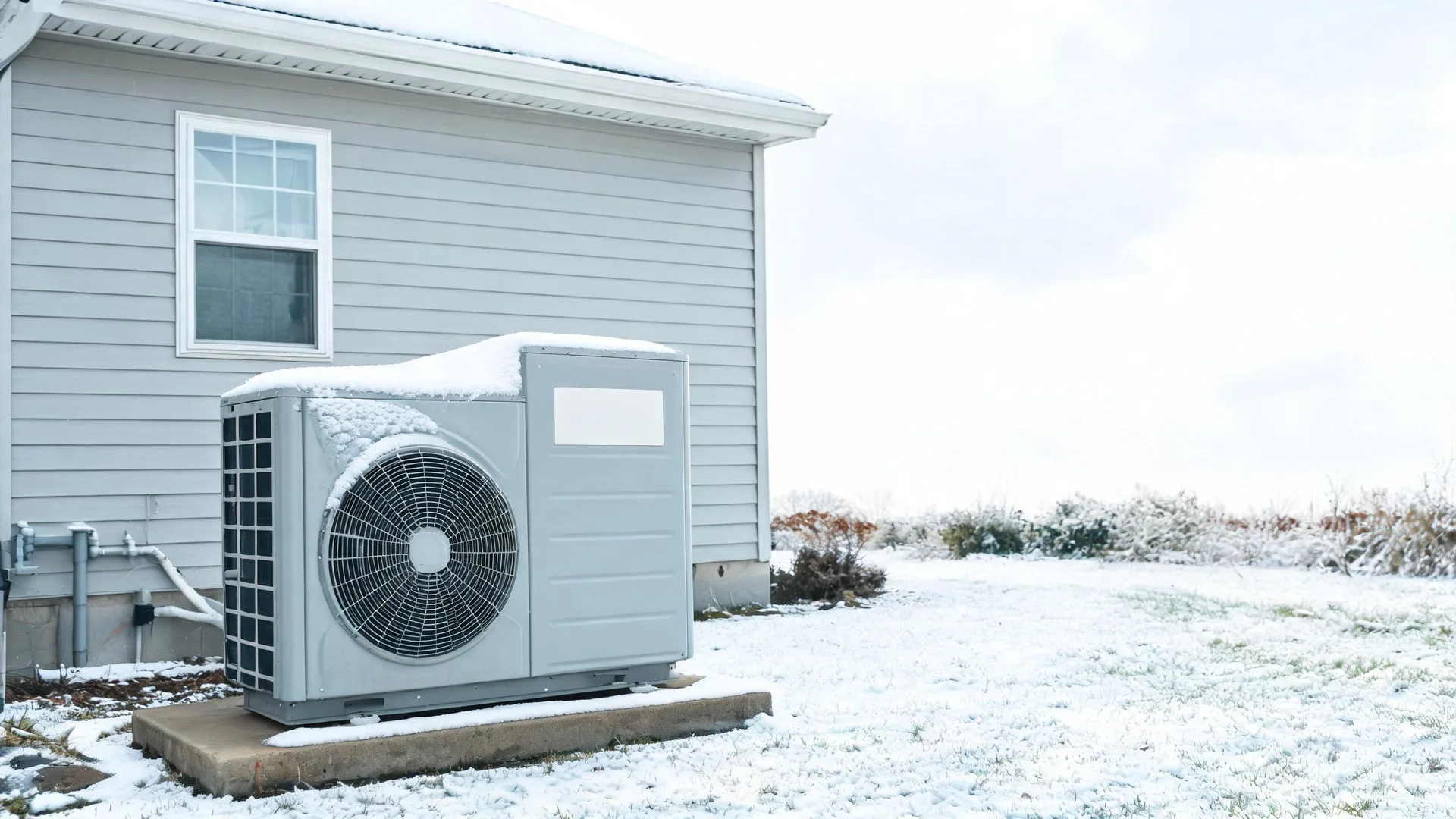
A residential heat pump outdoor unit mounted on a concrete pad next to a house with gray vinyl siding.

Right-sized, it runs long and easy. Wrong-sized, it fights the house.

A heat pump sized right runs long, slow cycles. It moves heat at a steady pace instead of racing to catch up. Oversize it and it short cycles. It blasts the house to temperature fast, shuts off, then starts again soon after. Those stops and starts wear the compressor harder than a long steady run ever does. The system also never runs long enough to pull moisture out of the air, so the house ends up warm and clammy in summer. Undersize it and it runs constantly in the hardest stretches of weather, struggling to keep up and leaning hard on backup heat strips to make up the difference. Getting the size right means a contractor works out a load calculation for the house. That means the square footage, the windows, the insulation, the ceiling height, not just a copy of whatever size was there before. A unit that matches that number cycles the way it's meant to and warms and cools evenly room to room.

Ask what happens below freezing

A heat pump pulls heat from outside air, and that gets harder as the temperature drops. Below a certain point, the unit leans on backup heat strips to make up the difference. Ask what that crossover point is for the system you're looking at, and ask a contractor to walk you through how the backup heat is controlled, not just that it exists.

Ask what the warranty actually covers

Compressor warranties and labor warranties are not the same thing, and a long compressor warranty means little if the labor to replace it isn't covered too. Ask what's covered, for how long, and whether the warranty is tied to the contractor doing the install or follows the equipment regardless of who services it later.

That SEER2 and HSPF2 number on the label is a ratio, not a size. It tells you how much heat the system moves for the electricity it uses, nothing about whether it's the right fit for the house. A higher rating costs more up front and pays back slowly, over years of running, and only if the unit is sized right to begin with. Pair a high rating with a unit that's too big and you still get the short cycling, the temperature swings, the wear on the compressor. The rating describes the equipment. The load calculation is what tells you it's the right equipment for this house.

Installation starts with pulling out the old equipment, the indoor air handler or coil, the outdoor unit, and disconnecting the line set and electrical. The new outdoor unit gets set on a pad, leveled, with clearance around it for airflow. The refrigerant lines get run or reused depending on the condition of what's already there, then the whole system gets evacuated with a vacuum pump to pull out moisture and air before any refrigerant goes in. That step matters more than it looks. Trapped air or moisture in the line set causes problems months later, not on day one. Once the system is charged, a contractor checks refrigerant levels against the manufacturer's specs, runs the system in both heating and cooling mode, and checks airflow at the vents. A thermostat gets set up last, and most contractors walk through how it works before they leave.