





A lit brick residential street at dusk showing a row of two-story homes with covered porches and mature trees.

Heat Pump Installation in Odessa, MO

Tell us about the job

Takes about a minute. No obligation.

New system or replacementHeat PumpLafayette County, MO
Step 1 of 2

What ZIP code is the job in?

Gas heats a little over half the homes in Lafayette County, with electricity and propane splitting most of the rest. A heat pump going into a house that currently runs on gas usually means new ductwork sizing gets checked and a decision on backup heat for the coldest days. Homes already heating with electricity have an easier path, since a heat pump replaces that system without changing the fuel the house runs on. Either way, the contractor sizes the unit to the house rather than the system it's replacing.

7 months
October through April, your system heats
5 months
May through September, it cools
23°F
the average winter night it heats against
86°F
the average summer afternoon it cools against
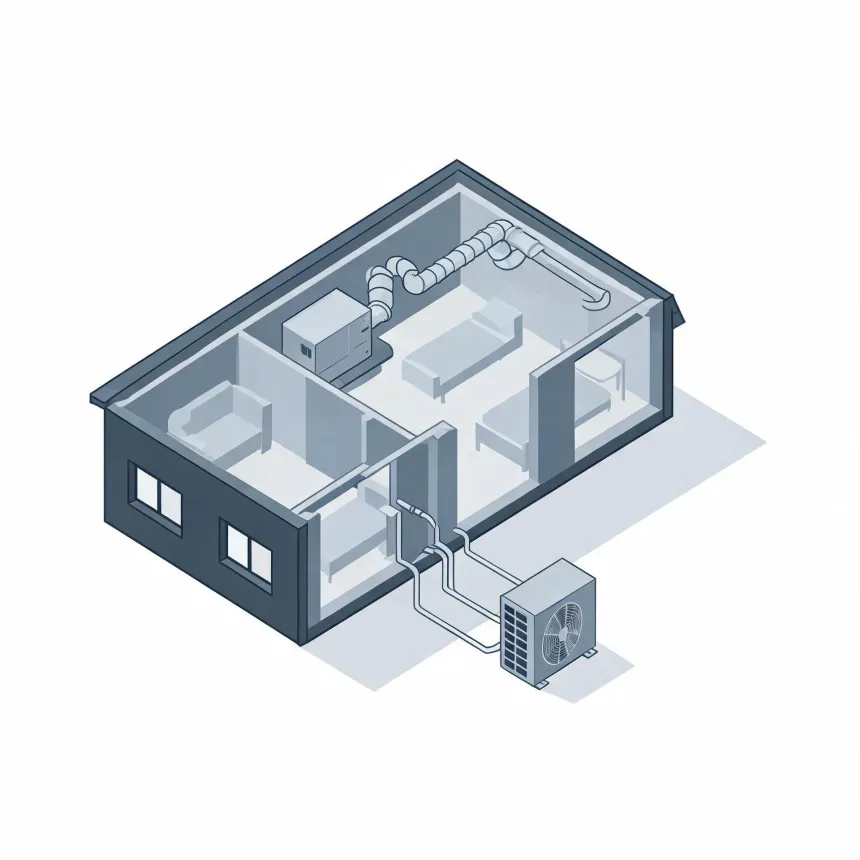
Isometric cutaway illustration of a small house showing interior rooms with furniture, an indoor air handler with flexible ducting, and refrigerant lines running to an outdoor condenser unit beside the building.
Your system heats October through April and cools May through September.

NOAA nClimDiv, 1991–2020 normals

Heat here runs October through April, seven months of the year.

September is the month to get a heat pump installed, before the house needs it.

Weather that cuts power is the reason a heat pump needs a plan for backup heat

97 severe weather events from 2015 to 2024
19% of homes statewide lost power a day or more in 2024
41 damaging wind events from 2015 to 2024
A standard heat pump holds up fine hereLafayette County logged 43 hail events between 2015 and 2024, weather the outdoor unit sits through same as the roof and siding.

Half the homes in Lafayette County were built in 1975 or earlier, half later. That split doesn't change how a heat pump gets sized. The contractor measures this house, the windows, the square footage, the layout, and sizes to that, not to the year it was built. An older house isn't an automatic reason to size up, and a newer one isn't a reason to size down. Most homes here call for a standard unit at standard efficiency. Nothing about this county pushes toward bigger equipment or a higher-end model than the house actually needs.

A new heat pump here has to meet zone 4A's minimum, and the credit rewards it

Zone 4A sets the floor. Any split-system heat pump installed here has to hit at least 14.3 SEER2 for cooling and 7.5 HSPF2 for heating, the federal minimum for units built from 2023 on. That rules out the oldest, lowest-efficiency equipment before a contractor ever quotes the job. A federal tax credit is available on top of that for qualifying installations.

Find a contractor
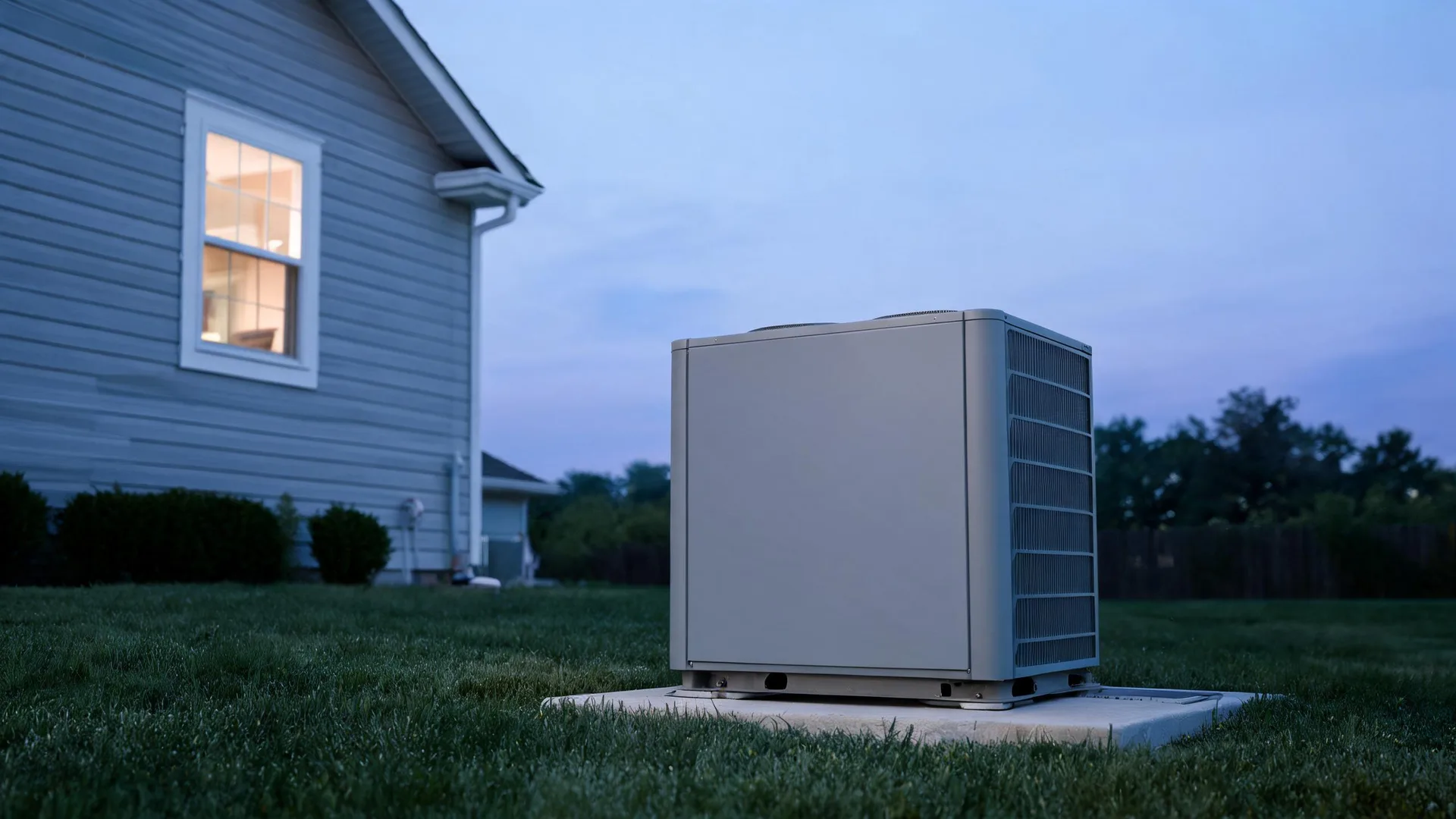
A gray heat pump condenser unit mounted on a concrete pad against the gray lap-siding exterior wall of a house.

The old system comes out, not along for the ride

The old furnace or AC doesn't get reused once a heat pump goes in. If the house is switching off gas, the furnace gets disconnected and removed, and the gas line to it gets capped. If the old system was a straight electric furnace or an older heat pump, that equipment comes out and the heat pump takes its place on the same pad and in the same closet or utility space. The ductwork usually stays. It's the equipment on each end of it that changes, not the runs themselves, unless the sizing check finds a duct that's too small or too leaky for the new unit to work with. An old outdoor unit gets hauled off and the refrigerant in it has to be recovered properly before the cabinet is scrapped, since it can't just be vented. None of this is work the homeowner needs to plan around. It's part of what a contractor handles on install day.

Sizing is a calculation, not a guess from square footage

A contractor works out heat loss and heat gain for the house room by room, counting windows, insulation, ceiling height, and how the walls and roof are put together. Houses the same size on paper can need different equipment once that math is done. Square footage alone never tells the whole story.
The wrong size shows up in comfort, not just capacity

A heat pump sized too big cools or heats the air fast, then shuts off before it pulls the moisture out, so rooms feel clammy even at the right temperature. One sized too small runs constantly in the hardest weather and still falls behind. Either way, the thermostat number stops telling you how the house actually feels.

SEER2 and HSPF2 are ratios, not a count of anything in the house. SEER2 measures cooling output against the power it takes to get there over a whole season, and HSPF2 does the same for heating. A higher number means less power for the same comfort, nothing more. It isn't a size, so units can carry the same rating and still be the wrong one or the right one for a given house. It isn't a guarantee either. The number on the label is measured under set conditions in a lab. What a unit actually uses in a real house depends on the ductwork it's tied into, how well the house holds the air once it's conditioned, and how the contractor sets it up. A unit at the higher end of the rating costs more to buy and less to run. Where that trade works out depends on how long the house keeps it and how much it runs, not on the rating by itself.

A few things move the price on any heat pump install, separate from the unit itself. Ductwork is usually the biggest one. If the existing runs are sized right and sealed well, the crew connects to what's there. If a duct is too small, too leaky, or routed poorly, that gets fixed before the new equipment goes in, and that work adds to the job. Electrical is the other big one. A heat pump draws differently than a gas furnace or an older unit, so the panel and the circuit to the outdoor unit get checked, and sometimes upgraded, to carry it. Backup heat is a real decision too, not just a checkbox. Whether that backup is a small electric coil or something bigger changes what the install involves. Where the outdoor unit sits and how far the line set has to run between it and the indoor coil adds labor on top of the equipment cost. None of this is optional work tacked on to raise the price. It's what has to be right for the system to actually perform once it's running.