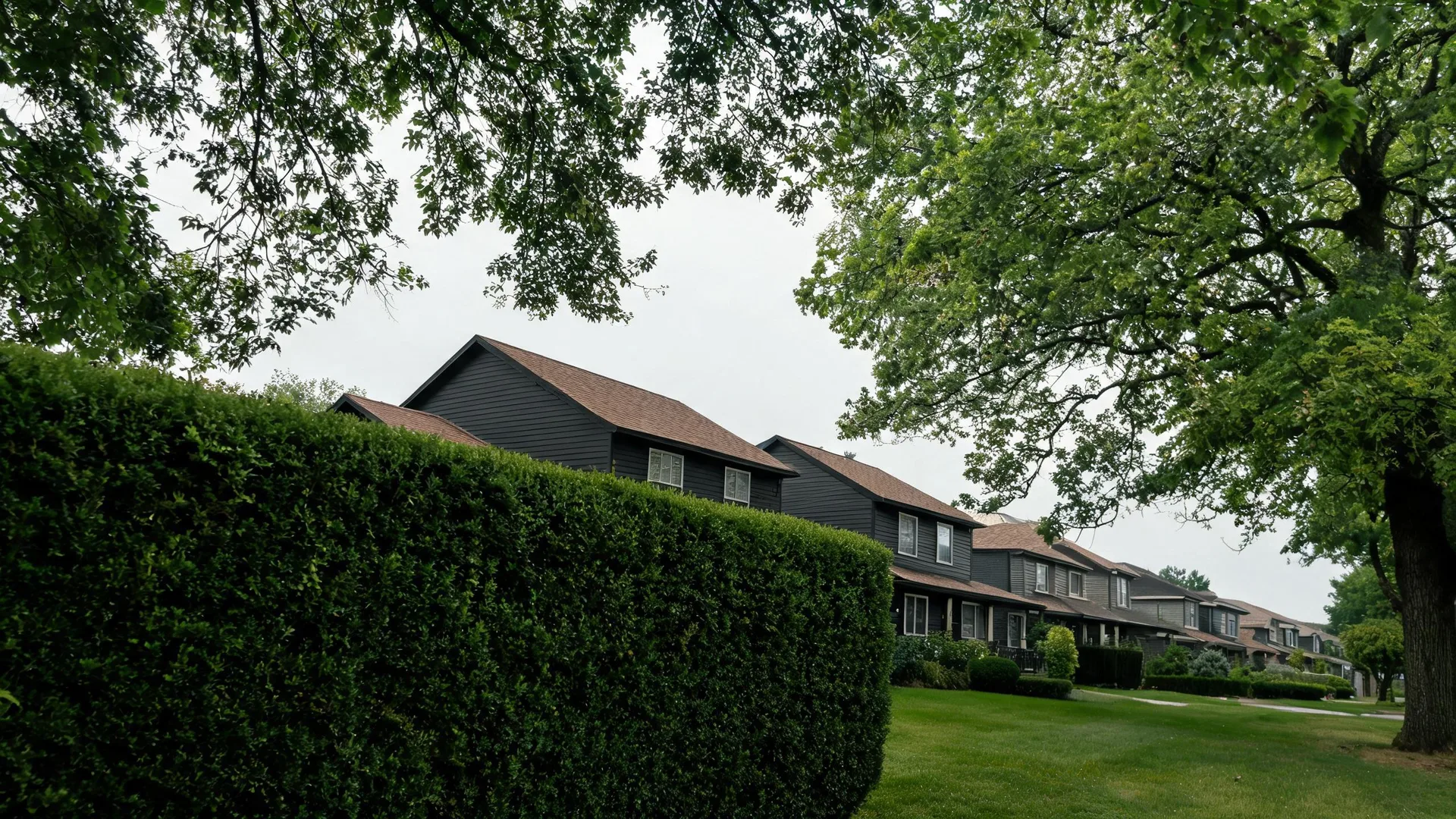
A tall trimmed hedge runs along a mown lawn in front of a row of dark-sided townhouses with brown shingled roofs, framed by leafy tree branches under an overcast sky.

Heat Pump Installation in O'Fallon, MO

Tell us about the job

Takes about a minute. No obligation.

New system or replacementHeat PumpSt. Charles County, MO
Step 1 of 2

What ZIP code is the job in?

Storms are frequent here

St. Charles County recorded 141 severe weather events between 2015 and 2024, including 84 damaging wind events, 39 hail events and 9 tornadoes. Nearly one in five Missouri households went at least a day without power in 2024.


Your outdoor unit sits in the open

A heat pump's outdoor unit takes whatever wind and hail come through, and it has to run through winter as well as summer. Where it goes and how it's protected matters more here than in places with calmer weather.

7 months
October through April, your system heats
5 months
May through September, it cools
25°F
the average winter night it heats against
87°F
the average summer afternoon it cools against
Isometric line illustration of a cutaway single-story house showing interior rooms, ceiling ductwork connected to an indoor air handler, and refrigerant lines running to an outdoor condenser unit on a pad.
Your system heats October through April and cools May through September.

NOAA nClimDiv, 1991–2020 normals

Heat pumps here run heat from October through April.

Install before October and the changeover happens on your schedule, not during the first cold snap.

Most of this county heats with gas, so a heat pump here usually means building in a backup, not just swapping one unit for another

65.9% of homes heat with gas
Climate zone 4A
Power here costs 12.83 cents per kilowatt-hour

St. Charles County falls under zone 4A in the 2021 energy code, a mixed climate that works both the heating and cooling side of a system. Any split-system heat pump installed here, if it was built on or after January 1, 2023, has to meet a federal minimum of 14.3 for cooling and 7.5 for heating. Those numbers are a floor, not a target, and they're what a contractor has to work with when sizing a system for this climate. A unit that clears the minimum still has to be matched to the house, since zone 4A doesn't let a system coast through either season. Installing a heat pump that meets this standard can also qualify the homeowner for the federal tax credit available for high-efficiency equipment.

Plan the install around the weather it has to survive

A contractor can plan the install around this before the unit ever gets set down. That means picking a spot that keeps it clear of falling branches and drifting snow, and talking through what happens to your heat and your hot water if the power goes out for a day. Settle that now, while it's part of the install, not after a storm has already made the decision for you.

Find a contractor
A man in a cap, gray long-sleeve shirt and tan work pants carries a canvas tool bag up gray porch steps toward a dark blue front door, with a blue ceramic planter and shrub beside it.
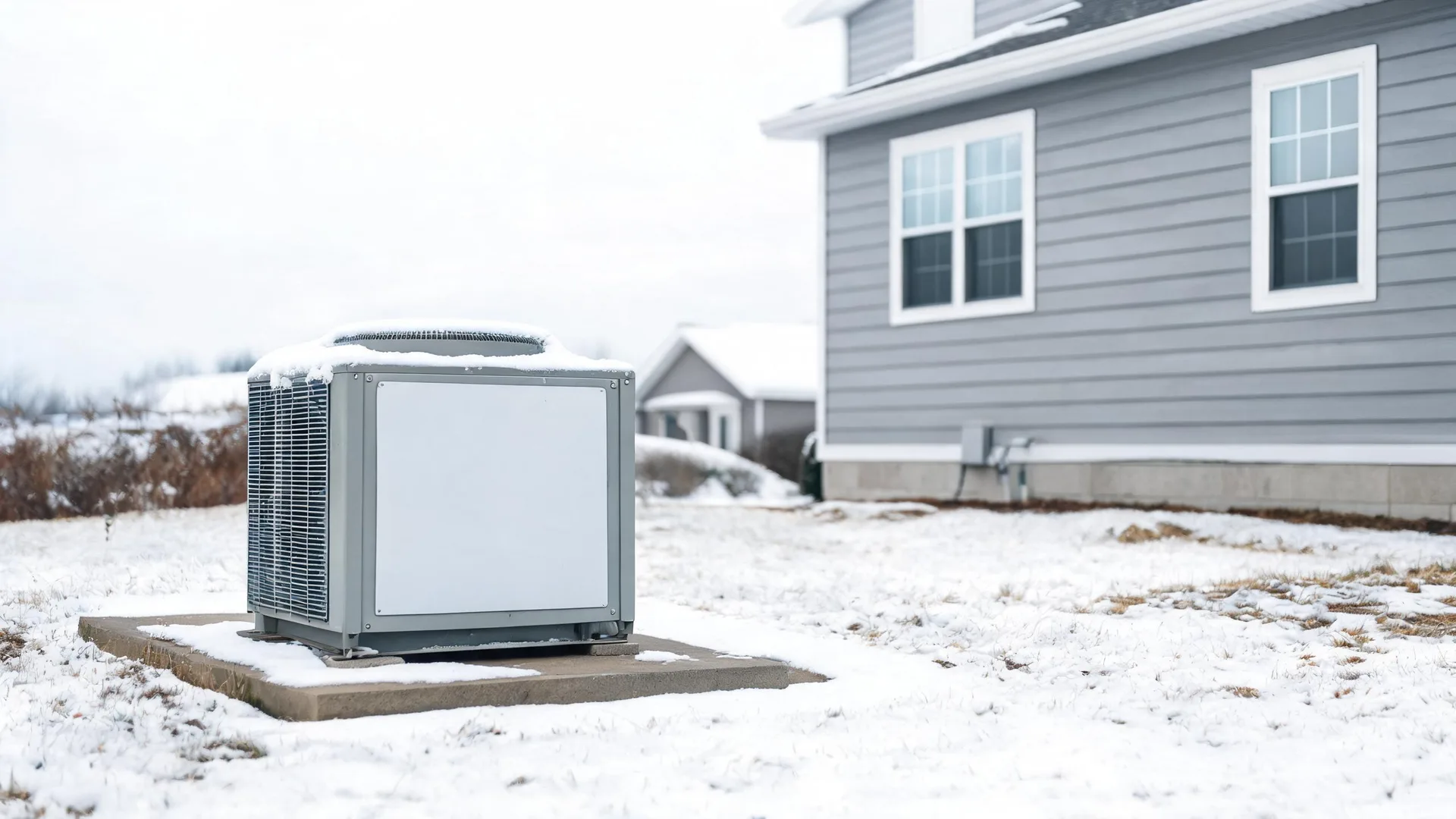
A gray heat pump outdoor unit mounted on a concrete pad next to a residential house with lap siding and stone accents.

Sizing isn't a guess, it's a calculation

A heat pump that's too big will short cycle. It blasts the house to temperature, shuts off, and starts again a few minutes later, never running long enough to pull moisture out of the air or settle into a steady rhythm. One that's too small just can't keep up when the temperature swings hard in either direction, so it runs constantly and still falls behind. Getting the size right means a contractor works out a load calculation for the specific house: the square footage, sure, but also the insulation, the windows, how many exterior walls each room has, which way the house faces. Two homes the same size can need different equipment. The ductwork matters just as much as the unit. A system sized right for the house but choked by undersized or leaky ducts won't deliver the air it's rated for, so the contractor has to look at both together, not just swap in new equipment on the old ductwork and assume it'll work. None of this is guesswork when it's done right. It's a room-by-room calculation, not a rule of thumb based on the size of the old unit.

The old equipment doesn't just get unplugged

A furnace or AC swap means disconnecting line sets, capping or reusing refrigerant lines, and dealing with the old refrigerant itself, which can't just be vented. If the old system ran on gas, that gas line either gets capped or gets reused for backup heat. A contractor handles the disposal and the refrigerant recovery as part of the job, not as an afterthought.

The switch to a heat pump changes what the old parts are for

Ductwork, thermostat wiring and the electrical circuit feeding the old unit don't automatically work for a heat pump. A heat pump's outdoor unit often needs a different electrical setup than a straight AC condenser did, and the old thermostat may not control a heat pump's reversing valve or backup heat the right way. Reusing what's there is fine when it checks out, but someone has to check it first.

Two systems can carry the same efficiency rating and still perform differently in the house. Ask what the rated output actually is at a low outdoor temperature, not just at mild conditions, since a heat pump loses capacity as it gets colder outside and that's when the house needs it most. Ask how the backup heat is set to engage, at what outdoor temperature it kicks in, and whether it's sized to carry the house on its own if it has to. Ask what the warranty covers on the compressor versus the parts around it, and whether labor is included or just the part. A contractor who can answer these without hesitating has actually run the numbers for your house. One who just points at the efficiency sticker hasn't.

Installation day starts with the outdoor unit and indoor coil going in, then the line set connecting the two, run through walls or along the exterior and brazed at each joint. Once the lines are connected, the system gets pulled into a vacuum to pull out moisture and air before any refrigerant goes in, since either one left in the lines causes problems down the road. The electrical hookup comes next: a dedicated circuit and disconnect box at the outdoor unit, and wiring to the air handler or furnace for the indoor side. The thermostat gets set up to run the heat pump's reversing valve and backup heat correctly, not just turn one system on and off. Before anyone leaves, the system runs through a full cycle in both heating and cooling, checking refrigerant charge, airflow at the vents, and that the backup heat kicks in when it's supposed to. A job that skips the vacuum, the charge check, or the full cycle test is a job that gets a callback later.