Weather here does damage
Webster County logged 190 severe weather events between 2015 and 2024. That includes 103 damaging wind events, 67 hail events, 6 tornadoes and 12 winter storms with heavy snow or ice.
Takes about a minute. No obligation.
Webster County logged 190 severe weather events between 2015 and 2024. That includes 103 damaging wind events, 67 hail events, 6 tornadoes and 12 winter storms with heavy snow or ice.
Nineteen percent of Missouri households went at least 24 hours without power in 2024. A heat pump installed in Marshfield has to hold up against hail and wind on the outdoor unit, and the home still needs a plan for heat and hot water when the power drops for a day or more.

NOAA nClimDiv, 1991–2020 normals
Heat runs October through April here, close to seven months of the year.
A heat pump going in before September means it's ready, not rushed, when the cold sets in.



Electricity heats more homes in Webster County than any other fuel, at 42.2 percent. Propane comes next at 28.3 percent, and utility gas heats 17.1 percent. A heat pump fits a home already wired for electric heat without the gas line or propane tank a furnace install would need. For a home moving off propane or gas, it still works, but the contractor will need to check the electrical panel and wiring before the switch. Either way, going electric puts the house in line with most of its neighbors.
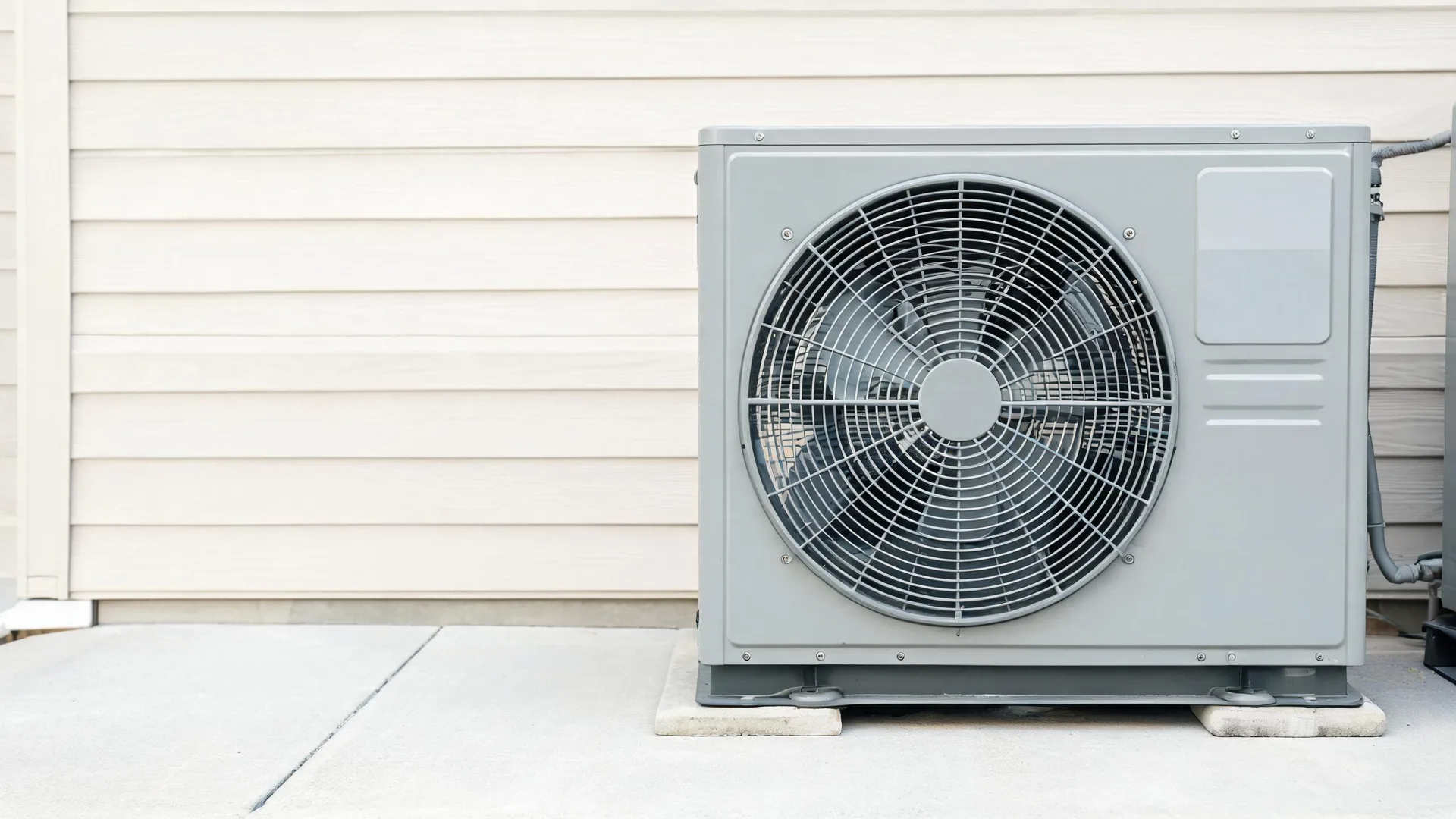
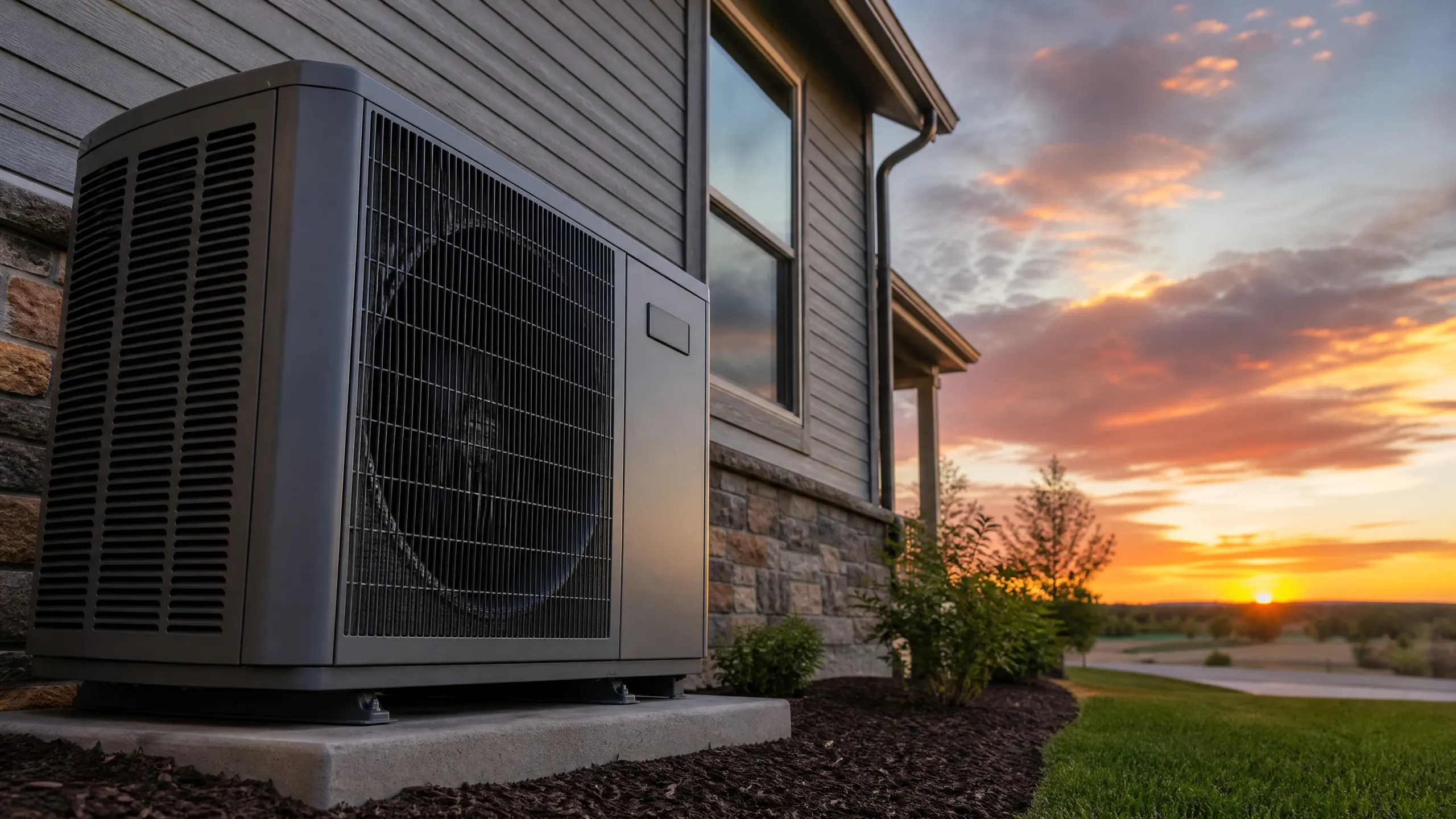
Get the outdoor unit placed and protected before a storm makes that decision for you, and have a contractor walk through what happens to heat and hot water if the power drops for a day or more.
Find a contractor
The number on the label is the efficiency rating, and it tells you how much heat the system moves for the power it uses. A higher rating means lower running costs, but that number is measured new, in a lab, under set conditions. It's a ceiling, not a promise. Dirty coils, a clogged filter, low refrigerant charge or ductwork that leaks air all pull real performance below that number. The rating also doesn't move with the weather. A heat pump works hardest at the extremes, deep cold or peak heat, and that's when the gap between the rated number and what the system actually delivers shows up on the bill. Keeping the coils clean and the filter changed is what keeps the machine running closer to what the label promised.
A contractor works out the right size by looking at the home's square footage, insulation, window area and layout, not by matching whatever was there before. A heat pump that's too big cools or heats the space fast, then shuts off before it pulls the humidity down, so the air feels clammy even at the right temperature. One that's too small runs constantly during the hardest stretch of winter or summer and never quite catches up.
A heat pump sized too large cycles on and off more often than it should, and every start puts wear on the compressor. Short cycles also mean the system rarely runs long enough to settle into steady, efficient operation. A properly sized unit runs longer stretches at a steadier pace, which is easier on the compressor and keeps the temperature in the house more even from room to room.
Webster County sits in zone 4A, a code that expects a system to carry real load both in summer and in winter. Any split-system heat pump built on or after January 1, 2023 has to clear a federal minimum to be installed anywhere, here included: at least 14.3 for cooling, at least 7.5 for heating. That's not a sales number. It's the floor a contractor is legally allowed to install. A federal tax credit is also available for qualifying heat pump installations, worth asking a contractor about before you settle on a system.
Since the payback math runs longer here, the deciding factor isn't the top efficiency number on the label. Put the weight on reliability instead: how the outdoor unit is mounted, what it takes to keep the coils clean, whether the contractor installing it will stand behind the work. A mid-tier system that holds up through hail, wind and a hard freeze is worth more here than a top-tier one that saves a few dollars a month on a power bill that's already low. Ask the contractor what happens to the warranty if the unit takes storm damage, and what maintenance it needs to keep running at the rating on the label.