Three lit brick homes on a tree-lined residential street photographed at dusk.

Heat Pump Installation in Liberty, MO

Tell us about the job

Takes about a minute. No obligation.

New system or replacementHeat PumpClay County, MO
Step 1 of 2

What ZIP code is the job in?

Clay County sees real storm numbers

Clay County logged 227 severe weather events between 2015 and 2024, including 116 damaging wind events, 94 hail events and 6 tornadoes. Statewide, 19% of Missouri households lost power for 24 hours or more in 2024.

A heat pump has to take the hit and keep going

The outdoor unit sits outside in all of this, exposed to wind and hail. And a heat pump needs power to run at all, for heating and for cooling, so an outage hits it harder than it hits a furnace paired with gas.

7 months
October through April, your system heats
5 months
May through September, it cools
22°F
the average winter night it heats against
86°F
the average summer afternoon it cools against
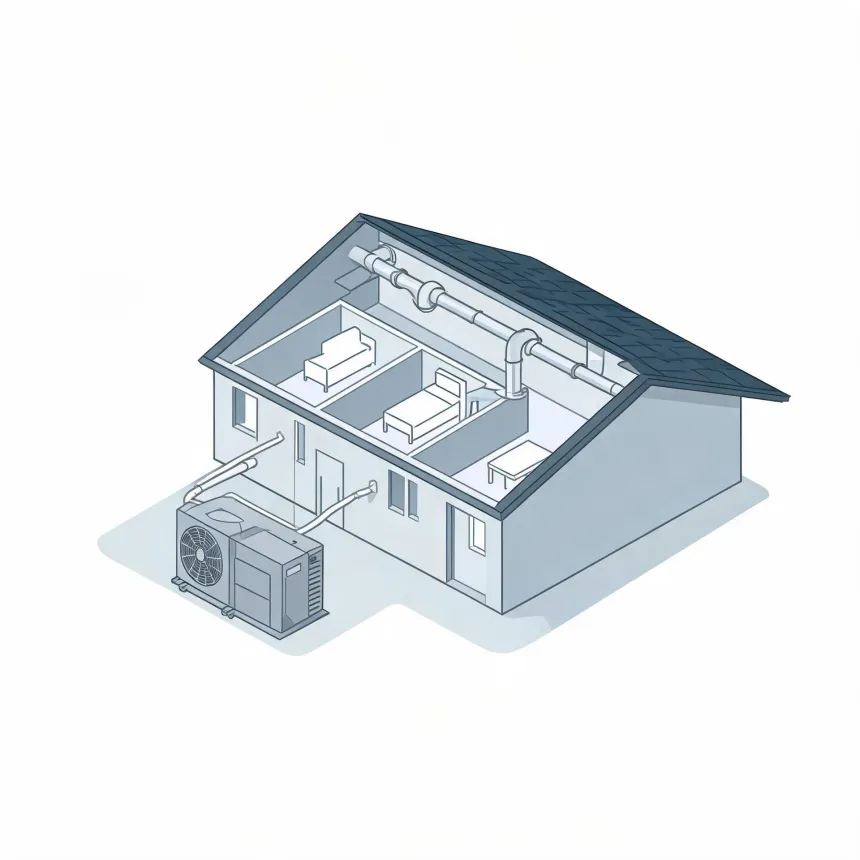
Isometric line illustration of a cutaway single-story house showing interior rooms with furniture and attic ductwork connected to an outdoor condenser unit beside the building.
Your system heats October through April and cools May through September.

NOAA nClimDiv, 1991–2020 normals

Clay County logged 94 hail events and 116 damaging wind events between 2015 and 2024.

An outdoor unit installed here needs to be mounted and protected with that in mind.

Most homes here heat with gas, so a heat pump usually goes in alongside it, not in place of it

66.5% of homes heat with gas
116 damaging wind events from 2015 to 2024
94 hail events from 2015 to 2024
Get it in before OctoberHeat runs seven months here, October through April, with overnight lows near 22°F in deep winter

Clay County falls under zone 4A in the 2021 energy code, a mixed climate that asks real work of both the heating side and the cooling side. Any split-system heat pump installed here has to meet the federal minimum for units built since January 2023: at least 14.3 Btu of heat moved per watt-hour over the summer, and at least 7.5 Btu per watt-hour over the winter. That sets a floor on what a contractor can install, not a ceiling. Some homeowners choose a higher-efficiency model anyway, since a heat pump here runs both seasons instead of sitting idle half the year.

Plan for the outage before the storm hits

Get the outdoor unit placement and backup plan settled at installation, not after a line of storms comes through. Ask where it sits, what protects it from wind and hail, and what keeps the house heated or cooled if the power goes out. A gas furnace alongside it can carry the heat when there's no power to run the heat pump.

Find a contractor
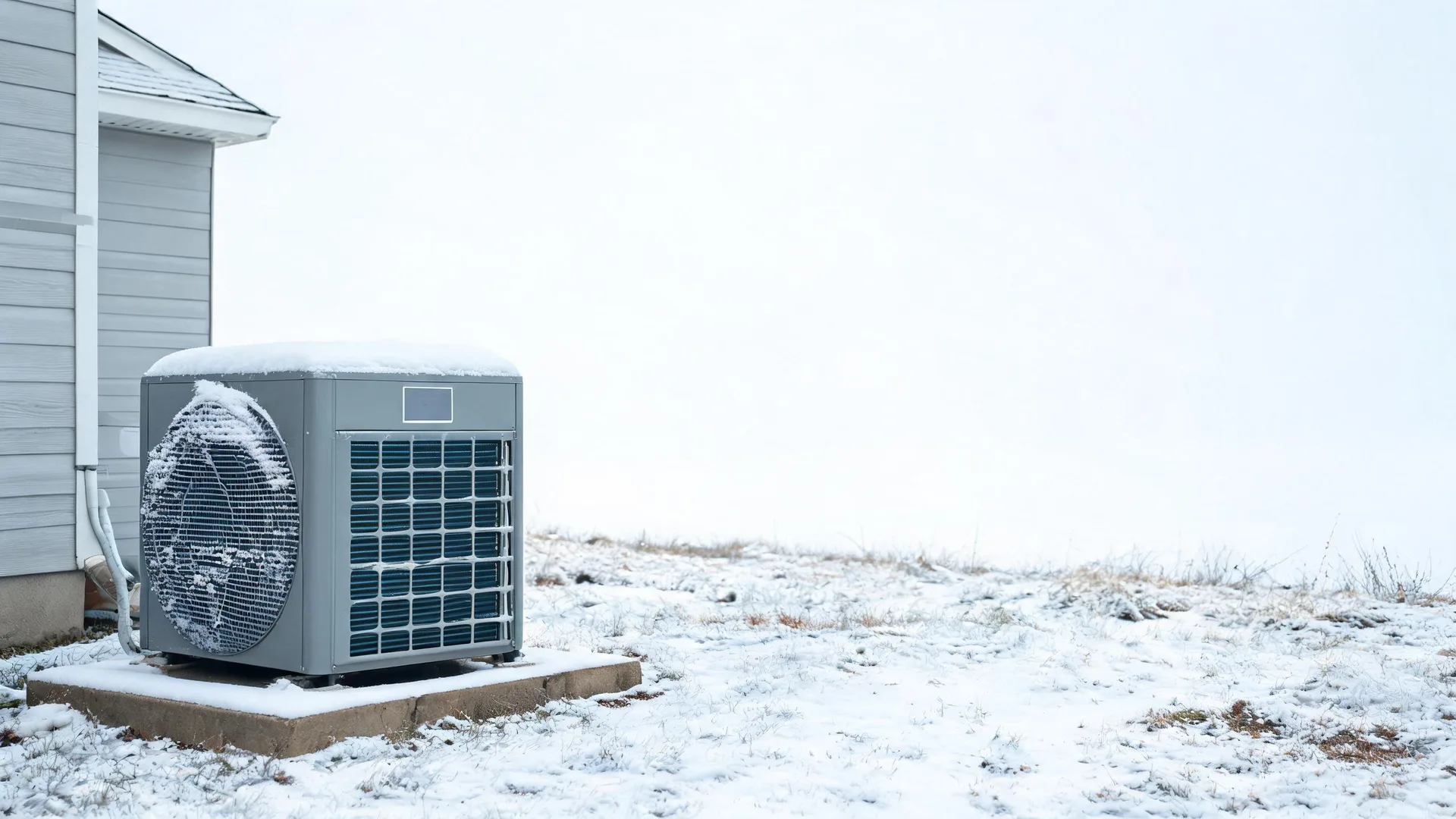
A gray air-source heat pump mounted on a concrete pad next to a house with gray vinyl siding, surrounded by gravel and flanked by green shrubs and white hydrangea flowers.

This Unit Doesn't Get a Season Off

This unit will run most months of the year here, cooling through the summer and sharing the load with the furnace once it turns cold. All those hours are outdoor hours too. The unit sits through every storm that crosses Clay County, and between 2015 and 2024 that was 116 damaging wind events and 94 hail events. None of that lets up because the system is new. A unit mounted low and left exposed takes that weather straight on, and the coil and fan show it first. Where this one gets placed and how it gets protected now decides how much of that it actually has to take.

The rating is two numbers, not one

A heat pump carries a cooling rating and a separate heating rating, and they measure different things. The cooling number tells you how much heat it moves out of the house per watt of power it uses over a cooling season. The heating number does the same job for winter, moving heat into the house instead. A unit can be strong on one and average on the other, so look at both, not just the one on the yellow sticker.

A higher rating buys you a quieter electric bill, not more heat

The rating doesn't change how warm or cool the house gets. A unit with a higher rating reaches the same temperature using less electricity to get there. What changes is how hard the compressor and fan have to work, and how long they run, to move the same amount of heat. That's the whole trade, comfort stays the same, the power draw behind it goes down.

A heat pump is sized by doing a load calculation on the house, not by matching the size of whatever unit was there before. The calculation looks at square footage, but also window area, insulation, ceiling height and air leakage, and comes up with how much heat the house actually loses in winter and gains in summer. Too big and the unit short cycles, blasting the house to temperature and shutting off before it finishes pulling moisture out of the air, so summers feel clammy even with the thermostat satisfied. Too small and it runs flat out on the coldest and hottest days and still can't keep up. Oversizing also means harder starts and stops on the compressor, which wears it faster than running steady. The right size runs longer, steadier cycles, and that's what actually keeps a house comfortable, not a bigger unit.

Installation day starts outside, before anyone touches the indoor unit. The crew sets the outdoor unit on its pad or bracket, levels it, and gets the line set run between it and the indoor coil. Those lines get brazed, not just connected, then pressure tested to make sure the joints hold before any refrigerant goes in. Once the system passes that test, it gets evacuated to pull out moisture and air, because either one left behind ruins the charge. The indoor coil usually ties into the existing ductwork, and if there's a furnace in that same air handler, the crew wires the controls so the two share the load instead of fighting each other. Last comes the charge itself, weighed in to the manufacturer's spec, then a full run cycle in both heating and cooling to check static pressure, temperature split, and that every safety control shuts the system down the way it should.