A dark two-story house with a wide covered front porch, framed by large leafy trees, behind a trimmed hedge and a striped mowed lawn.

Heat Pump Installation in Kimberling City, MO

Tell us about the job

Takes about a minute. No obligation.

New system or replacementHeat PumpStone County, MO
Step 1 of 2

What ZIP code is the job in?

Stone County sees real storm numbers

Stone County logged 190 severe weather events between 2015 and 2024, including 100 damaging wind events, 68 hail events and 8 tornadoes. Winter added 11 more storms with heavy snow and ice. Statewide, 19% of Missouri households lost power for 24 hours or more in 2024.


What this means for your install

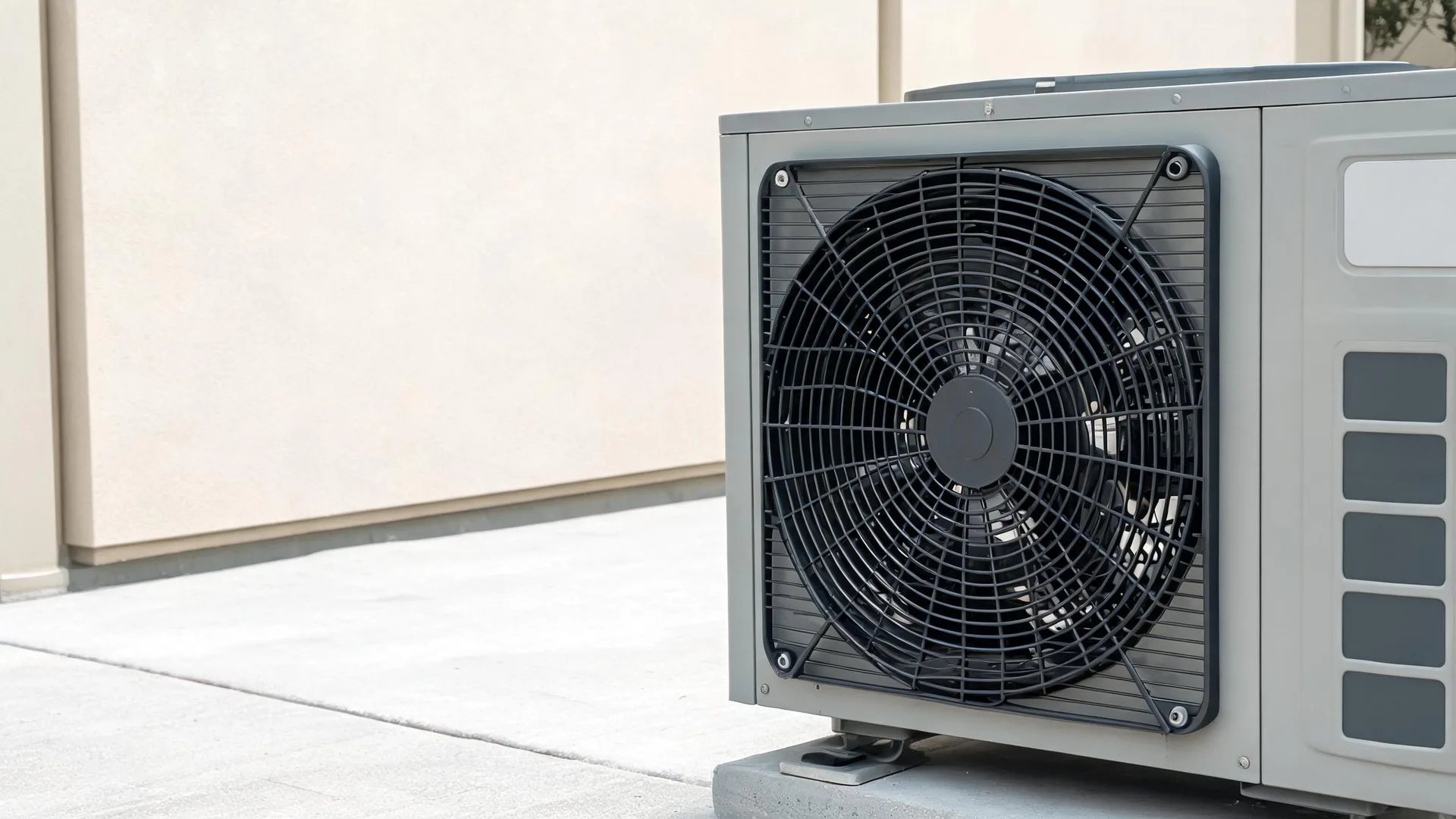
Your outdoor unit sits outside through all of it, exposed to hail and wind-blown debris. A heat pump also handles both your heating and cooling, so when the power goes out, you lose your only source of heat along with your AC. Where the unit goes and how it's protected matters here.

7 months
October through April, your system heats
4 months
June through September, it cools
27°F
the average winter night it heats against
87°F
the average summer afternoon it cools against
Isometric cutaway illustration of a single-story house showing interior rooms, ceiling ductwork connected to an air handler, and an outdoor condenser unit linked by a line set.
Your system heats October through April and cools June through September.

NOAA nClimDiv, 1991–2020 normals

Heat pumps here run heat from October through April, about seven months a year.

Get the install done before October and you pick the schedule instead of losing heat on a cold night.

This is a lot of machine for the weather to test

100 damaging wind events from 2015 to 2024
68 hail events from 2015 to 2024
Power here costs 14.78 cents per kilowatt-hour

Electricity heats 62.2% of the homes in Stone County, more than any other fuel. Bottled or tank LP gas comes in second at 26.1%, and gas heat accounts for only 5.3% of homes here. A heat pump runs on electricity, so it fits the setup already in place in most houses around Kimberling City. That matters for an install, because it means less work rerouting fuel lines or adding gas service. It also means your heat depends on the grid the same way your neighbors' heat does, which is why the outage risk here runs through the whole house, not just the air conditioning.

Plan the install around the outages, not just the storms

The outdoor unit needs a spot that keeps it clear of falling branches and wind-blown debris, not just a flat pad. If you want backup power for heat during an outage, that's a decision made at install, not after. Get that settled now and the system is ready for whatever this county sends it.

Find a contractor
A white mini-split heat pump outdoor unit mounted on a concrete pad beside a gray-sided house, surrounded by gravel and green shrubs.

Running nearly year round, in weather that doesn't let up

A heat pump here cycles on in both directions, cooling in the sticky months and carrying the only heat you've got the rest of the year. That's close to year round work, with hail and wind in the mix on top of it. Ask the contractor about a surge protector for the outdoor unit and a cover or guard that still lets it breathe. Get the sizing right too. A unit too big for the house will short cycle, and one too small will run flat out on the hardest days and still fall behind.

Sizing comes from a load calculation, not the old unit's label

A contractor works out heat pump size from the house itself: square footage, insulation, window area, ceiling height, how much shade the place gets. Matching whatever size was there before just copies a guess someone else made years ago. The old unit might have been wrong from the start, or the house might have gotten new windows or insulation since it went in.

Wrong either direction causes real damage

A unit too big for the house cools or heats the air fast, shuts off, then kicks on again a few minutes later. That short cycling wears on the compressor and never runs long enough to pull humidity out of the air. A unit too small runs constantly on the hardest days and still can't keep up, which means more strain on the parts that keep it running and a house that never quite feels right.

What a heat pump installation costs comes down to more than the equipment itself. Sizing is the first driver: a contractor runs a load calculation on the house, and the right size costs what it costs, not what a bigger or smaller unit would. Ductwork matters too. If the existing ducts are undersized, leaky, or routed for a different kind of system, bringing them up to the job adds work the equipment price doesn't cover. The electrical side can factor in as well, since a heat pump draws differently than a gas furnace and the panel or wiring may need to support that before the unit ever turns on. Where the outdoor unit goes, how accessible the attic or crawlspace is, and whether the old system is a straight swap or a redesign all shape the labor side of the job.

Stone County falls in climate zone 4A, which asks real work of both heating and cooling, not just one or the other. Any split-system heat pump installed here has to meet the federal minimum if it was built on or after January 1, 2023: at least 14.3 Btu of cooling for every watt-hour it uses, and at least 7.5 Btu of heat for every watt-hour in winter. That floor narrows what a contractor can put in. It also means the equipment on the market now is already built for a climate that swings both ways, which is exactly what this county does to a system.