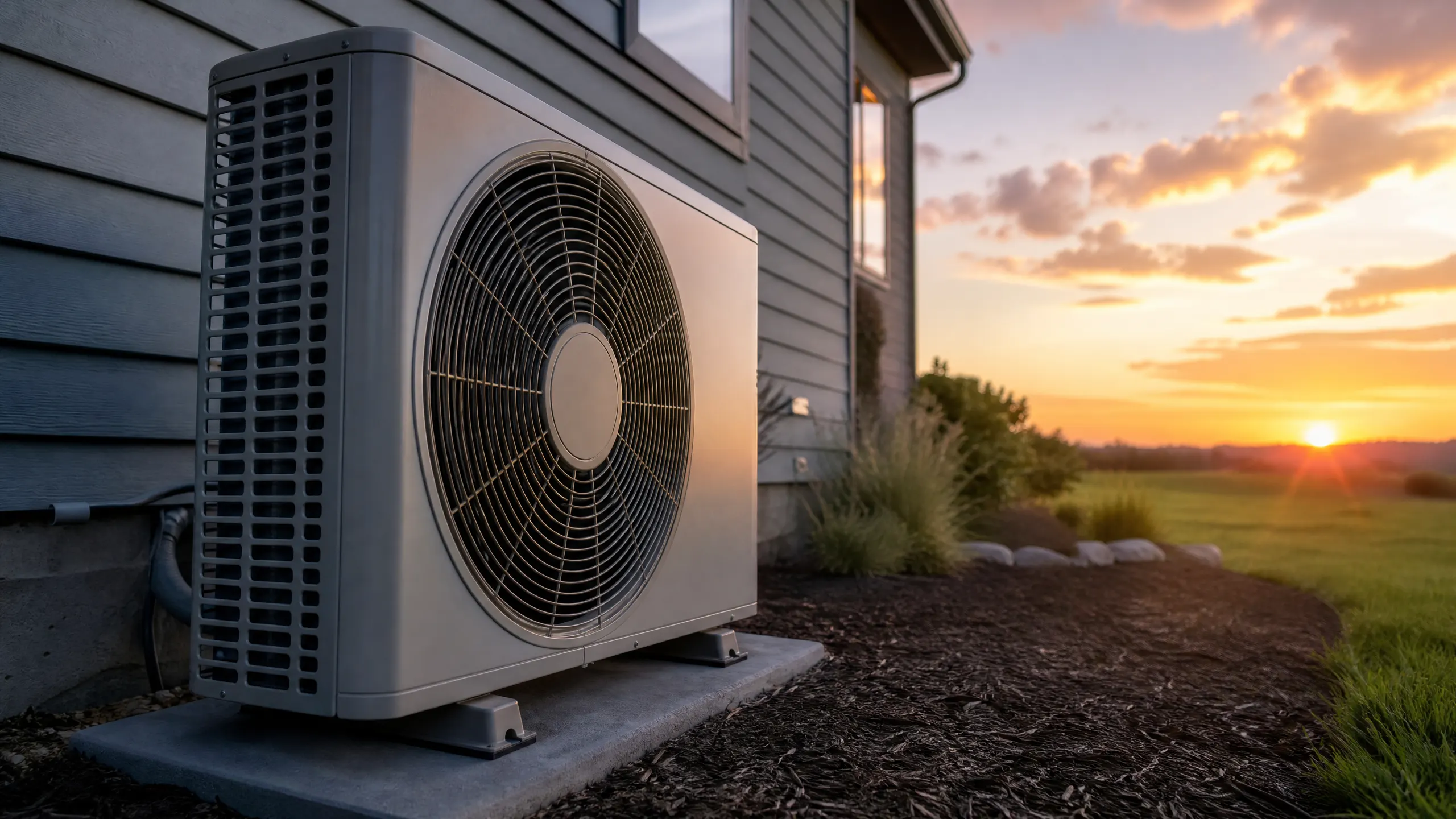





A grey residential air-conditioning condenser unit mounted on a concrete pad beside a house, photographed at sunset.

Heat Pump Installation in Kansas City, MO

Tell us about the job

Takes about a minute. No obligation.

New system or replacementHeat PumpJackson County, MO
Step 1 of 2

What ZIP code is the job in?

Jackson County saw 367 severe weather events between 2015 and 2024. That includes 212 damaging wind events, 127 hail events, and 16 tornadoes. An outdoor heat pump unit sits outside through all of it, exposed to hail and flying debris in a way a furnace tucked in a basement never is. Winter storms hit too, 10 of them over that same stretch, the kind that knock out power along with the snow and ice. Statewide, close to one in five households went at least a day without power in 2024. A heat pump needs electricity to run at all, so where it goes and what backs it up are part of the decision, not an afterthought.

7 months
October through April, your system heats
5 months
May through September, it cools
23°F
the average winter night it heats against
86°F
the average summer afternoon it cools against
Isometric grey-toned illustration of a cutaway house showing interior rooms, ceiling ductwork and an air handler, connected by lines to an outdoor condenser unit beside the building.
Your system heats October through April and cools May through September.

NOAA nClimDiv, 1991–2020 normals

Half the houses in Jackson County went up in 1970 or earlier.

An install crew working on a house that old is fitting a heat pump to wiring and ductwork nobody designed for one.

This county throws weather at outdoor equipment most places don't see

212 damaging wind events from 2015 to 2024
127 hail events from 2015 to 2024
Power here costs 13.55 cents per kilowatt-hour

Heat here runs October through April, then cooling takes over in May. That only leaves April and September as months when the system isn't carrying the load. An install done in one of those windows gets a full check and a proper setup, not a rushed one. Wait for a breakdown in the middle of winter or summer and the crew is working against whatever the weather is doing that week. Given how often severe weather hits this county, a unit put in on your schedule, tested before it has to perform, is worth more than one put in during an emergency.

Plan the install around the weather this county actually gets

A contractor can site the outdoor unit where it's shielded from wind and flying debris, and go over backup options for the nights power is out. Get that settled during the install instead of during the next storm.

Find a contractor
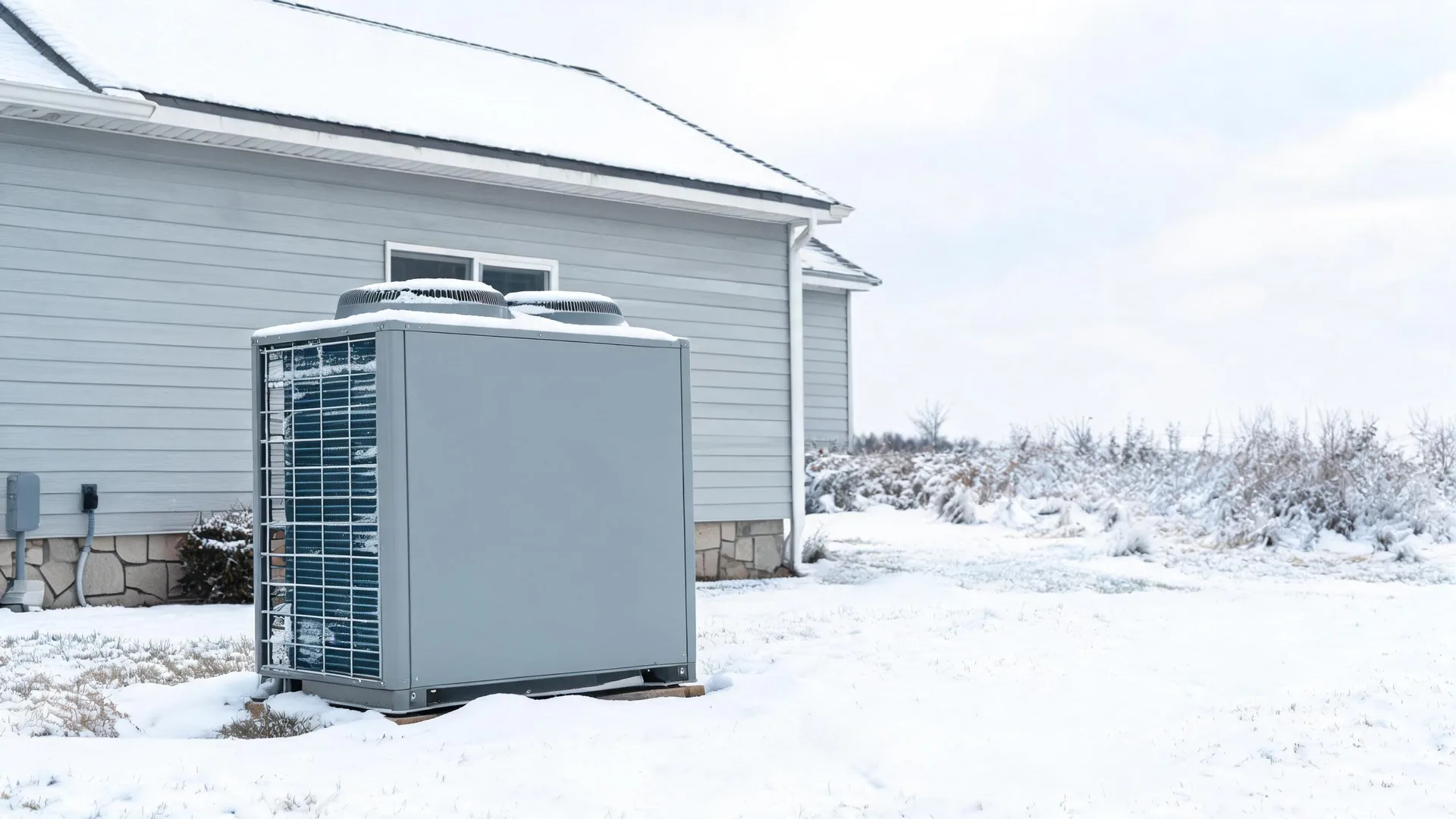
A gray heat pump outdoor unit mounted on a concrete pad next to a residential house with lap siding and stone accents.

The house was built for a different system

If your place was built in 1970 or earlier, the panel and the ductwork were sized for whatever heated the house before, not for a heat pump. A heat pump asks more of both. The install crew needs to check what the panel can carry and whether the ducts can move the air a heat pump puts out. That check happens once, during the install. Get it right then and the system runs the way it's supposed to for as long as it's in the ground.

The outdoor unit is half the job, not an add-on

A heat pump has two main pieces, the outdoor unit and the indoor coil, and both have to be sized to the house together. Get that sizing wrong and the system either short cycles or can't keep up on the hardest days. The line set connecting them, the refrigerant charge, and the electrical whip running power to the outdoor unit all factor into what the crew has to do on site, and none of that shows up until someone's out there measuring the actual house.
Ductwork decides more than the equipment does

A heat pump moves a different volume of air than a furnace alone, and older duct runs built for a different kind of heat are not guaranteed to handle it well. Undersized returns or leaky runs make the system work harder for less comfort, no matter how good the outdoor unit is. Checking the ducts and sealing or modifying what's there adds labor the equipment price alone doesn't cover, and it's the kind of work that only turns up once someone opens the system up.

A heat pump has to be sized to the house, not picked off a chart by square footage alone. The load calculation looks at how much heat the house loses in winter and gains in summer, factoring in insulation, window area, ceiling height, and how much sun hits the place through the day. Oversize the unit and it short cycles, running in bursts that cool or heat the air but never run long enough to pull moisture out or settle into a steady temperature. Undersize it and it runs flat out on the worst days and still can't keep up, while wearing down faster from the strain. Either mistake shows up as a comfort problem first and a bill problem second. The only way to get the number right is a room by room calculation done on site, not a guess based on the system it's replacing.

Gas heats 69.5% of homes in Jackson County. Electric heat covers another 27.2%, and a small slice runs on bottled or LP gas. A heat pump works alongside either setup, since it's an electric system that can pair with existing gas furnace as backup or run on its own. For a house already wired for electric heat, the swap is more direct. For one of the many gas-heated homes here, adding a heat pump means the installer is figuring out how the two systems hand off to each other, not just setting a new box outside.