A lit residential street at dusk featuring large two-story brick houses with glowing windows, mature trees, and a street lamp.

Heat Pump Installation in Joplin, MO

Tell us about the job

Takes about a minute. No obligation.

New system or replacementHeat PumpJasper County, MO
Step 1 of 2

What ZIP code is the job in?

Jasper County gets hit often

232 severe weather events struck Jasper County between 2015 and 2024, including damaging wind, hail and tornadoes. An outdoor heat pump unit sits out in that weather year round, so where it goes and what shields it matters.


The power doesn't always hold

19% of Missouri households lost power for a full day or more in 2024. A heat pump runs on electricity, so an outage means no heat and no cooling until it's back on. Worth planning for before the install, not after.

7 months
October through April, your system heats
5 months
May through September, it cools
27°F
the average winter night it heats against
88°F
the average summer afternoon it cools against
Isometric grayscale illustration of a cutaway single-story house showing interior rooms, ductwork and an air handler, an exterior condenser unit connected by lines, and dark solar panels on the roof.
Your system heats October through April and cools May through September.

NOAA nClimDiv, 1991–2020 normals

The efficiency rating on the label is a comparison, not a promise of what you'll see in the house.

A higher-rated heat pump costs more to buy and less to run, so the label is really showing you a trade-off.

Electricity here runs 12.91 cents a kWh, so a high-efficiency model saves less than it would elsewhere

Power costs 12.91 cents a kWh statewide
124 damaging wind events from 2015 to 2024
82 hail events from 2015 to 2024

Jasper County sits in zone 4A. Any split-system heat pump installed here has to meet a federal minimum of 14.3 SEER2 for cooling and 7.5 HSPF2 for heating if it was built after January 2023. That floor narrows what a contractor can offer you. It also gives you something to check a quote against, since a unit rated below that shouldn't be on the table at all. Going above the minimum is a choice, not a requirement, and whether it's worth it depends on what you want out of the system. Ask what rating a proposed unit carries and why that one.

Have it in before May

Cooling starts in May here and heat starts back up in October, so this system barely gets a rest. Putting it in during April means it's tested and running before the first hot day, not during one.

Find a contractor
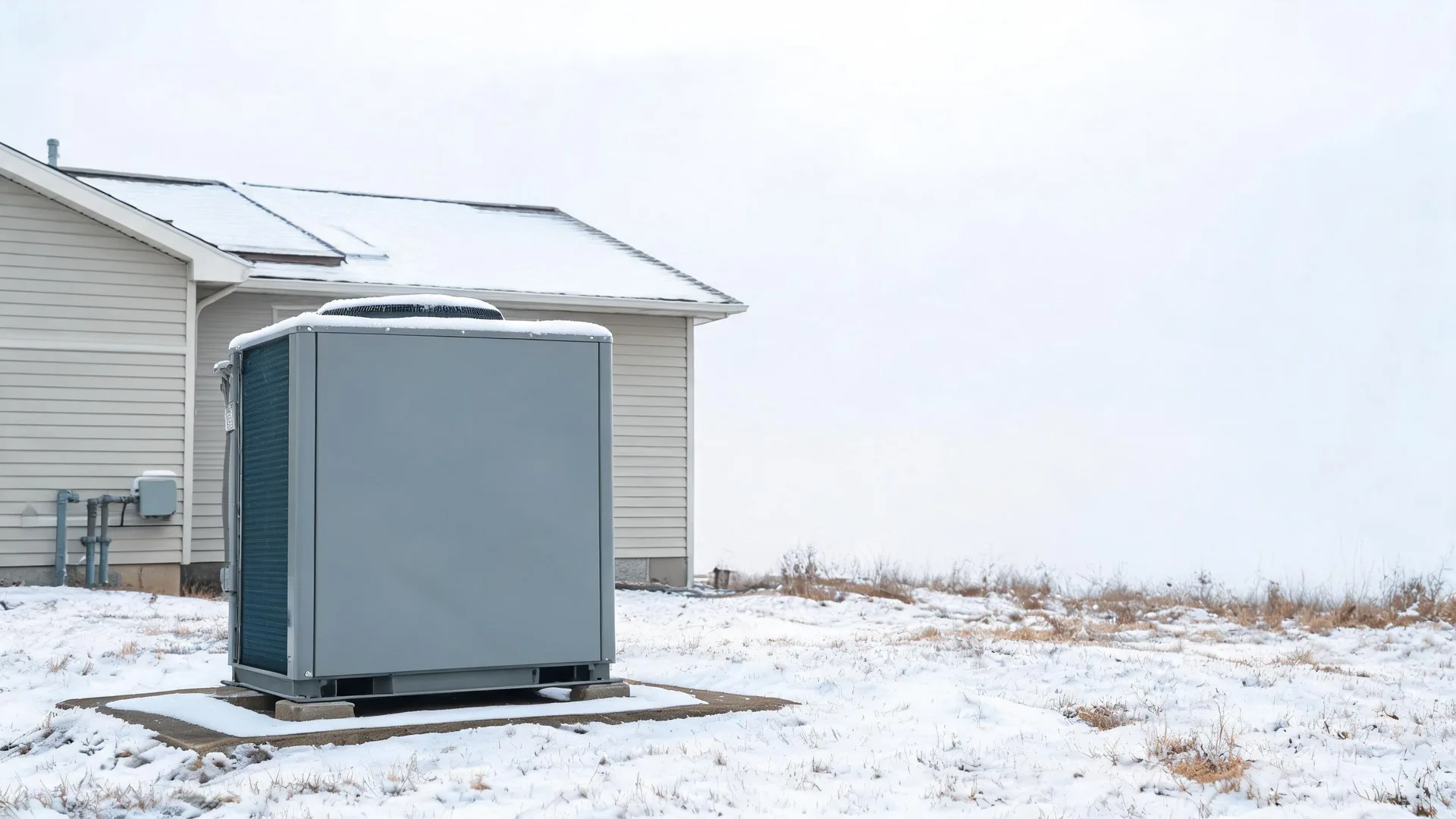
A dark gray heat pump unit mounted on a concrete pad next to a house with gray siding and a stone veneer wall.

Taking out what's there

Pulling out the old system is its own job, separate from setting the new one. A straight swap means disconnecting the refrigerant lines, the electrical whip and the condensate drain, then unbolting the old outdoor unit from its pad and the indoor coil from the plenum. If the old system used a different refrigerant than the new one calls for, the line set usually has to come out too, not just get reused. Old refrigerant has to be recovered into a tank, never vented, so a contractor brings the equipment for that as part of the job. The pad underneath often stays if it's level and not cracked, and the new unit sets right on it. Wiring sometimes needs updating even when the pad doesn't, since a new heat pump may draw differently than what was there before. None of this is guesswork for a licensed contractor, but it's worth asking what happens to the old unit and whether removal is already part of the quote.

Bigger isn't better

A heat pump sized too large for the space cools or heats it fast, then shuts off before it finishes pulling moisture out of the air. The room feels clammy even at the right temperature, and the compressor spends its life starting and stopping instead of running steady.

The size comes from a load calculation

A contractor works out the right size by looking at the square footage, the windows, the insulation and the orientation of the house, not by matching whatever was there before. The old system may have been wrong from the day it went in, so it's a starting point to check, not a number to copy.

What a heat pump installation costs comes down to more than the equipment sitting outside. The line set has to match the unit, and if the old lines carry the wrong refrigerant for the new system, that copper gets replaced, not reused. Ductwork matters just as much as the equipment. A heat pump moves a different volume of air than some older systems, and undersized or leaky ducts make a properly sized unit struggle no matter how good it is. Electrical work is often part of the job too, since the new unit may call for a different circuit than what's already run to that spot. And the indoor part of the system, the air handler or the coil, has to be matched to the outdoor unit for the whole thing to perform the way it's rated. None of these show up on the nameplate, but they shape what the job actually involves.

Installation day starts with the old system already disconnected, since the swap can't happen with both sitting there at once. A contractor sets the new outdoor unit on the pad, runs or reuses the line set, and connects the electrical whip before touching the indoor side. The indoor coil or air handler goes in next, matched to what's now sitting outside. Once everything's connected, the lines get pressure tested for leaks before any refrigerant goes in, since a leak found after charging means pulling it all back out and starting the charge over. The system gets charged, then run through both heating and cooling so the contractor can check airflow at the vents and confirm the thermostat is actually talking to the unit. Ductwork or electrical work beyond the swap itself adds to the day.