




A row of dark-sided buildings with brown shingled gable roofs behind trimmed hedges, with a mown lawn in the foreground and leafy trees under an overcast sky.

Heat Pump Installation in Jefferson City, MO

Tell us about the job

Takes about a minute. No obligation.

New system or replacementHeat PumpCole County, MO
Step 1 of 2

What ZIP code is the job in?

Most homes in Cole County heat with electricity, 56 percent of them. Utility gas accounts for another 31.8 percent, with bottled or LP gas making up most of the rest. A heat pump fits naturally into a home already wired for electric heat, since it runs on the same fuel and usually the same electrical service. If your home falls into that larger group, installation often means working with what's already there rather than adding a gas line or rethinking how the house is fed.

7 months
October through April, your system heats
5 months
May through September, it cools
25°F
the average winter night it heats against
87°F
the average summer afternoon it cools against
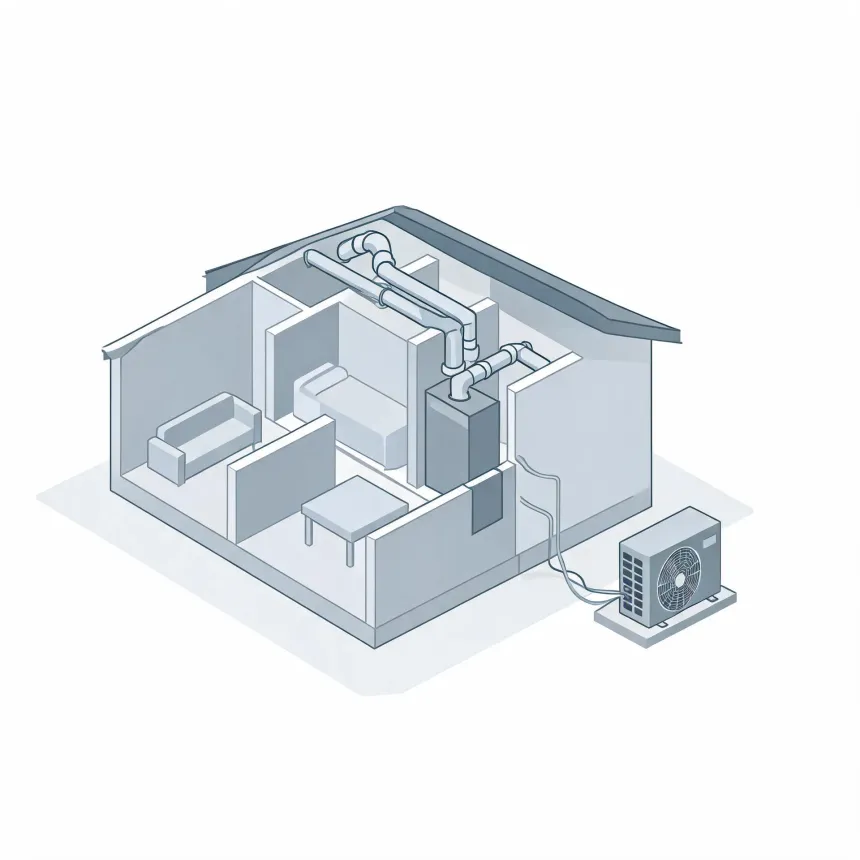
Isometric line illustration of a cutaway house showing interior rooms with furniture, ceiling ductwork connected to an indoor air handler, and a line running outside to an outdoor condenser unit.
Your system heats October through April and cools May through September.

NOAA nClimDiv, 1991–2020 normals

A heat pump has to be sized to the house, not picked off a shelf.

Getting that size right means a load calculation, a look at the ductwork, and sometimes panel work before the unit goes in.

Jefferson City doesn't call for anything bigger or special

Power costs 12.91 cents a kWh statewide
Climate zone 4A
Cooling runs May through September
Get it in before the season needs itSeptember is the month to plan ahead of heat, April ahead of cooling.

Cole County sits in zone 4A, a mixed climate that asks real work of a heat pump in both directions, humid summers and real winter cold. Any split-system heat pump installed here has to meet 14.3 SEER2 for cooling and 7.5 HSPF2 for heating. That's a federal floor, not a local add-on, so it holds whether the contractor is quoting a mid-range unit or something higher. A system that clears those numbers is built to handle the swing this county sees across the year. Ask what SEER2 and HSPF2 rating a quoted unit carries before you compare prices, since a unit priced lower sometimes sits right at the minimum.

Go with the standard fit

A standard size and efficiency fit fine here. There's no local reason to go bigger or pricier.

Find a contractor
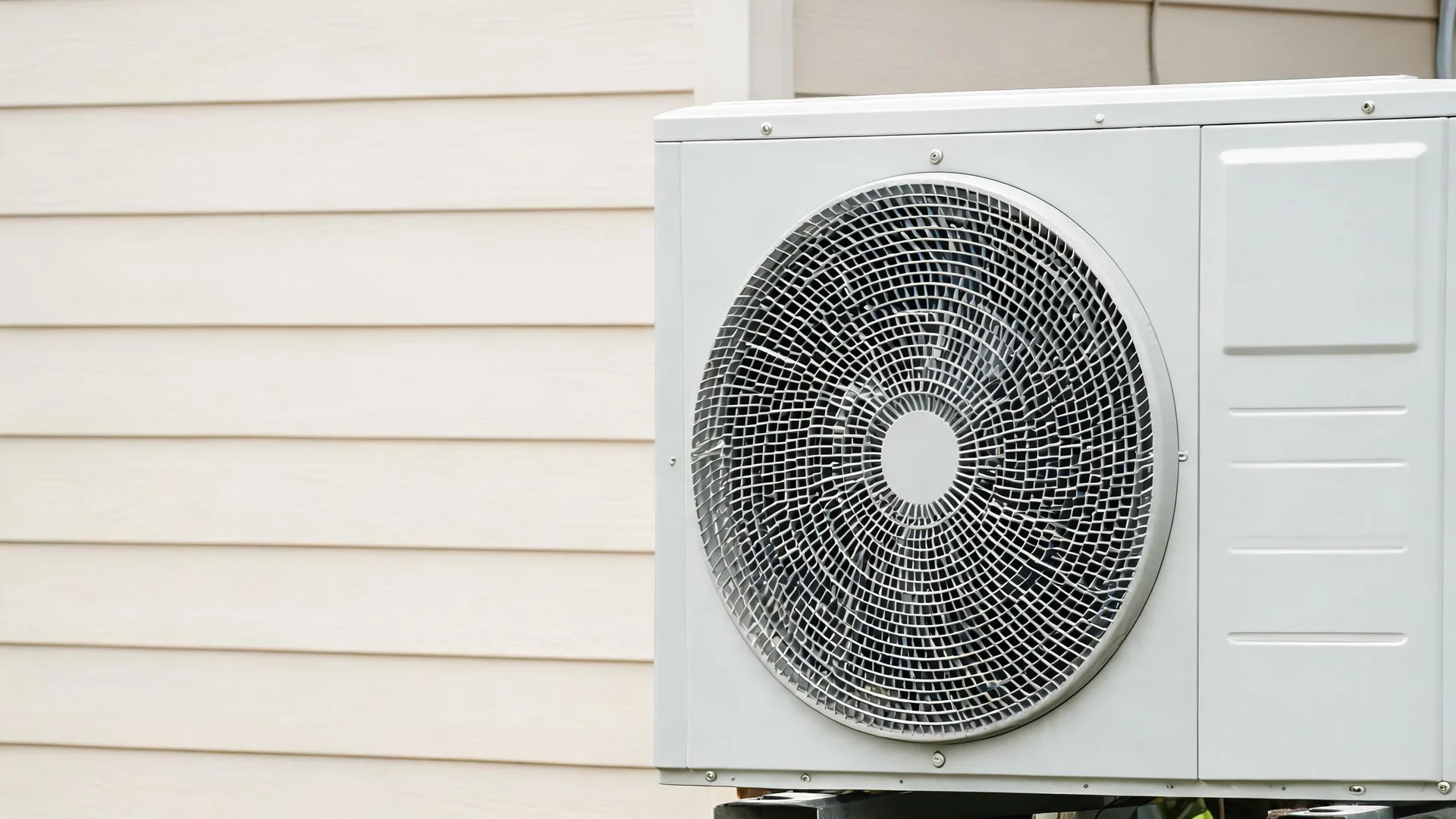
A gray heat pump outdoor unit mounted on a concrete pad next to a residential house with lap siding and stone accents.

What happens to the old system

The old system doesn't get a slow retirement. Once the new heat pump is in and running, whatever was heating and cooling the house before comes out, usually the same day. If it was a furnace and AC setup, the furnace gets disconnected from the gas line or electric supply, and the condenser outside gets unhooked from its refrigerant lines. A straight swap from an old heat pump is simpler, since the new one just takes the old one's place on the pad and at the air handler. Refrigerant in the old outdoor unit has to be recovered properly before it's disconnected, not vented, so factor that into the teardown. The ductwork usually stays, since it's doing the same job either way, carrying air, not making heat or cooling it. Whoever hauls the old equipment away should be handling the refrigerant and any components separately from scrap, since that's regulated. If the old system used a different fuel, there may be a line or tank to cap or remove too.

The rating is a ceiling, not a guarantee

SEER2 and HSPF2 numbers come from lab tests run under fixed conditions, a set temperature, a clean coil, a system running exactly as designed. A real system in a real duct network rarely hits that peak every day. Loose duct joints, a dirty coil, or a refrigerant charge that's off all pull actual performance below the rated number, even on a high-efficiency unit.
One rating for cooling, another for heat

SEER2 tells you how the heat pump performs pulling heat out of the house. HSPF2 tells you how it performs putting heat into the house. A unit can run strong in one direction and only middling in the other, so it's worth looking at both ratings rather than judging the system off whichever one looks better on the spec sheet.

Sizing a heat pump means working out how much heat the house loses when it's cold out and how much it gains when it's hot, then matching the equipment to that, not to the size of the unit it's replacing. A contractor runs a load calculation room by room, weighing window area, insulation, ceiling height, and how the place sits relative to the sun. Skip that and guess instead, and the system ends up wrong one way or the other. Too big, and it blasts the house to temperature fast, then shuts off, cycling on and off instead of running long steady stretches. That short cycling means it never pulls enough moisture out of the air in summer, so the house feels clammy even when the thermostat says it's at temperature. Too small, and it runs flat out on the coldest and hottest days and still can't keep up, leaning hard on backup heat strips that work a lot harder than the compressor was ever meant to. Either way, the fix isn't a bigger unit. It's the right one for that house.

Installation day starts with the crew setting the outdoor unit on its pad and running the line set to wherever the indoor coil ties in, either a new air handler or the one already in the house. Those refrigerant lines get brazed, then pressure tested before any refrigerant goes in, since a leak is a lot easier to find and fix before the system is charged than after. Electrical work usually happens alongside that, giving the heat pump its own circuit and running thermostat wiring if it's not already in place. Once everything's connected, the system gets charged to the weight the manufacturer specifies, not just run until the pressures look close. Then it gets tested in both directions, heat and cooling, with the crew checking temperatures at the vents and listening for anything that doesn't sound right. A system wired and charged correctly should start up smoothly, hold a steady temperature, and switch between heating and cooling without hesitating.