







A nighttime street view of several illuminated two-story red brick homes with front porches, flanked by a large tree.

Heat Pump Installation in Hannibal, MO

Tell us about the job

Takes about a minute. No obligation.

New system or replacementHeat PumpMarion County, MO
Step 1 of 2

What ZIP code is the job in?

Gas heats 55.2% of homes in Marion County, most of them with a furnace burning utility gas. Electricity is next at 31.1%, and LP gas makes up another 11.4%. A heat pump works differently from all of these. It moves heat instead of burning fuel or using resistance coils, and it handles cooling too, so it replaces both a furnace and an AC condenser in one system. If your home runs on gas now, switching means new ductwork connections and likely an electrical upgrade to run the unit. If you're on electric heat already, the swap is more straightforward since the wiring is closer to what a heat pump needs.

7 months
October through April, your system heats
4 months
June through September, it cools
22°F
the average winter night it heats against
85°F
the average summer afternoon it cools against
Isometric line illustration of a cutaway single-story building showing interior rooms, ceiling ductwork, an indoor air handler, and an outdoor condenser unit connected by refrigerant lines.
Your system heats October through April and cools June through September.

NOAA nClimDiv, 1991–2020 normals

Missouri homes paid 12.91 cents per kilowatt-hour in 2024.

A heat pump sized right for your home is the way to keep that rate from costing you more than it should.

Half the homes in Marion County were built in 1971 or earlier, and a heat pump has to work with the house that's already there

Half the homes here were built by 1971
Winter nights average 22°F
Power costs 12.91 cents a kWh statewide
Get it in before OctoberHeat runs October through April here, so September is the month to have it ready.

Winter here gets cold. Overnight lows average 22°F across December, January and February, and Marion County sits in zone 5A, a cool climate where heating does most of the work over the year. That's within range for a heat pump, but it means the system has to be sized for real heating demand, not just for summer cooling. A standard size and efficiency unit, matched to your home's square footage and duct layout, handles this climate fine. There's nothing about the cold here that calls for oversizing the unit or paying for a higher-tier model than the house needs.

The minimum efficiency is set. See what else qualifies.

Any split-system heat pump installed here now has to meet 14.3 SEER2 for cooling and 7.5 HSPF2 for heating. That's the federal minimum as of January 2023, and it applies everywhere, not just in cold climates like this one. There's also a federal tax credit available for qualifying heat pumps, worth knowing before you settle on a system.

Find a contractor
A man in a gray T-shirt and tan work pants, seen from behind, carries a worn canvas tool bag up concrete steps toward a blue front door of a house with gray siding and a potted shrub.
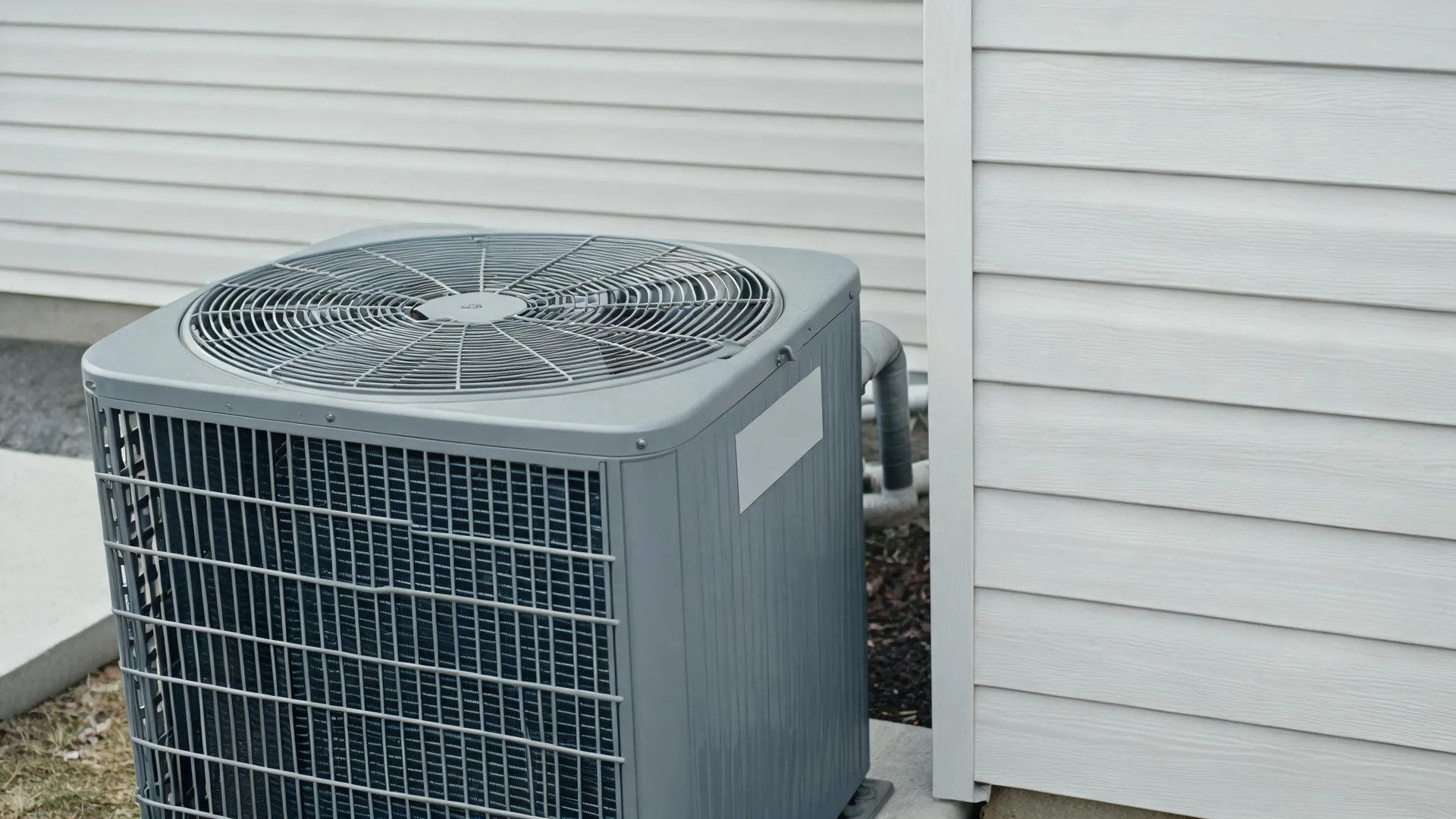
A white mini-split heat pump outdoor unit mounted on a concrete pad beside a gray-sided house, surrounded by gravel and green shrubs.

Sized for the house, not guessed at

A heat pump that's too big cools the room fast and shuts off before it pulls the moisture out of the air, so the space feels clammy even at the right temperature. It also cycles on and off more, and every start draws harder on the compressor than running steady does. Too small, and it runs flat out on the coldest and hottest days without ever catching up, so the backup heat kicks in more than it should and the house still won't hold its temperature. Getting the size right starts with a load calculation, not a square footage chart. A contractor measures the walls, the windows, the insulation, the ceiling height, which way the house faces, and works out how much heat it loses in winter and gains in summer. Houses the same size can need different sized units if one has more window area or older insulation. The duct layout matters too, since the blower has to move the right amount of air through the sizes already in place, or get modified where it can't. None of this is guesswork a homeowner can do by looking at the old unit's label, because the old one may have been sized wrong from the start.

The unit is the smaller part of the bill

A heat pump installation covers more than the outdoor unit and the air handler. Line sets have to be run between them, and if the old system used a furnace, that means new refrigerant lines where gas pipe used to be. The electrical panel often needs a new circuit sized for the compressor, and some panels need upgrading before they can take it. Ductwork gets inspected too, and any run that's leaking or undersized for the new airflow gets fixed as part of the job, not after.
Removal and disposal count as work

Pulling out the old furnace or condenser, capping off gas lines safely, and hauling away the old equipment all take time on site before the new system goes in. A straight swap, same fuel type, same spot, same ductwork, goes faster than a switch from gas to electric. The more the house has to change to accept the new system, the more labor the job carries, separate from whatever the equipment itself costs.

If the old system was a furnace, it gets disconnected from the gas line and the line gets capped off safely before anything is removed. The furnace itself, the coil above it, and the outdoor condenser all come out, usually cut apart or unbolted in sections since they don't fit through a door whole. Refrigerant in the old condenser has to be recovered into a tank rather than vented, that's a legal requirement, not an option. Once the old equipment is out, haul-away is part of the same visit rather than a second trip. Copper line sets from the old system are usually pulled too, since the new heat pump needs its own sized for the unit going in.

When you're comparing quotes, ask what SEER2 and HSPF2 numbers each system carries, not just the brand or the price. Ask whether the quote includes a load calculation or just matches the old unit's size, since matching the old size only works if the old system was sized right to begin with. Ask what happens to the ductwork, whether it gets inspected and sized for the new airflow or left as is. Ask what the warranty covers on the compressor versus the labor, since those often run different lengths and one running out doesn't mean the other has. Ask how the contractor handles the refrigerant lines, whether new ones get run or the old ones are reused. A contractor who answers all of this without hesitating is one who's done the work before, not just sold it.