





An outdoor HVAC condensing unit on a concrete pad next to a beige single-story house with a dark shingle roof.

Heat Pump Installation in Florissant, MO

Tell us about the job

Takes about a minute. No obligation.

New system or replacementHeat PumpSt. Louis County, MO
Step 1 of 2

What ZIP code is the job in?

A heat pump in Florissant has to pull moisture out of the air all summer, and that air sits heavy. The dew point here averages 66°F across June, July and August, which is the kind of mugginess that keeps a system running longer than the thermometer alone would suggest. Then winter comes and it has to reverse and do the opposite job just as hard. The outdoor unit takes all of this standing outside, unprotected. St. Louis County saw 108 damaging wind events and 77 hail events between 2015 and 2024, and the coil and cabinet sit through whatever comes. None of that means skip a heat pump here. It means size it for the house rather than copying whatever was installed last time.

7 months
October through April, your system heats
5 months
May through September, it cools
26°F
the average winter night it heats against
87°F
the average summer afternoon it cools against
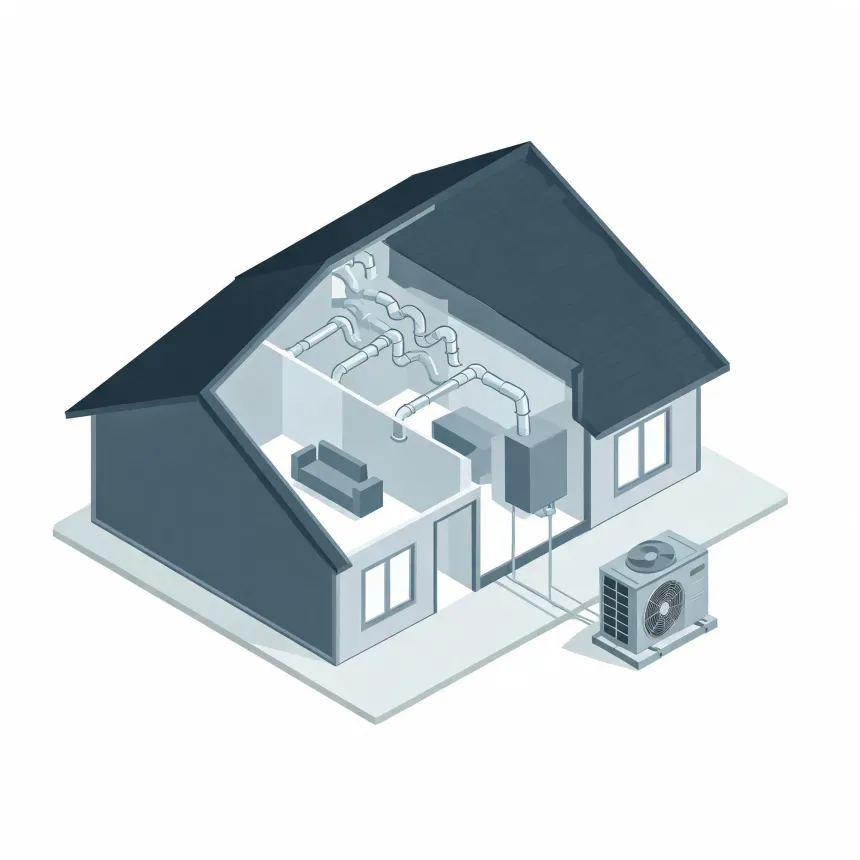
Isometric cutaway illustration of a house showing interior ductwork, an indoor air handler unit, and an outdoor condenser unit beside the building.
Your system heats October through April and cools May through September.

NOAA nClimDiv, 1991–2020 normals

Half the homes in St. Louis County were built in 1969 or earlier.

A heat pump going into a house that old has to be sized for that house, not for whatever was taken out.

Gas heats three out of four homes here, which is why most heat pump jobs in Florissant are replacing electric heat or adding air conditioning to a furnace, not switching a house over

74.6% of homes heat with gas
108 damaging wind events from 2015 to 2024
77 hail events from 2015 to 2024
Storms Here Take the Outdoor Unit Down With the PowerSt. Louis County logged 208 severe weather events between 2015 and 2024, and 19% of Missouri homes lost power for a day or more in 2024.

Florissant sits in climate zone 4A, which the energy code treats as having real heating and real cooling loads, not one or the other. Any split-system heat pump installed new has to clear federal minimums set for that kind of mixed demand: at least 14.3 Btu of cooling delivered for every watt-hour it draws over the summer, and at least 7.5 Btu of heating for every watt-hour over the winter. Those numbers rule out the low-efficiency units still legal in places that only need to handle one season well. A heat pump that meets them may also qualify for a federal tax credit, which lowers what the installation costs after the fact. The baseline here is already higher than it would be in a milder zone, so the equipment has less room to be the wrong fit twice.

Get This One Sized for Your House, Not the Last One

A heat pump here runs harder every year than the same unit would two states over, and it does that work standing outside through wind and hail. That is the case for getting the sizing right the first time, matched to this house, not to the unit that is already out there. The quote that follows is where that gets decided.

Find a contractor
A gray heat pump condenser unit mounted on a concrete pad against the gray lap-siding exterior wall of a house.

This Runs Most of the Year, So Plan the Swap Before It Picks the Time for You

This machine works nearly every month of the year here. Heat runs October through April, seven months. Cooling picks up in May and runs through September, another five. That leaves April and September doing double duty, closing out one job and opening the next. A system that old or worn does not get to rest much between seasons, and the failures tend to show up right when it is working hardest, a January night when the low sits near 26 degrees, or the first hot stretch in May. Installing before that point means picking the week yourself instead of waiting on a system that picks it for you.

Sizing Comes From a Room by Room Load Calculation

The right size for a heat pump comes from a load calculation, a room by room count of how much heat the house gains in summer and loses in winter. It accounts for square footage, window area, insulation, ceiling height and how the house is laid out. Nobody can look at a heat pump sitting in a yard and tell if it's the right size for the house behind it. The only way to know is to run the numbers for that specific house.
Oversized Fails as Often as Undersized

A heat pump that's too big cools the air fast and shuts off before it pulls the moisture out, so the house feels clammy even at the set temperature. It also cycles on and off more, which wears the compressor faster than a unit that runs steady. One that's too small runs constantly and still can't keep up on the coldest or hottest days. Matching the equipment to the house is what makes it run efficiently and last.

The number on the label, the SEER2 or HSPF2 rating, tells you how much heat the unit moves for the power it draws, not how big a house it can handle. A high rating on a unit that's the wrong size for the house still runs up the power bill, because it ends up cycling wrong or running longer than it should to make up for a poor fit. That rating also comes from lab testing under set conditions, so it tells you how the equipment performs on its best day, not on the coldest night or the most humid afternoon. Two units with the same rating can behave differently once they're installed, because ductwork, refrigerant charge and airflow all affect what the house actually feels. The rating is a starting point for comparing equipment side by side. It's not a substitute for sizing the unit to the house it's going into.

Put the outdoor unit where it has some cover from wind and flying debris, not just wherever the old one happened to sit. A fence line or the side of the house away from the prevailing wind gives it some protection that an open yard doesn't. Ask the contractor about a model with a factory coil guard, since hail has hit this county 77 times between 2015 and 2024, and the coil is the part most exposed to it. Worth asking too is what happens to heat in an outage, since a heat pump needs power to run either direction. Some homes here pair the heat pump with a backup plan for that reason, whether that's a generator or keeping a furnace in place as a second source of heat.