A quiet suburban street at twilight featuring two-story brick homes with illuminated windows and large trees lining the sidewalk.

Heat Pump Installation in Cape Girardeau, MO

Tell us about the job

Takes about a minute. No obligation.

New system or replacementHeat PumpCape Girardeau County, MO
Step 1 of 2

What ZIP code is the job in?

This county sees real storm numbers

Cape Girardeau County logged 160 severe weather events between 2015 and 2024, 120 of them damaging wind and 23 hail. Seven tornadoes touched down in that same stretch. A heat pump's outdoor unit sits outside through all of it.


Power doesn't always hold through a storm

Almost one in five Missouri households went at least 24 hours without power in 2024. A heat pump needs electricity to heat your home and your water, so an outage here is worth planning for before it happens.

7 months
October through April, your system heats
5 months
May through September, it cools
27°F
the average winter night it heats against
88°F
the average summer afternoon it cools against
Isometric cutaway illustration of a single-story house showing interior ductwork, an indoor air handler and furnace unit, and an outdoor condenser connected by a line, on a white background.
Your system heats October through April and cools May through September.

NOAA nClimDiv, 1991–2020 normals

Cape Girardeau County hit 120 damaging wind events between 2015 and 2024.

Summer air here sits heavy, averaging a 67°F dew point, so your heat pump will lean on long cooling runs most years.

Cold starts in October here, so get the new system in before it has to work

Cooling runs May through September
Heat runs October through April
120 damaging wind events from 2015 to 2024

Cape Girardeau County falls under zone 4A, a mixed climate that pushes a system hard in both directions. Any split-system heat pump installed now has to clear a federal floor to be sold at all: 14.3 Btu of heat moved per watt-hour of electricity across the summer, 7.5 Btu per watt-hour across the winter. That floor narrows what a contractor can offer you. It also means the unit going on your pad or your wall already has to handle this county's swing between muggy summers and cold winters, not just one or the other.

Plan for the outage before you need the heat

Pick a spot for the outdoor unit that's covered from falling debris but not boxed in, and ask your contractor how the system handles a power cut, since a heat pump needs electricity to make heat as well as cool air. Working that out before install day means it's settled before the next storm comes through.

Find a contractor
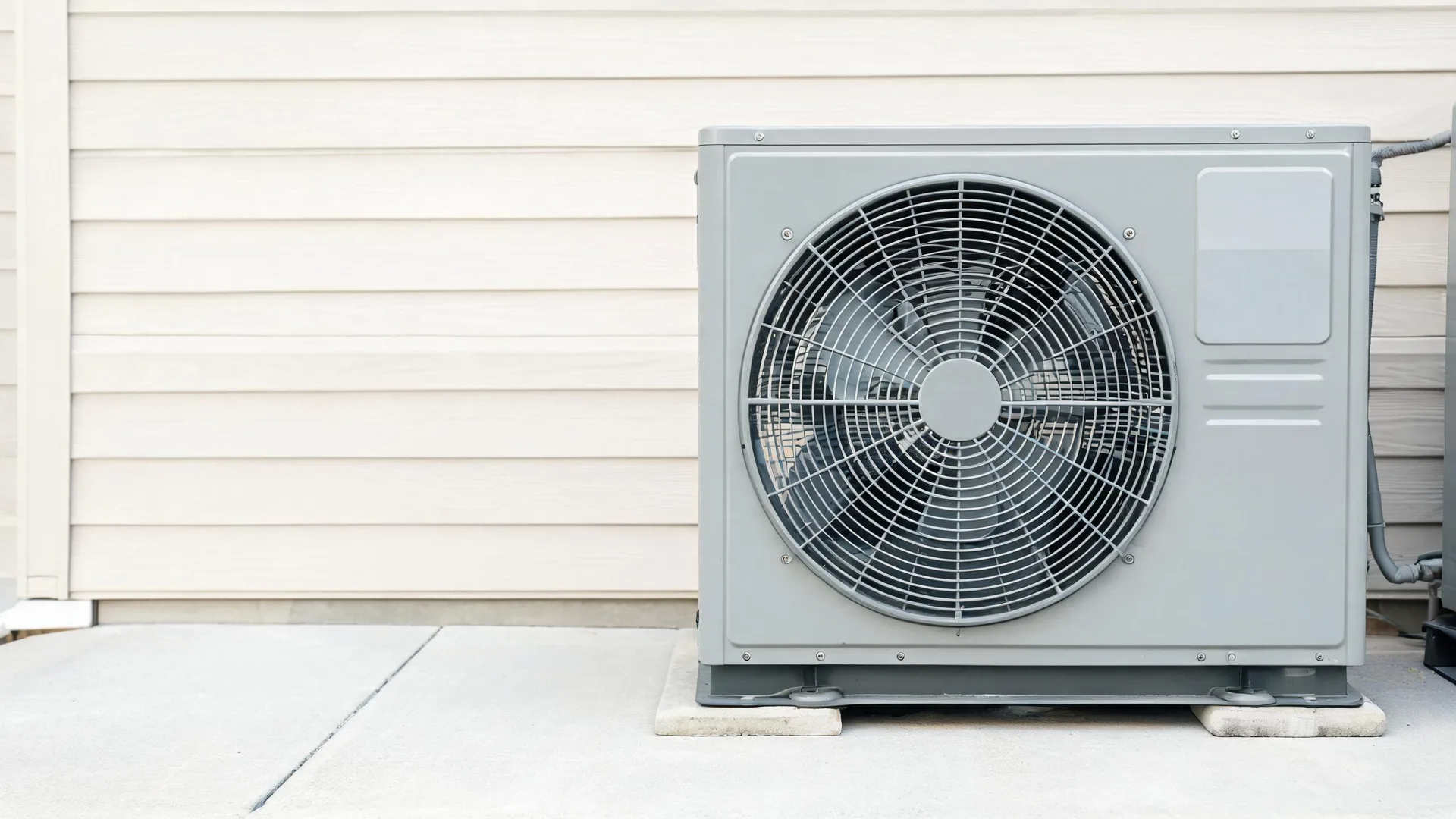
A gray outdoor HVAC unit mounted on a concrete pad beside a house with gray lap siding and a stone foundation.

This unit goes in to run through storms, not around them

This county has averaged a dozen damaging wind events a year for the last ten. A new heat pump installed now is going to sit outside through plenty of them. Ask the contractor about surge protection for the outdoor unit and whether the model you're getting has a track record for coming back on clean after a power cut, not just turning back on. Get that settled at install, not after the first storm trips it.

The rating tells you the ratio, not the bill

That number on the label is a ratio of heat moved to electricity used, measured across a full season. A higher number means the compressor is getting more heat moved per watt-hour it pulls. It doesn't tell you what your bill will look like, because that also depends on how the unit is sized, how it's installed, and how your ductwork handles the air it pushes. A high rating on a poorly installed system can still run worse than a modest rating installed right.

The rating is a lab number, not a storm number

That efficiency number gets measured under steady lab conditions, not during a wind event or a day the grid is strained. It says nothing about how the unit restarts after a power cut or whether the outdoor coil and controls hold up through surges. Two systems with the same rating can differ a lot in how they handle a rough restart. Ask the contractor about that separately, because the label won't tell you.

Sizing a heat pump starts with a load calculation, not a tape measure on the old equipment. A contractor works out how much heat your home loses in winter and gains in summer by looking at wall and ceiling insulation, window area and orientation, and the volume of each room. That number, not the square footage, tells them what size unit to put in. Too big and the system short cycles, running a few minutes at a time, cooling or heating the air fast but shutting off before it pulls the moisture out or evens out the temperature room to room. Too small and it runs constantly during the hardest stretch of summer or winter, struggling to keep up and wearing down faster for it. The right size runs longer, steadier cycles, which is what actually keeps a room comfortable and keeps the compressor from working harder than it has to.

Electricity heats 47.9% of homes in Cape Girardeau County, more than any other fuel, with gas second at 41.3%. If your home is already on electric heat, a heat pump fits the wiring and setup you have now. That matters here because it keeps the replacement simple: no new gas line to run, no venting to rework. Gas is still common enough that plenty of homes here pair a heat pump with an existing furnace instead of replacing it outright. Either way, ask the contractor what your current setup allows before you assume the new unit has to match the old one piece for piece.