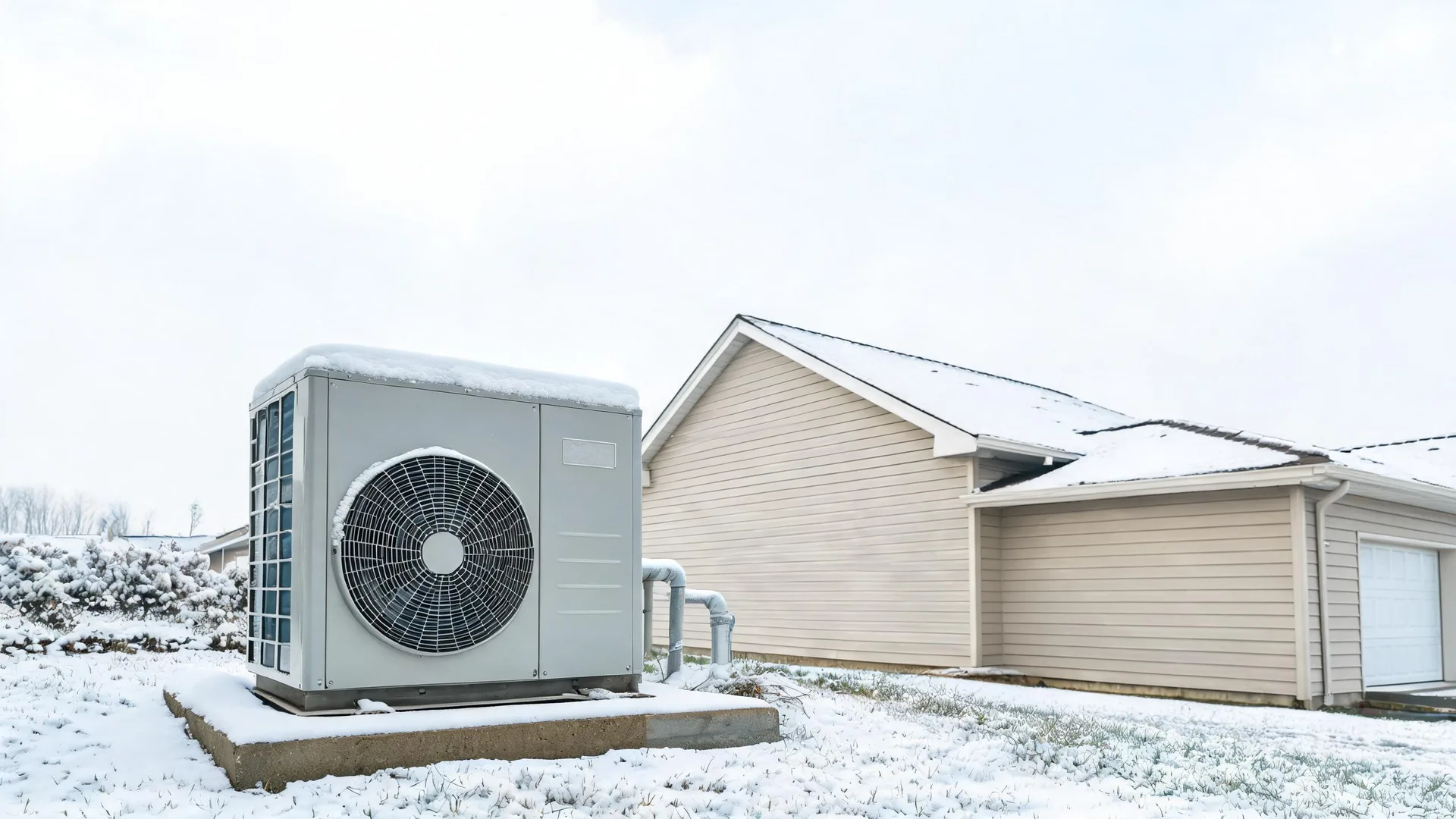
Polk County sees its share of storms
Polk County logged 190 severe weather events between 2015 and 2024. That includes 99 damaging wind events, 72 hail events, and 12 tornadoes. A heat pump installed here deals with more than temperature swings.
Takes about a minute. No obligation.
Polk County logged 190 severe weather events between 2015 and 2024. That includes 99 damaging wind events, 72 hail events, and 12 tornadoes. A heat pump installed here deals with more than temperature swings.
Nearly one in five Missouri households went at least 24 hours without power in 2024. A heat pump needs electricity to heat and cool, and if the home's water heater runs on electricity too, an outage takes that with it.
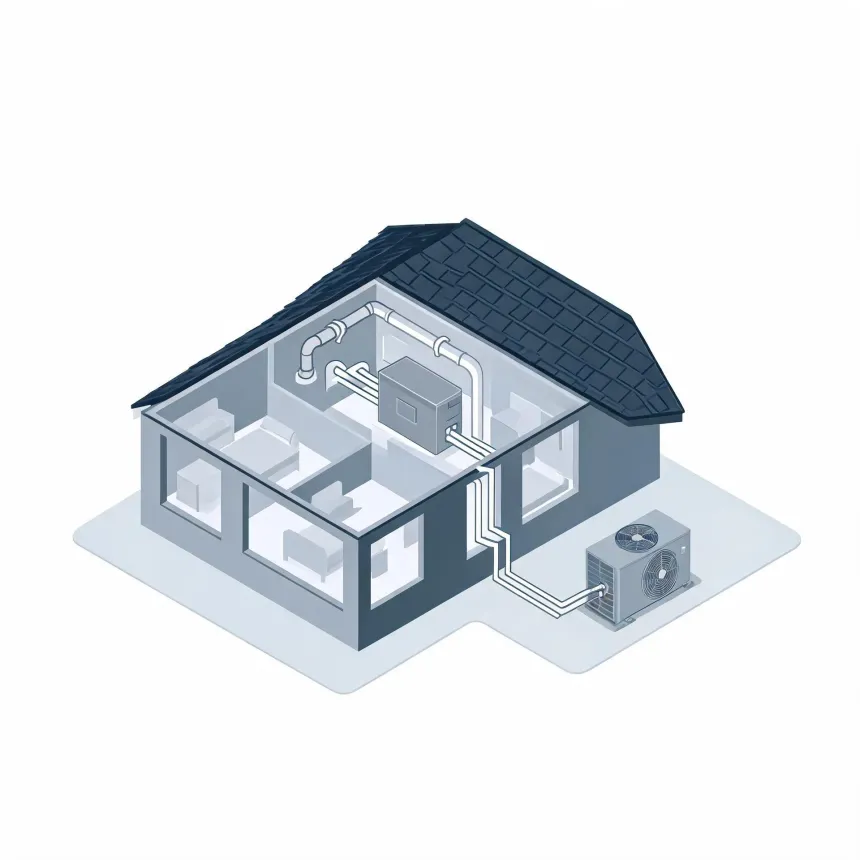
NOAA nClimDiv, 1991–2020 normals
Polk County recorded 72 hail events between 2015 and 2024.
A heat pump installed here has to hold up under storms, not just temperature swings.




Polk County falls under zone 4A in the 2021 energy code, a mixed climate that doesn't let a system coast on either end of the year. Any split-system heat pump installed here now, if built on or after January 1, 2023, has to hit federal minimums: at least 14.3 Btu of heat moved per watt-hour over the summer, and at least 7.5 Btu per watt-hour over the winter. That's the floor, not a suggestion. It narrows which units can legally go into this house. A contractor sizing a system for this address has to work within that standard, not around it.
Where the outdoor unit sits matters here. Keep it clear of falling limbs and set where hail and wind won't make it the first thing hit. Ask what happens to heat and hot water if the power drops for a day. A contractor sizing this job can plan for both before anything goes in the ground.
Find a contractor
This unit sits outside through every month, running the AC all summer and the heat all winter with no break between. That alone wears a system faster than a mild climate would. On top of that it has to sit through what the weather here actually does. Wind has hit this county 99 times between 2015 and 2024, hail 72 times in that same stretch. Each one is a load the cabinet and outdoor coil take before the compressor runs at all. A unit built for a calmer place will show that wear sooner here. Ask what the housing and coil are rated to take, not just how the unit performs on a clear day.
That efficiency number compares the heat moved against the electricity used to move it. A higher rating means the unit does more work per watt-hour. It's measured under set lab conditions, so the number on the label is a ceiling. What the system actually delivers depends on the ductwork, the refrigerant charge, and whether the unit is sized right for the house.
The efficiency rating has nothing to do with how much heating or cooling capacity a system has. A small heat pump can carry a high rating and still not be enough machine for a given house, and an oversized one can carry the same rating and short-cycle instead of running steady. Capacity and efficiency are sized separately, and both have to be right.
Taking out the old system is its own job, separate from setting the new one in place. A heat pump or furnace holds refrigerant, and that refrigerant has to be recovered into a tank before any line gets disconnected, never vented to the air. If the old system ran on a different refrigerant than the new one uses, the line set usually can't be reused, since residue left behind can contaminate the new charge. The indoor coil, the outdoor unit, and any electric furnace or air handler being replaced all come out, along with the old disconnect box and pad if they're not fit to reuse. A contractor should haul away what gets removed. Ask ahead of time whether removal and disposal are part of the job or billed separately, since that affects how the full quote compares to another one.
Installation day starts with a walkthrough, confirming the equipment on site matches what was ordered before anything gets disconnected. From there the old system comes out first, refrigerant recovered, lines and electrical disconnected, the old pad or mounting cleared if it won't be reused. The new outdoor unit goes in on a level pad or bracket, the indoor coil or air handler set in place, and new line set run if the old one isn't fit to reuse. Once everything's connected, the system gets evacuated to pull moisture and air out of the lines before refrigerant goes in, then charged to the weight the manufacturer specifies. The last part is startup: checking airflow, checking the charge, cycling the system in both heating and cooling before the crew leaves. A contractor should walk through the thermostat and basic controls with the homeowner before calling the job done.