Why your heat pump makes noise in a Missouri winter

RepairHeat PumpMissouri
Step 1 of 2

What ZIP code is the job in?

Why does my heat pump make noise in winter?

Cold mornings bring out sounds from a heat pump that it doesn't make in July. A low hum turns into a clank, or the outdoor unit starts clicking on and off more than usual. It's loud enough to notice from inside the house, and when it's your job to keep everyone warm and comfortable, a strange noise on a cold day is the kind of thing you want explained, not ignored.

Most winter noise from a heat pump is the defrost cycle doing its job

A heat pump pulls heat out of outside air, and in a Missouri winter that air carries enough moisture to frost up the outdoor coil. The unit runs a defrost cycle to melt that off, and that's when you hear a change: a whoosh or hiss as it briefly reverses into cooling mode, a clank as metal parts expand and contract, or a louder fan as it ramps up afterward. That cycle is normal on a cold, damp day. What's worth paying attention to is noise that's new, constant, or paired with the unit blowing cold air for long stretches or short-cycling on and off, since those point to a part that's failing rather than the system doing what it's built to do.

A two-story gray horizontal-siding house with multiple gables, a covered front porch with white columns and railing, and a dark front door, fronted by a patchy green and brown lawn under a clear blue sky.

Summer here runs muggy, with the dew point averaging 66°F across June, July and August, according to NOAA. Your heat pump spends those months pulling moisture out of the air along with the heat, and that steady workload wears on the same parts that give you trouble once the cold sets in. A contactor or motor bearing that strained through a sticky July is already weaker going into January. That's part of why the noise shows up in winter even though the unit ran just as hard, or harder, all summer without a sound.

NASA POWER T2MDEW county cells weighted by homes

A woman with long light-brown hair in a gray knit sweater sits in a living room looking off to the side, with a sectional sofa, houseplant, lamp, wooden table and large windows behind her.
A woman in a chunky gray turtleneck sweater sits indoors looking off to the side, with a blurred dining table, chairs, pendant lamp and window behind her.
A woman in a cream knit sweater with her hair in a bun stands near a window, looking off to the side, with a gray sofa, houseplant and open kitchen with pendant lights blurred behind her.
A woman with long brown hair in a cream knit sweater stands near a window, looking to the side, with a white sofa, shelving, and a hallway visible behind her.

Noise that stops by itself

Some sounds are just cold weather working on metal and refrigerant. A light rattle when the unit kicks on, or a few minutes of whooshing air that's louder than usual, often eases off once the system gets going. Defrost cycles bring their own noises too, a hiss or a gurgle as the outdoor coil melts off frost, then a change in tone when it switches back to heating. If the sound shows up, runs a few minutes, and the heat pump keeps keeping the house warm, it's usually not something failing. Write down when it happens and what it sounds like, in case it changes.


Noise that means call someone

A hard clank, grinding, or a buzz that wasn't there last winter points to something wearing out, not just cold air moving through the system. So does clicking that repeats as the outdoor unit struggles to start, or a hum that turns into a squeal. These point to a part under strain, a fan motor, a failing capacitor, ice that isn't clearing. A contractor near you who works on heat pumps through a Missouri winter can tell you which from a description over the phone, and knows what tends to go first on units that run as hard as yours does this time of year.

A woman and a child wrapped together in a thick knitted blanket on a sofa, both with eyes closed, with a lit table lamp and houseplant in the dim background.
An older woman with short gray hair in a cream cable-knit turtleneck sweater smiles while looking to the side in a wooden kitchen, with a round loaf of bread on a board in the foreground and a lit candle by a dark window.

A heat pump that clanks or clicks through a cold snap is still the thing keeping the house warm while everyone's asleep or at the kitchen table. If a bedroom runs cooler than the rest of the house, or the system is cycling on and off every few minutes instead of running steady, that's the strain showing up as comfort you can feel, not just noise you can hear. Ice building up on the outdoor unit and staying there past a normal defrost cycle means it's working harder to pull in the same amount of warm air, and that shows up on the power bill even with Missouri's low rates. Left alone through a hard winter, a part straining under that load is a part more likely to fail outright on the coldest morning of the year, which is exactly when you don't want to be without heat. None of that means the system is done. It means something specific inside it is working harder than it should, and that's worth a look before the next cold snap finds the part that finally gives out.

An outdoor condenser unit on a concrete pad beside a horizontal-sided house, with insulated refrigerant lines running to a wall-mounted box, surrounded by bare dirt.
Before you get your heat pump repair
A gray outdoor condenser unit on a concrete pad beside a light-green sided house, surrounded by mulch, ornamental grasses and a shrub, with mowed lawn in the foreground.
After you get your heat pump repair
A beige outdoor condenser unit on a gray pad beside a house with gray horizontal siding, with refrigerant lines and an electrical disconnect box on the wall, bordered by dark mulch, a stone retaining wall with shrubs, and a paver walkway.

Skip the search

The pro who reaches out is licensed in Missouri.

Fill out one short form instead of calling around.

Skip calling around

Sending the form costs nothing.

Is this noise coming from a room you sleep in?

Walk the house on a cold morning and notice where the sound carries. A clank or a hard clicking from the outdoor unit might reach the kitchen but fade upstairs, or it might travel straight into a bedroom through the wall nearest the compressor. Check the vents in that room too. If the air coming out feels cooler than it should, or barely moves at all, the noise and the weak airflow are likely the same problem. Left alone, a heat pump working harder than it should keeps running longer to hit the thermostat setting, and the room it serves worst is usually the one someone is trying to sleep or get dressed in.

A gray outdoor heat pump unit on a concrete pad beside a house with horizontal lap siding, connected by conduit and a flexible line to a wall-mounted disconnect box, with low shrubs and mulch nearby.
Running steady, the outdoor unit cycles on and off at normal intervals with no clatter from the fan or housing.
An outdoor air conditioner condenser unit on a concrete pad beside a house with horizontal siding above a concrete block foundation, with insulated refrigerant lines and a vertical white pipe on the wall.
Lines resting against the block foundation and a weathered cabinet point to wear that gets louder as the cold sets in.
A dimly lit bedroom at dusk with a made bed, a table lamp on a nightstand, and a condensation-covered sash window with a dark curtain.

It's a few degrees past midnight in January, and the bedroom is cold enough that you've pulled a second blanket from the closet. The vent by the window ticks instead of blowing steady air, then goes quiet for a stretch before the outdoor unit clicks back on with a hard clunk that carries through the wall. You lie there listening for the hum to settle into something normal. It doesn't. The glass is cold against your hand when you check it, and down the hall your kid's door is cracked open, the room on the other side of the house holding its heat just fine while yours doesn't.

Power costs 13.30 cents per kilowatt-hour statewide

At 13.30 cents a kilowatt-hour, a heat pump running rough costs you more to run, not less. A unit that's clicking on and off more than it should, or straining through a clank, is pulling extra power to do the same job. The noise is also a bill you haven't seen yet.

EIA-861 2025 statewide residential average

A gray outdoor heat pump unit on a concrete pad beside a house with horizontal lap siding, with a conduit running to a wall-mounted disconnect box and a green shrub to the left.

Running clean, running quiet

A unit this clean, with clear ground around it and solid mulch, is moving air the way it's supposed to. The disconnect box and conduit are secure, nothing is rattling loose against the siding, and the noise you'd hear from inside stays at a low, steady hum.

An outdoor air conditioning condenser unit with dusty coils sits on a concrete pad against light horizontal siding, with an electrical disconnect box and refrigerant lines on the wall and a shrub and mulch at left.

Years of buildup, louder every winter

Grime on the housing and bare soil pulled back from the pad are signs this unit has sat through a lot of winters without much attention. Caked coils make the fan work harder, and that strain is often where the clank or the clicking is coming from.

A closed silver laptop and a glazed ceramic mug on a wooden table, with a blurred kitchen counter, potted plant, cutting board and window in the background.

A noisy heat pump is telling you something specific

The sound your heat pump makes this winter has a cause, whether that's a loose panel, worn bearings in the fan motor, or something straining in the compressor. It isn't something to wait out until spring. A tech who works on these units all winter can listen to it once and usually tell you which part is wearing out before it fails on the coldest night of the year.

Finding someone for that doesn't have to mean calling around to a handful of companies, explaining the clanking and clicking to each one, then sitting with a stack of quotes trying to guess who's right. A local contractor who knows heat pumps in Missouri winters can take a look, tell you what's worn, and get it fixed. One call, one visit, one answer instead of several you have to sort out yourself.

A wooden table holding a stone vase with a bare branch, two stacked books and a small dark bowl, beside a window with green foliage outside and a sofa in the dim background.
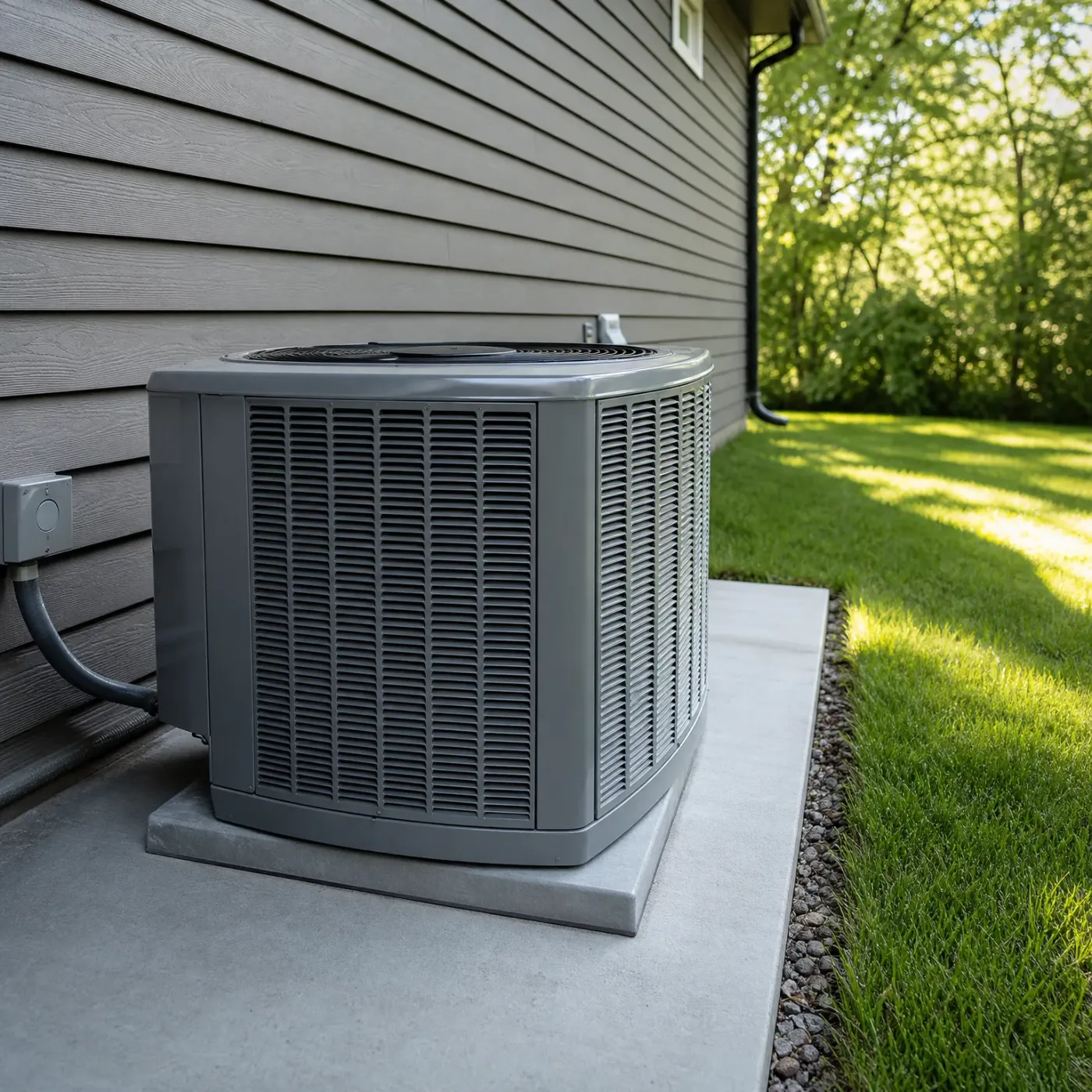
A gray outdoor air conditioner condenser unit on a concrete pad beside a house with horizontal lap siding, with an electrical disconnect box and conduit on the wall, a downspout, gravel edging and a green lawn with trees to the right.

Explain it one time

Fill out one form

Only one pro gets your request, so you hear from one company.

You're not committing to anything by asking.