A two-story black-painted house with a covered front porch and gray shingled roof, framed by large deciduous trees and fronted by a mowed lawn and trimmed hedge.

Furnace Repair in St. Louis, MO

Tell us about the job

Takes about a minute. No obligation.

RepairFurnace or heatingSt. Louis city, MO
Step 1 of 2

What ZIP code is the job in?

A normal winter workload

Furnaces here run from October through April, with overnight lows averaging 26°F in December, January and February. That's a solid stretch of regular use, but it's not extreme by furnace standards. A furnace built for this climate is meant to handle it.


So look for the usual cause

When a furnace in St. Louis acts up, it's rarely the cold itself behind it. It's more likely a worn igniter, a dirty flame sensor, or a clogged filter restricting airflow. Those are the same problems furnaces develop anywhere, and they're usually straightforward to find and fix.

7 months
October through April, your furnace is on duty
26°F
the average winter night it heats against
67%
of homes here heat with gas, so most furnaces here burn gas
9 winter storms
in ten years, the nights a failure hurts most
Isometric cutaway illustration of a single-story house in gray tones, showing interior rooms with furniture, ceiling ductwork, and an exterior furnace unit with a tall flue pipe.
Your furnace works hardest from November through March.

NOAA nClimDiv, 1991–2020 normals

Before you call anyone, check the thermostat is set to heat and the batteries are good.

Check the filter too. A filter clogged with dust can starve the furnace of airflow and cause it to shut itself off.

September is worth a look before the furnace starts up in October. If it's been sitting unused since spring, whatever was already marginal in it, a weak igniter, a sensor coated in dust, didn't have a load on it to show itself. The first real cold snap does that. That's why furnace trouble tends to show up in the first few weeks of the season rather than months into it. Once it's running every day through the winter, you'll know soon enough if something's wrong, but there's no reason to wait for the coldest morning to find out.

Get the usual fix

Nothing about this area is especially hard on it. It's most likely the usual problem with the usual fix.

Find a contractor
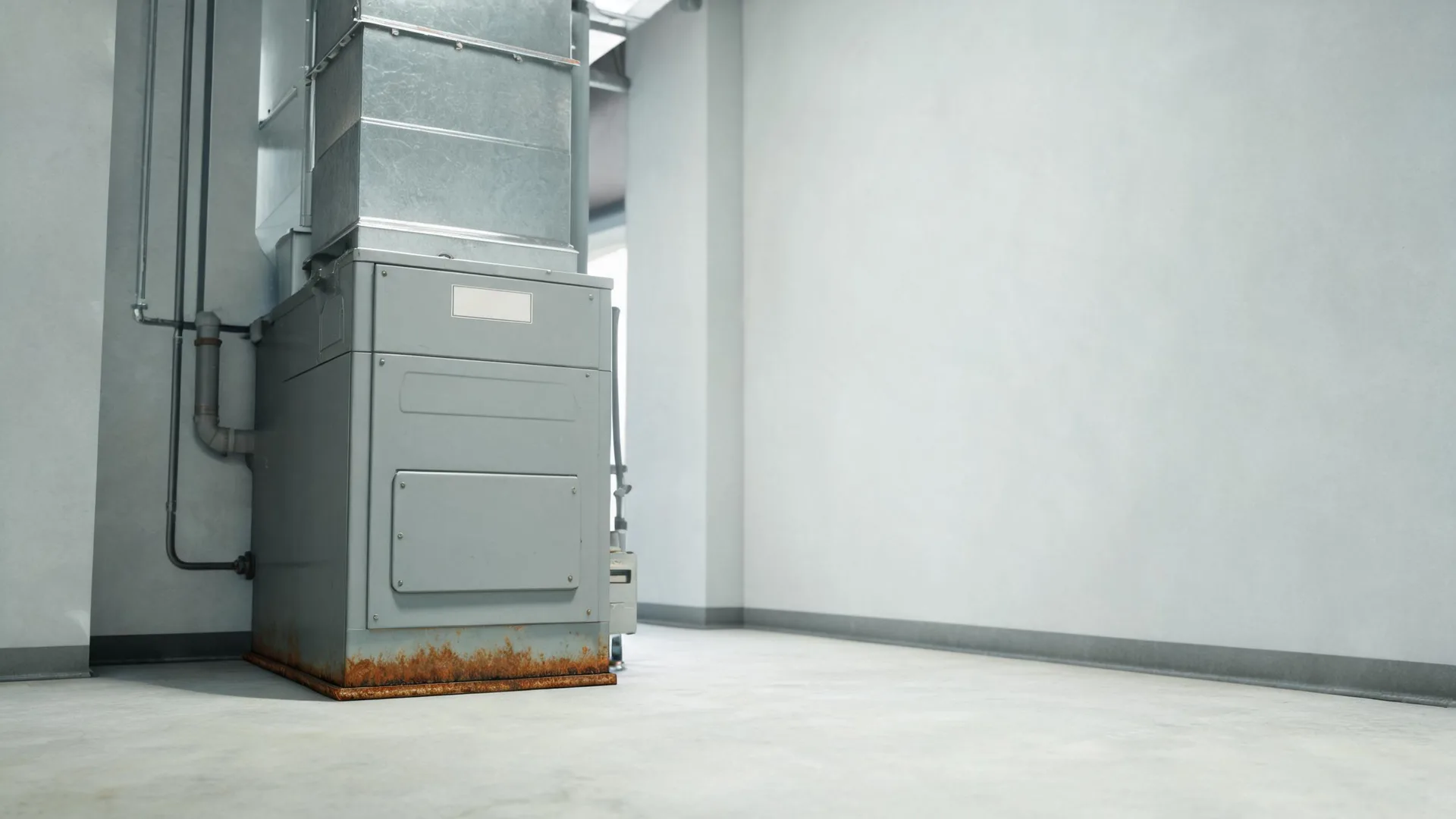
A gray high-efficiency gas furnace installed in an unfinished basement, surrounded by gas lines, a condensate drain, and sheet-metal ductwork.

What a tech actually does when they get there

A diagnostic starts before any panel comes off. A tech will ask what the furnace is doing. Won't start at all. Starts and shuts off. Runs but doesn't heat. That narrows where to look before anything's touched. From there they'll check that the thermostat call is reaching the control board, pull the burner compartment cover, and watch an actual ignition cycle. Watching it light tells them more than any single test. They can see whether the igniter glows and fails to catch, or catches and the flame sensor drops it a few seconds in. If it never gets that far, they'll check the pressure switch and the inducer motor. The furnace won't send power to the igniter until it sees proof the inducer is pulling air through correctly. Only after watching it run do they pull the flame sensor to look at it or test the igniter for continuity. The cabinet comes off last, not first. Most answers show up in how the thing behaves before anyone starts swapping parts.

A cracked heat exchanger gets worse fast

A heat exchanger that's starting to crack will keep running, but every cycle flexes that metal with heat and lets more combustion gas leak past the crack instead of up the vent. Left alone, a small crack spreads into a bigger one. This is the one problem where shutting the furnace off and getting it looked at matters more than anything else here.

A dirty flame sensor just shuts things down

Other problems don't compound the same way. A flame sensor coated in ash will make the furnace shut off and try again, over and over, but it's not damaging anything while it does that. A clogged filter restricts airflow and makes the blower work harder, which can shorten its life over time, but it won't strand you without heat overnight the way a cracked exchanger can.

An unfinished basement featuring concrete block walls, exposed floor joists, a bare concrete floor, and a forced-air furnace with a large metal exhaust duct in the corner.

A new furnace would cut about $180 a year off heating for a typical St. Louis home.

  • A new high-efficiency furnace$720 a year
  • An older furnace$900 a year

Estimates for a typical St. Louis home, compared with an older unit built to the previous federal minimum, from EIA household energy data, Missouri fuel prices and NOAA climate normals. Your home will differ.

Repair makes sense when one part has failed and the heat exchanger is sound.

Replacement makes sense when the heat exchanger is cracked or the furnace keeps needing parts.

Most furnace repairs are worth doing. An igniter, a flame sensor, a blower motor, a capacitor, these are parts that get replaced on their own, and swapping one out doesn't say anything about the condition of the rest of the furnace. The question changes when the heat exchanger is the problem, or when the furnace is old enough that one worn part is likely to be followed by another worn part next season. A tech who's inside the unit can tell you which situation you're in. They can see whether a repair is an isolated fix or the first of several, and whether the cabinet and the rest of the furnace look like they've got years left in them. That's not something you can judge from how the furnace sounds or how long it's been acting up, so it's worth asking the question directly rather than guessing.