



A gray forced-air furnace with sheet-metal ductwork stands in an unfinished basement with exposed wooden joists, concrete walls, and a hanging incandescent bulb.

Furnace Repair in St. Joseph, MO

Tell us about the job

Takes about a minute. No obligation.

RepairFurnace or heatingBuchanan County, MO
Step 1 of 2

What ZIP code is the job in?

Your furnace in St. Joseph runs about seven months a year, October through April, with overnight lows averaging 21°F in December and January. That's real work for a furnace. It's not unusual work. Nothing about the cold here wears a furnace out faster than it would anywhere else in the Midwest. So when it quits or starts acting up, the cause is almost always something ordinary. A dirty flame sensor. A failed igniter. A clogged filter choking airflow. The job is finding which one it is, not guessing at something exotic.

7 months
October through April, your furnace is on duty
21°F
the average winter night it heats against
54%
of homes here heat with gas, so most furnaces here burn gas
8 winter storms
in ten years, the nights a failure hurts most
Isometric cutaway illustration of a house showing interior rooms with furniture, a furnace unit with a tall flue pipe outside, and ductwork running through the attic.
Your furnace works hardest from November through March.

NOAA nClimDiv, 1991–2020 normals

September is the month before heat season starts here.

A furnace that struggled last April has sat idle since, and October is when that weak part gets found.

Half the homes in St. Joseph were built by 1964

Half the homes here were built by 1964
Heat runs October through April
Winter nights average 21°F

Buchanan County sees its share of severe weather, a little over a hundred events in the last ten years, mostly wind. None of that targets a furnace directly. What it can do is knock out power, and a furnace without power is just a box of parts, no matter how well it's running otherwise. Most furnaces start back up on their own once power returns. If yours doesn't, the outage probably isn't the real story. Something was already due for a look, and this is when it showed itself.

The fix costs less than the furnace running wrong all winter

Gas heat costs more in Missouri now than it used to. That's a statewide number, not a St. Joseph problem, and it has nothing to do with why your furnace is acting up. A furnace that's cycling oddly, running loud, or not keeping up is dealing with a worn part, not the gas price. Fixing the actual cause is what brings the bill back down.

Find a contractor
A man in a cap, gray T-shirt and tan work pants climbs porch steps toward a blue front door, carrying a canvas tool bag filled with tools, beside a blue planter with a shrub.
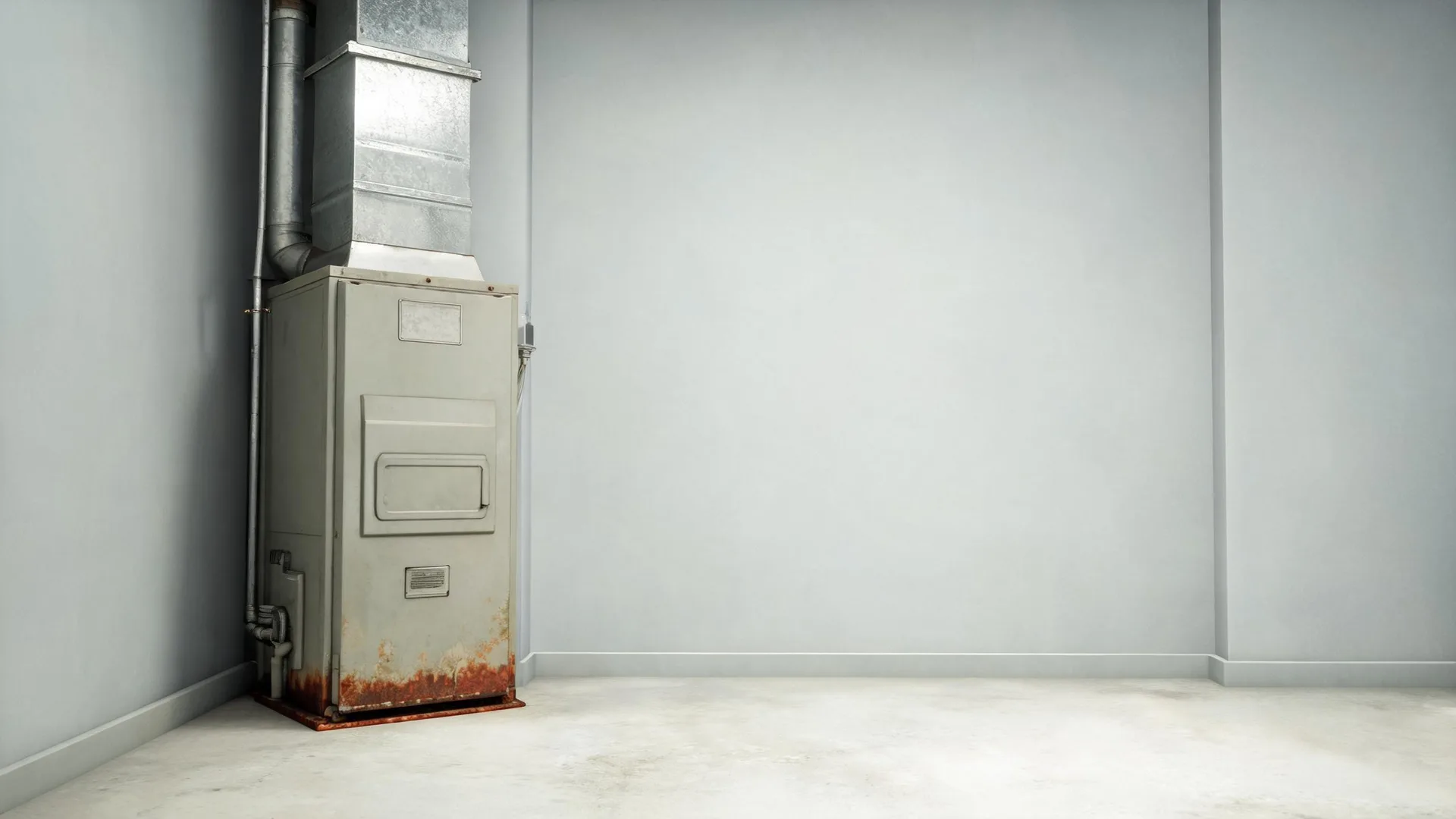
A gray residential gas furnace installed in an unfinished basement, connected to sheet-metal ductwork and PVC pipes.

A small problem left alone usually takes a bigger part down with it

A furnace that's cycling oddly or blowing cool air is usually still trying to do its job. The burner fires, the blower pushes air, and whatever's wrong gets asked to work anyway. A dirty flame sensor keeps almost failing to sense the flame, so the furnace shuts down and restarts over and over, and each restart stresses the igniter a little more. A clogged filter keeps choking airflow, so the blower motor pulls harder than it's built to pull, cycle after cycle. A cracked heat exchanger stays cracked and keeps flexing with every cycle it runs. None of that fixes itself by running longer. Left alone, a small problem is usually what wears out the part that stops the furnace from running at all.

A few parts cause most no-heat calls

The igniter cracks or weakens with age and stops lighting the burner. The flame sensor coats with a film from normal combustion and quits sensing the flame it's supposed to detect. The draft inducer motor wears out its bearings and either won't start or runs noisy. None of these point to anything else being wrong with the furnace.

Airflow problems cause the rest

A filter left in too long chokes the air the blower is trying to move, and the furnace overheats and shuts itself off as a safety response. Blocked return vents or closed supply registers do the same thing from the other direction. The furnace isn't broken in these cases. It's reacting correctly to not getting the airflow it needs to run.

An unfinished basement featuring concrete block walls, exposed floor joists, and a metal forced-air furnace with ductwork near a central pillar.

A new furnace would cut about $210 a year off heating for a typical Buchanan County home.

  • A new high-efficiency furnace$840 a year
  • An older furnace$1,050 a year

Estimates for a typical Buchanan County home, compared with an older unit built to the previous federal minimum, from EIA household energy data, Missouri fuel prices and NOAA climate normals. Your home will differ.

Repair makes sense when one part has failed and the heat exchanger is sound.

Replacement makes sense when the heat exchanger is cracked or the furnace keeps needing parts.

Age is what tips the decision, not any one symptom. A furnace early in its life is almost always worth repairing. A cracked igniter or a failed draft inducer motor is a contained problem, and swapping that part brings the whole unit back to normal. A furnace near the end of its expected life is a different question, because the part that just failed usually isn't the only one close to failing. Replacing an igniter on an old furnace can mean the flame sensor or the inducer motor is next. The heat exchanger changes the math entirely. If that's cracked, the furnace gets replaced, not repaired, because a cracked heat exchanger can let combustion gases into the air the blower moves through the house. Everything else on this list is a part. That one is a safety problem wearing the shape of a repair.