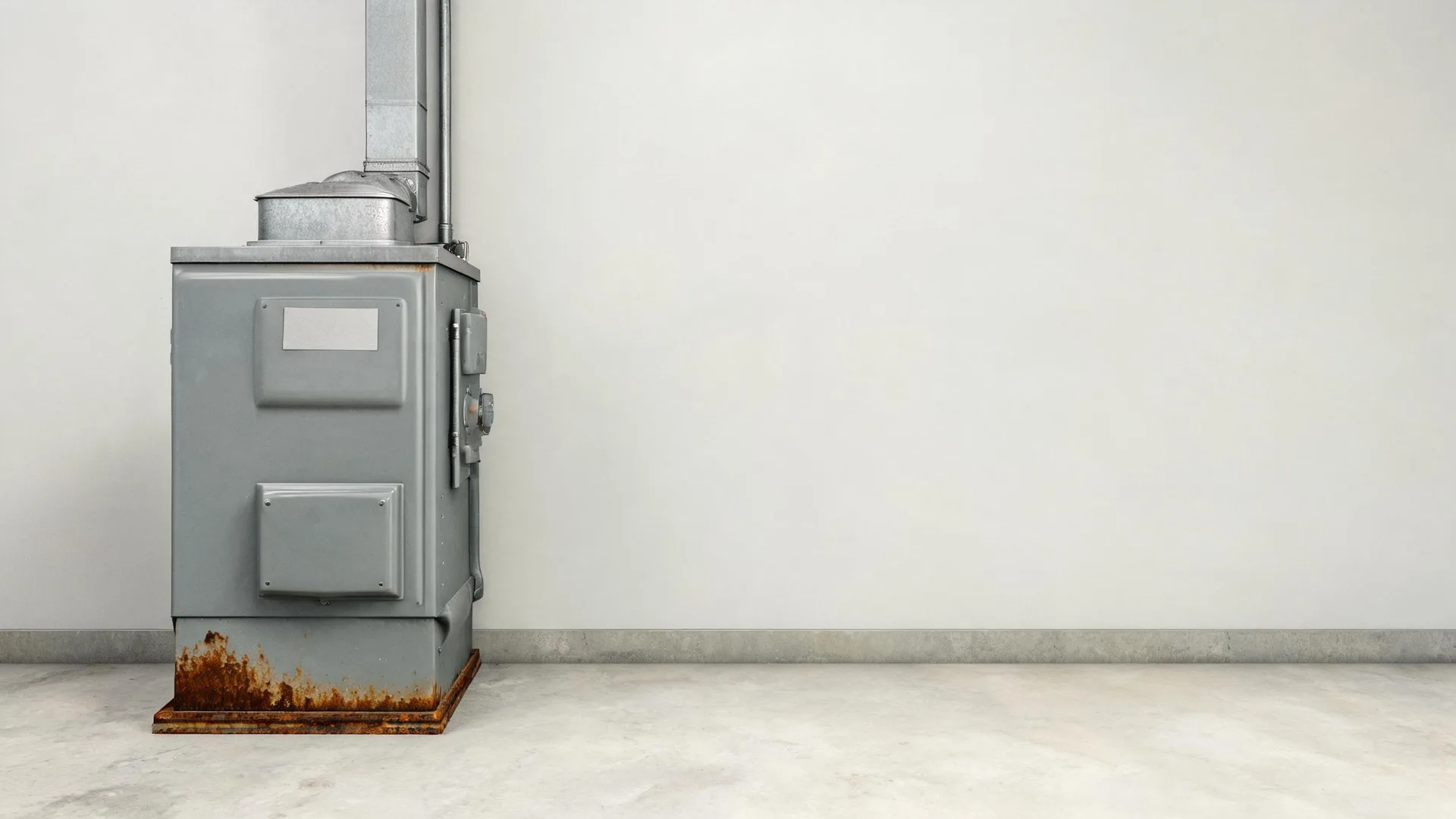
Have the outdoor unit checked after a bad storm
If hail or wind debris hit the outdoor unit, get it looked at even if the furnace still runs fine. Bent fins or a dented cabinet can hide damage that only shows up once the system has to work hard.
Takes about a minute. No obligation.
A tech starts by asking what the furnace is doing, or not doing, before touching anything. Short cycling, no heat, a smell, a sound that wasn't there before, all of that narrows things down fast. Then the cover comes off and they watch it run through a full cycle if it'll start at all. They'll check the igniter or pilot, test the flame sensor, look at the pressure switch and the inducer motor, and pull the filter to see if airflow is choking the system. A clogged filter or a blocked vent can throw off readings that look like something worse. If it's an electrical fault, they're testing the control board and the wiring with a meter, not guessing. The goal of the visit is to find the one part that's actually failing, not to replace parts until something works.
NOAA nClimDiv, 1991–2020 normals
A cracked heat exchanger gets worse every time the furnace fires.
Shutting it down when something's wrong stops a small failure from turning into a bigger repair.




Most furnace failures trace back to one of a handful of parts wearing out, not some mystery problem. The igniter is the part that usually goes first, since it heats up and cools down every single cycle and that stress adds up until it cracks. A flame sensor coated with a thin layer of residue will tell the control board no flame is present even when there is, so the system shuts itself down as a safety measure. Inducer motors fail from years of running, and once the bearings go, the furnace won't get the draft it needs to even attempt ignition. Pressure switches stick for the same reason, age and dirt. None of these are expensive to inspect for, but left alone, a failing part can take out the control board that depends on it.
Problems tend to show up in the first weeks of the season, when the load hits a part that was already weak.
Find a contractor
Before anything else, check the thermostat. Make sure it's set to heat, not cool, and that the set temperature is actually above room temperature. Dead batteries in the thermostat cause more false alarms than almost anything else. Next, go to the breaker panel and look for a tripped breaker. A furnace that won't start at all is often just a flipped switch. Pull the filter and hold it up to a light. If you can't see light through it, it's choking the system, and swapping it for a new one is something anyone can do. Check that the furnace switch, the one that looks like a light switch on or near the unit itself, hasn't been bumped off. If you have a gas furnace, look for a reset button on the inducer motor housing and check that the gas valve is turned to on. Listen for what the furnace is doing. A furnace that tries to start, clicks, and shuts off is different from one that does nothing at all, and that difference matters once someone comes to look at it. Don't take the burner compartment apart or reset anything more than once. If it trips again after a reset, it's telling you something is actually wrong, and the part that needs attention is already failing.
If hail or wind debris hit the outdoor unit, get it looked at even if the furnace still runs fine. Bent fins or a dented cabinet can hide damage that only shows up once the system has to work hard.
Scott County households lose power for a day or more more than most. A furnace that was already acting up before an outage may not come back the same way, so a repair that's been put off is worth finishing before the next storm.
A furnace rarely fails without warning. It usually tells you first, through sound or smell or timing. Short cycling, where it fires up and shuts off again before the house warms, points to a flame sensor or a limit switch cutting things off early. A burning smell that doesn't fade after the first few minutes of the season is different from one that lingers or comes back, and the second kind means something's overheating. A bang or boom at startup is delayed ignition, gas building up before it catches, and that one is worth shutting down for rather than living with. Weak, lukewarm air from the vents even though the furnace is running often means a cracked heat exchanger or a failing blower, not just a dirty filter. Rooms that used to heat evenly and now don't are telling you the system is losing ground somewhere, even if it hasn't quit yet.
A repair is almost always worth making the first time. Most furnace parts, an igniter, a flame sensor, a pressure switch, fail one at a time, and swapping the one that's gone is cheaper and faster than anything else. The question changes once a furnace is on its second or third repair in a short span, or once the part failing is the heat exchanger itself. A cracked heat exchanger isn't something to patch, since it's the barrier between the flame and the air moving through your house, and once it's compromised the whole unit is done. Age matters less than what's actually broken. A furnace that's been reliable for years and suddenly needs a motor is still a furnace worth fixing. One that keeps finding new ways to fail is telling you the whole system is wearing out at once, not just the part in front of you.