


A gray forced-air furnace with metal ductwork stands in an unfinished basement with exposed wooden joists, concrete walls, and a single hanging light bulb.

Furnace Repair in Sedalia, MO

Tell us about the job

Takes about a minute. No obligation.

RepairFurnace or heatingPettis County, MO
Step 1 of 2

What ZIP code is the job in?

Furnaces in Sedalia run long hours all winter, from October through April, and overnight lows averaging 24 degrees in December, January and February mean yours is working hard most nights. That's a normal load, not an unusual one. Most calls out here turn out to be an igniter that's failed, a flame sensor that needs cleaning, or a blower motor on its way out. None of that has much to do with how cold it gets outside. A furnace that short cycles or won't fire at all is telling you one of its parts quit, and a contractor can usually track down which one and get it fixed without replacing the whole unit.

7 months
October through April, your furnace is on duty
24°F
the average winter night it heats against
8 winter storms
in ten years, the nights a failure hurts most
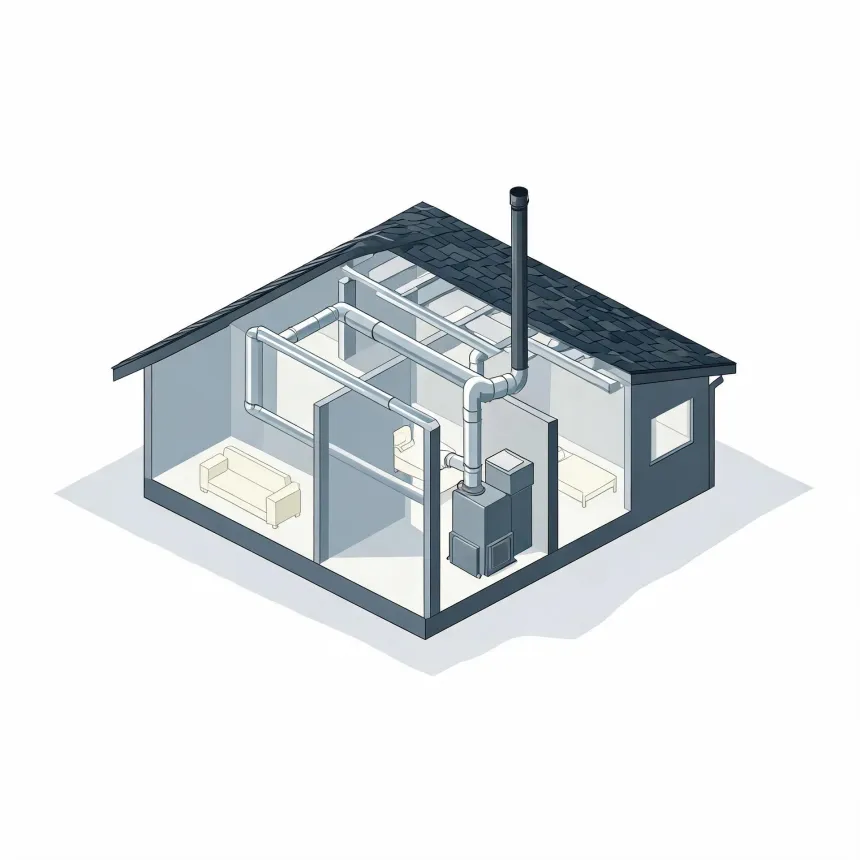
Isometric cutaway illustration of a small single-story house showing a furnace with a flue pipe through the roof and ducting running to rooms containing a sofa, chair and bed.
Your furnace works hardest from November through March.

NOAA nClimDiv, 1991–2020 normals

Furnaces in Pettis County start running in October and go through April.

A weak igniter or a tired blower motor usually shows itself in that first October cold snap.

Half the homes here were built by 1974, but age isn't why your furnace fails

Half the homes here were built by 1974
Heat runs October through April
Winter nights average 24°F

Pettis County sees its share of rough weather. Damaging wind is the most common, hail close behind, and tornadoes touch down now and then. None of that is what takes down a furnace. Wind and hail hit the roof, the siding, the trees in the yard. They don't reach the igniter or the flame sensor sitting inside your cabinet. Winter storms are a different matter, since they can knock out power. If your furnace won't start back up once the power's restored, that's worth a call, but it's usually a simple reset, not storm damage to the unit itself.

A bad igniter or blower costs you more here every month it runs

Electricity in Missouri runs $37.84 per million Btu. A furnace that's short cycling or struggling to fire is burning through that every time it kicks on, all winter long. Finding the part that quit and fixing it stops that waste.

Find a contractor
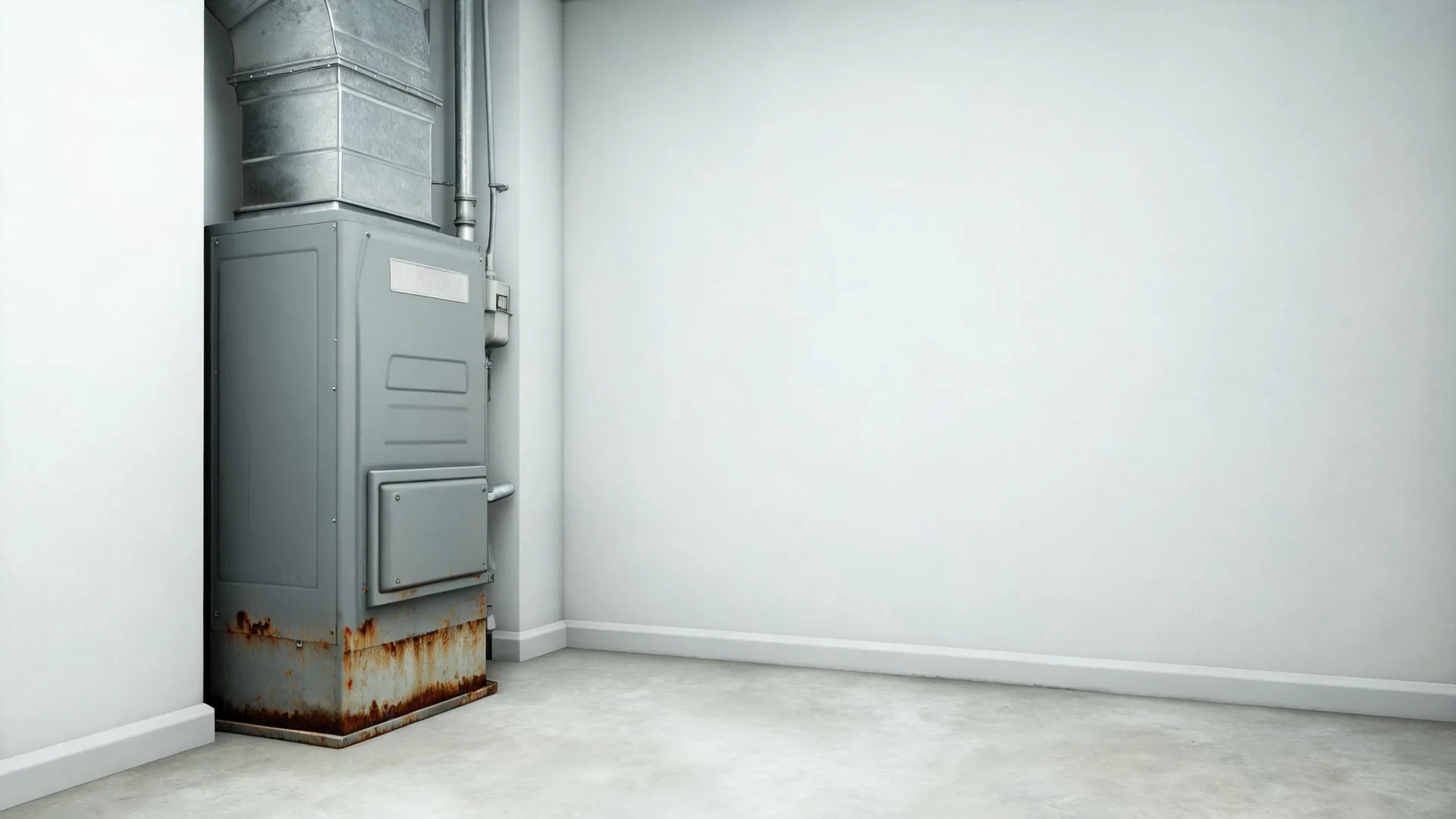
A gray residential gas furnace installed in an unfinished basement, surrounded by ductwork, a metal flue pipe, and a gas supply line.

What to check before you call

Before you call anyone, check the thermostat first. Make sure it's set to heat, not just fan, and the set point is above the room temperature. Next find the switch that kills power to the furnace, the one that looks like a light switch near the unit or at the top of the basement stairs. Someone may have bumped it without noticing. Check the breaker panel too, since a tripped breaker will stop the whole thing cold. If the furnace vents out through the side of the house, go look at that vent and clear away anything blocking it, snow, leaves, a fallen branch. A blocked vent will shut the furnace down on its own, and that's it doing what it's supposed to do. Pull the air filter and hold it up to a light. If you can't see light through it, put in a new one before you do anything else, because a clogged filter chokes the airflow and can cause the exact short cycling that brings people to this page. None of that takes tools or opening the cabinet. If the furnace still won't fire after all that, or it fires and quits a few minutes in, that's a part that's failed and it's time to get someone out to look at it.

A furnace rarely quits without warning you first

Most failures announce themselves before the day they leave you cold. A furnace that cycles on and off every few minutes is telling you the flame sensor isn't reading the flame right, or the igniter is too weak to hold it. A delay before ignition, a clicking that doesn't catch, a burning smell that fades after a few minutes, all of those show up for days before the no-heat call. A blower that runs constantly, or rattles or squeals when it starts, is wearing out its bearings or losing its balance. Catching any of this early is what keeps a worn part from taking out something bigger around it.
What you notice tells a contractor where to start

A furnace that won't fire at all points at the igniter, the flame sensor, or the gas valve, not the blower. One that fires and then shuts off within minutes is usually a flame sensor coated with residue, failing to prove there's a flame and killing the gas valve as a safety measure. Warm air that never gets hot, or air that cycles between warm and room temperature, points at the heat exchanger or the limit switch. Telling the contractor exactly what you saw, not just that it's not working, is what lets them walk in with the right part instead of guessing.

The igniter takes the most abuse of any part in the furnace, since it heats up and cools down every single cycle, and that repeated stress is what eventually cracks it or wears it out. The flame sensor fails a different way. It sits in the flame path too, but what gets it is a thin coating that builds up on the metal over time, enough that it stops sensing the flame at all even though the burner's lit fine. Once that happens the control board cuts the gas, because as far as it can tell nothing's burning. A blower motor goes the way any motor does, on bearings. They wear down with use until the motor starts dragging, squealing, or seizing up. Gas valves and heat exchangers hold up much longer than any of that, and trouble there is usually old age rather than a part that failed early. More hours running means more cycles on the igniter and more hours on the blower bearings, so the parts that wear fastest are exactly the ones carrying the load.

A diagnostic visit starts with the complaint, not the cabinet. A contractor wants to hear what the furnace was doing before it quit, since that points at a part before a panel ever comes off. From there it's a sequence, not a guess. Power and thermostat settings get confirmed first, because those rule themselves out fast. Then the igniter gets checked for a crack or a weak glow, the flame sensor gets pulled and looked at for a coating of residue, and the blower gets tested for the amp draw and bearing wear that don't show up just from listening to it run. Each check either clears that part or points straight at it. A furnace that fires and quits usually ends the search at the flame sensor. One that never fires at all moves the search to the igniter or the gas valve. By the time the cabinet goes back on, the part that failed has a name, and so does the fix.