





A lit residential street at dusk featuring large two-story brick houses with glowing windows, mature trees, and a street lamp.

Furnace Repair in Rolla, MO

Tell us about the job

Takes about a minute. No obligation.

RepairFurnace or heatingPhelps County, MO
Step 1 of 2

What ZIP code is the job in?

Furnace here runs October through April, about seven months straight. September is the last quiet month before it kicks on every day. A part that was already weak, a cracked igniter or a failing flame sensor, tends to give out right in those first few weeks of October, not months into the season. If your furnace is acting up now, early on, that timing is worth mentioning to the tech who comes out. It points toward something that was wearing thin before the cold ever set in.

7 months
October through April, your furnace is on duty
25°F
the average winter night it heats against
10 winter storms
in ten years, the nights a failure hurts most
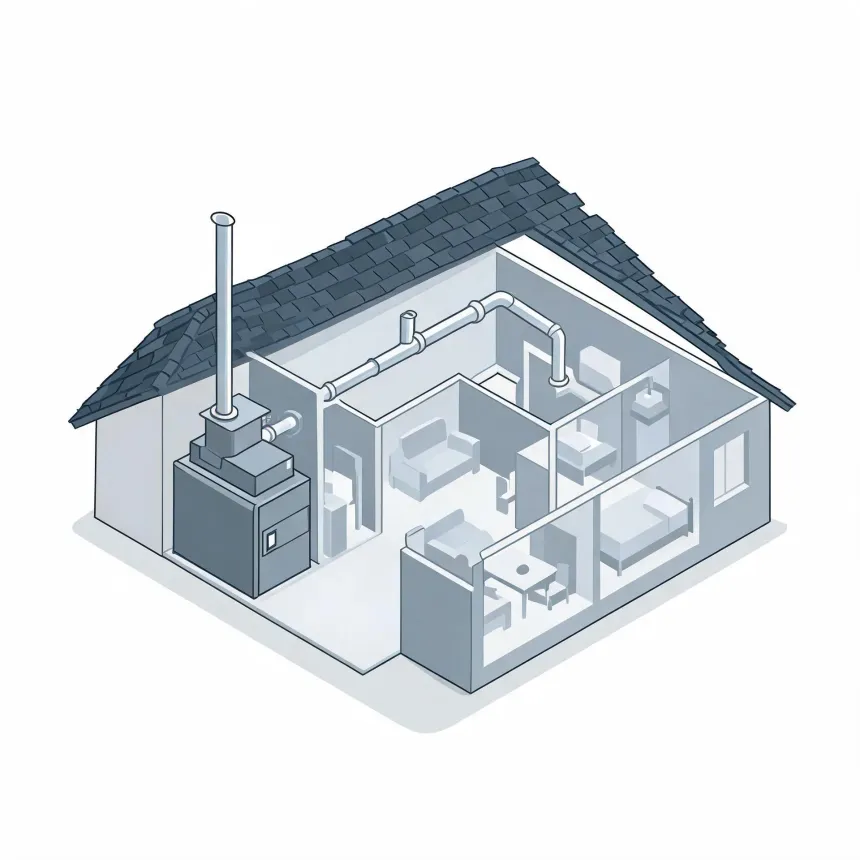
Isometric cutaway illustration of a single-story house showing interior rooms with furniture, ceiling ductwork, and a large furnace unit with a tall flue pipe in a corner room.
Your furnace works hardest from November through March.

NOAA nClimDiv, 1991–2020 normals

A furnace that short cycles, running for a few minutes and shutting off, is telling you the flame sensor or the limit switch is already failing.

Catch that pattern early and it's a part swap. Ignore it and the heat exchanger ends up doing the damage instead.

Electricity here runs $37.84 per million Btu, and a furnace running rough burns more of it all winter

Heat runs October through April
Winter nights average 25°F
Climate zone 4A
Nothing unusual here, just the usual wearNights average 25°F in Phelps County, the kind of cold any working furnace is built for

Phelps County sees its share of rough weather, 56 damaging wind events and 55 hail events over the past ten years. None of that is what wears out a furnace. Wind and hail hit the roof, the siding, the AC unit outside. They don't touch the burner or the igniter sitting inside your house. What actually takes down a furnace is simpler. A part that's been weakening for a while finally quits once the system starts running every day. The weather here is no harder on your furnace than it is anywhere else in Missouri. The fix is the same one it would be in a county with none of those storms.

A rough-running furnace costs more here every month it goes unfixed

A furnace burning more gas than it should is costing you something every month it runs, and power here isn't cheap to begin with. Getting it looked at now, before it's running every day straight through winter, is what stops that waste.

Find a contractor
A man in a cap, dark jacket and tan pants walks up porch steps toward a navy blue front door, carrying a canvas tool bag filled with hand tools, with a potted plant in a blue planter to the right.
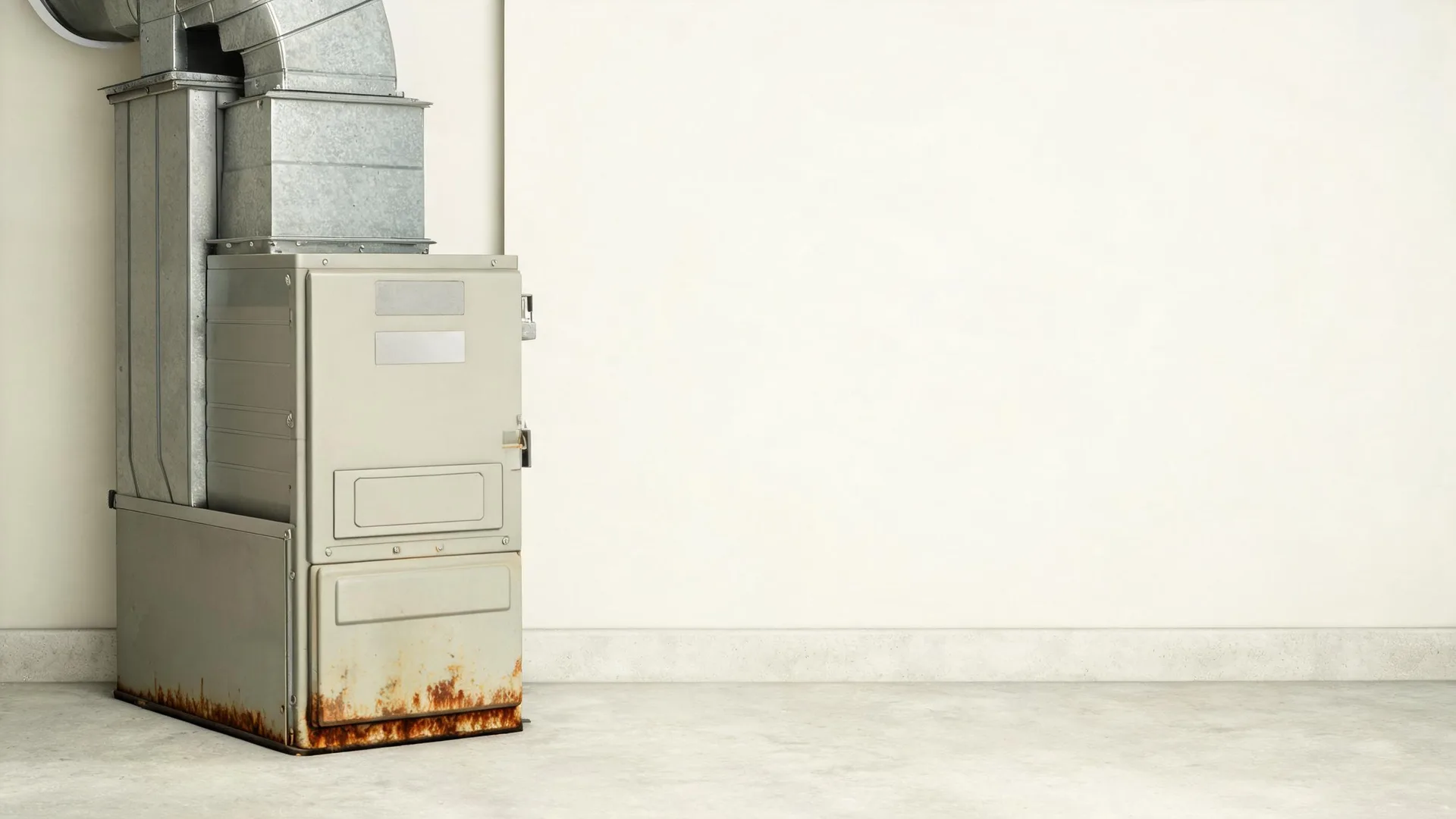
A gray high-efficiency gas furnace installed in an unfinished basement, surrounded by gas lines, a condensate drain, and sheet-metal ductwork.

A newer house usually means a furnace with life left in it

Half the homes in Phelps County were built in 1984 or later. If your house is one of them, check when the furnace was put in, since it may have come with the house rather than replaced an older one. A furnace that's only had a handful of winters hasn't had the chance to wear the way an older unit has. That doesn't mean parts can't fail early, an igniter or flame sensor can go bad on a new system too, but it does mean repair is the better bet before anyone talks replacement.

Most failures are one part, not the whole furnace

The igniter wears out from being heated and cooled every cycle until it finally cracks. The flame sensor coats with a thin layer of residue until it can't tell the burner is lit. A draft inducer motor wears on its bearings until it won't spin fast enough to satisfy the pressure switch. Each of these ends the same way, the furnace won't start or won't stay running, but each one is its own repair.
The blower motor and the heat exchanger fail differently

A blower motor usually gives warning first, a bearing squeal or a hum that won't start the fan, before it quits outright. A heat exchanger fails quietly, cracking from years of heating and cooling with each cycle, and the first sign is sometimes a carbon monoxide detector going off rather than any sound from the furnace itself. One is a straightforward swap. The other is why a tech checks the exchanger on every service call, not just when something seems wrong.

A cracked heat exchanger starts small. Every cycle after that, the metal heats and cools again, and the crack opens wider. A flame sensor coated in residue can still light the furnace for a few more cycles before it quits altogether. Neither one gets better by running. A motor that hums instead of spinning is already dragging on a bad bearing, and every hour it runs that way wears the bearing further, not less. Shutting it down and getting the part replaced early is almost always the smaller repair. Waiting usually just means the next part goes with it.

Age is only part of the question. What matters more is what's actually failed and what it would take to fix. A cracked heat exchanger is the one repair that usually ends the conversation, since it means heating a flame next to a hole in the metal, and that's a replace, not a repair, no matter how new the furnace is. Everything else, the igniter, the flame sensor, the draft inducer, the blower motor, is a part swap on a furnace that's otherwise sound. A unit that's needed several different repairs over a short stretch of time is starting to tell you something, even if no single failure was serious on its own. One failed part on a furnace that's otherwise been left alone is just a part that wore out. The furnace itself isn't what's failing in that case, only the one piece inside it that finally gave.