





A lit residential street at dusk featuring large two-story brick houses with glowing windows, mature trees, and a street lamp.

Furnace Repair in Osage Beach, MO

Tell us about the job

Takes about a minute. No obligation.

RepairFurnace or heatingCamden County, MO
Step 1 of 2

What ZIP code is the job in?

Most repair calls come down to one part. An igniter that won't glow, a flame sensor gone dirty, a draft inducer that's seized up. These are straightforward to replace, and the furnace runs fine again for years after. What changes things is the heat exchanger. If that's cracked, the furnace isn't safe to run no matter what else checks out fine. A crack like that tends to show up in a furnace that's already old, one that's had other parts fail before. A single repair on a furnace that's otherwise sound is almost always worth doing. It's when the same unit keeps needing new parts, or the heat exchanger itself is the problem, that replacing it starts to make more sense than keeping it limping along.

7 months
October through April, your furnace is on duty
25°F
the average winter night it heats against
7 winter storms
in ten years, the nights a failure hurts most
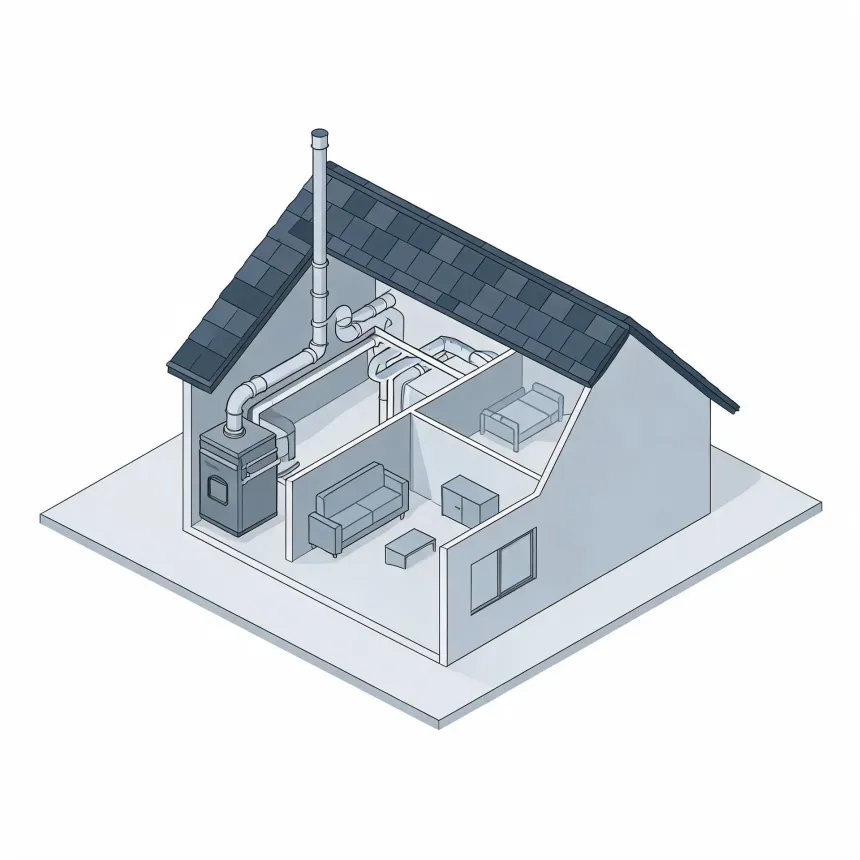
Isometric cutaway illustration of a small gabled house showing a furnace with flue pipe and ductwork connecting to interior rooms containing a sofa, bed, and cabinets.
Your furnace works hardest from November through March.

NOAA nClimDiv, 1991–2020 normals

A furnace that short cycles is shutting off before the blower clears the heat out of the exchanger.

Left alone, that habit wears out the parts that were never the real problem to begin with.

Electricity here runs $37.84 per million Btu, and a furnace that's struggling burns more of it every month it goes unfixed

Heat runs October through April
Winter nights average 25°F
Climate zone 4A

Half the homes in Camden County were built in 1988 or later, so there's a good chance yours is one of them. A furnace that came with a newer build hasn't had the years behind it that lead to a cracked heat exchanger or a cabinet full of worn-out parts. If yours is acting up, the odds favor a single bad part rather than a system on its way out. That makes repair the straightforward call. Worth checking when your furnace went in, if you know it, since that tells you more than the age of the house itself.

Heat starts in October. Get it fixed before the first cold week tests it.

Furnaces here run October through April. The first weeks of the season put load on parts that were already weak, and that's when they fail. If yours is acting up now, in September, it's worth sorting out before it's doing the work of keeping a house warm.

Find a contractor
A man in a cap, navy T-shirt and brown pants carries a waxed canvas tool bag up the steps toward a blue front door of a shingled house, beside a potted shrub.
A gas furnace with attached ductwork, gas piping, and condensate lines installed in a concrete-block basement.

Fix it and move on

A furnace that still has years ahead of it is worth fixing rather than replacing when something goes wrong. If the part that failed is an igniter or a flame sensor, swap it and keep running the furnace the way you have been. There's no reason to plan around a replacement just because one part gave out.

Dirt and dust do more damage than age

A furnace that's never had its filter changed on schedule pulls dust straight through the cabinet. That dust cakes onto the blower wheel, coats the burners, and fouls the flame sensor. Most of what gets called a mechanical failure started as a clogged filter choking the airflow the whole system depends on.
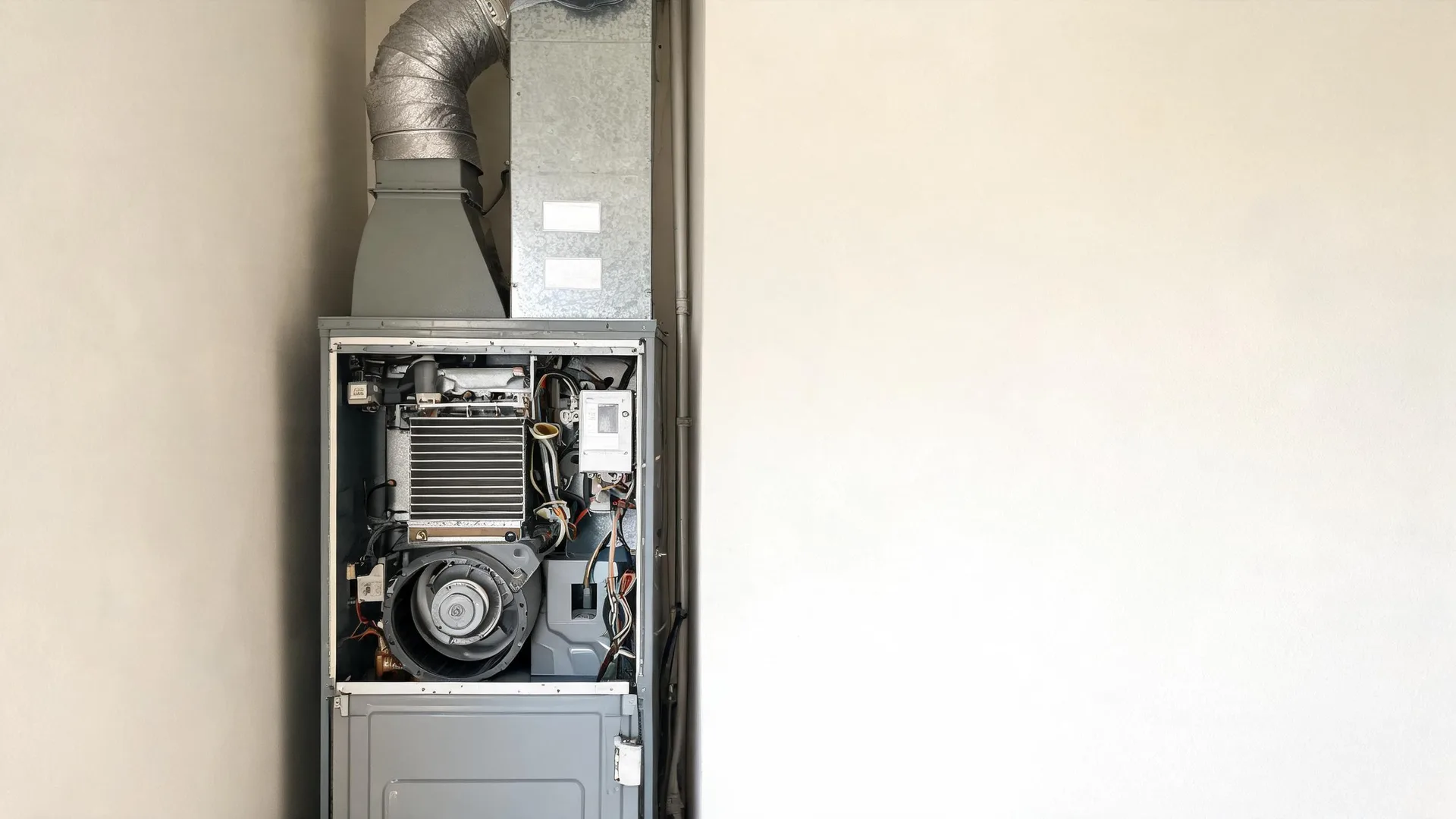
The ignition system fails first, almost always

Whether a furnace lights with a hot surface igniter or a spark system, that part works harder than anything else in the cabinet. It heats up and cools down every single cycle, all season. That kind of stress is why igniters crack and sensors go dirty long before anything else in the furnace gives out.

Before anyone comes out, a few things are worth checking yourself. Go look at the filter. If it's gray and matted, pull it and see if the furnace runs any better without that airflow fighting it the whole time. Check the thermostat is set to heat, not just on, and that the batteries aren't dead if it takes them. Go to the breaker panel and make sure the furnace's breaker hasn't tripped. If you've got a standing pilot, see if it's actually lit. None of this fixes a cracked heat exchanger or a seized inducer, but it rules out the simple stuff first, and it gives whoever comes out a clearer picture of what's actually wrong.

A diagnostic call starts with questions, not tools. What the furnace is doing, when it started, whether it's one room or the whole house. From there a tech checks for power and gas reaching the unit, pulls the cabinet, and watches it try to run through a full cycle. The job is finding where the sequence breaks. No ignition at all points one direction. Ignition that fails to hold points another. Each step rules something out before moving to the next, rather than guessing and swapping parts to see what sticks. Near the end comes the heat exchanger, checked for cracks or corrosion. That answer decides whether the rest of the visit is about a part or about the whole unit.