A nighttime view of a tree-lined residential street with illuminated two-story brick houses and street lamps.

Furnace Repair in Odessa, MO

Tell us about the job

Takes about a minute. No obligation.

RepairFurnace or heatingLafayette County, MO
Step 1 of 2

What ZIP code is the job in?

How old the furnace is matters less than what's failing

A cracked heat exchanger or a failing control board on an older furnace is a sign to start planning a replacement. A bad igniter or a dirty flame sensor is a cheap, quick fix no matter how old the unit is. Ask what part is causing the problem before asking whether the furnace is worth fixing.
A furnace that's starting to need repairs more often is telling you something

One repair in several years is normal wear. Needing a tech back out again within the same season usually means something bigger is wearing down, even if each individual fix is small and cheap on its own. That pattern is worth mentioning to whoever comes out, since it changes what they look for.

7 months
October through April, your furnace is on duty
23°F
the average winter night it heats against
51%
of homes here heat with gas, so most furnaces here burn gas
8 winter storms
in ten years, the nights a failure hurts most
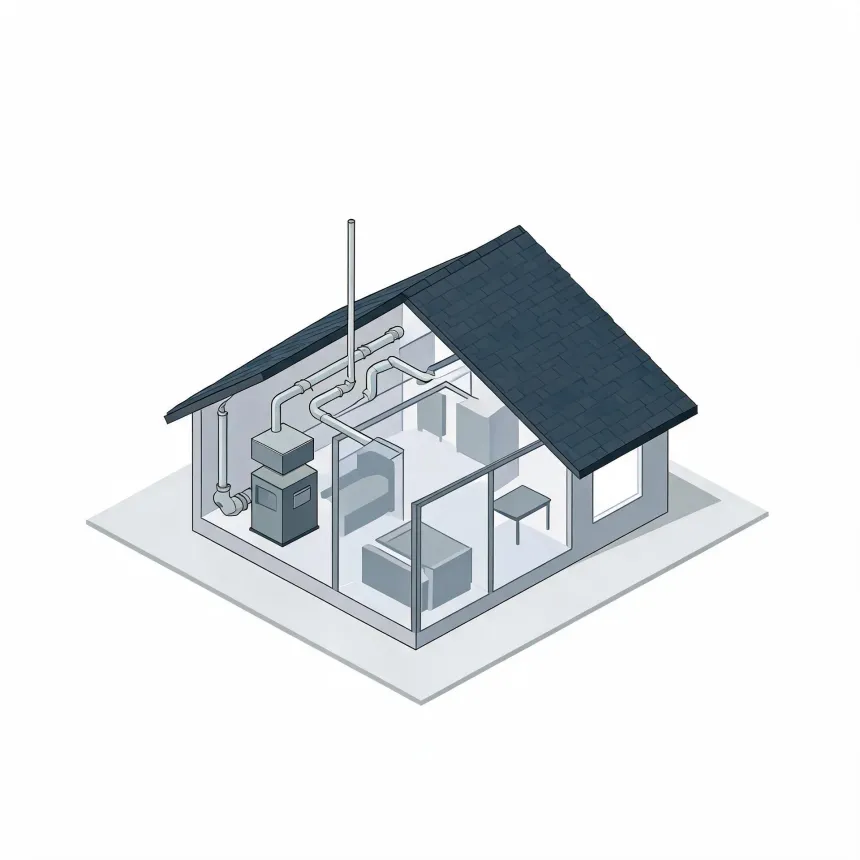
Isometric cutaway illustration of a small house with a dark shingled roof, showing an interior furnace unit, ductwork, and a flue pipe extending through the roof.
Your furnace works hardest from November through March.

NOAA nClimDiv, 1991–2020 normals

Furnaces in Odessa start getting used in October.

A furnace that sat idle since April will show its weak part in the first cold snap.

Half the furnaces here are older, but age alone doesn't break them

Half the homes here were built by 1975
Heat runs October through April
Winter nights average 23°F

Furnace here runs about seven months, October through April. That's a long stretch, but it's not extreme, and it's not what wears a furnace down early. Overnight lows average 23°F through December, January and February. That's a normal winter workload for a furnace sized right for the house. The furnace isn't fighting anything unusual. If it's acting up, the cause is probably the same one you'd find anywhere else. A part that's failing, not a climate that's too much for it.

It's probably one part, not the furnace

Gas here runs $16.49 per million Btu. A furnace that's short-cycling or running longer than it should is burning through that while it sits broken. Most furnace problems come down to one part. An igniter. A flame sensor. A control board. Finding which one is what fixes it.

Find a contractor
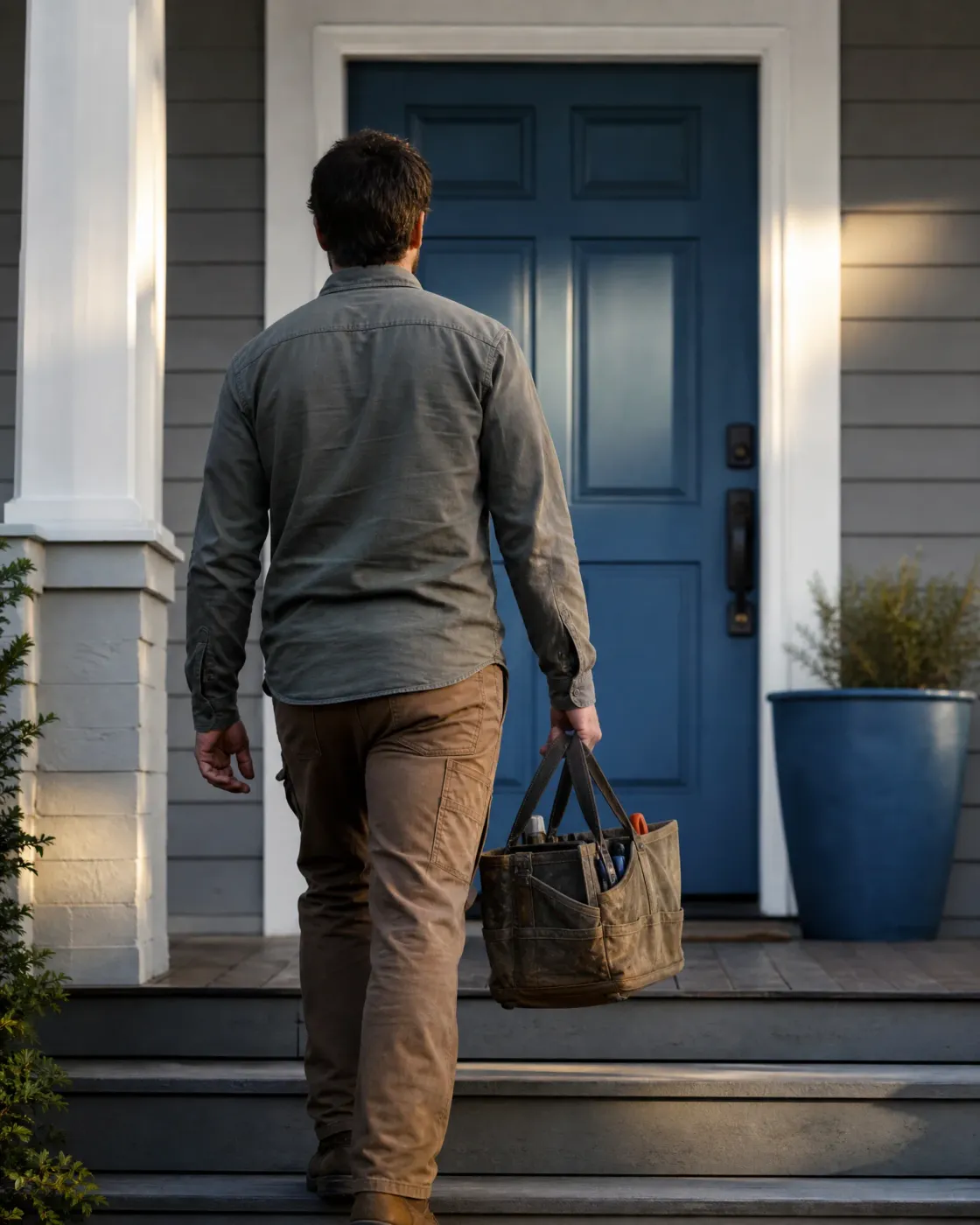
A man in a gray shirt and brown pants, seen from behind, carries a canvas tool bag up porch steps toward a blue front door beside a potted shrub.
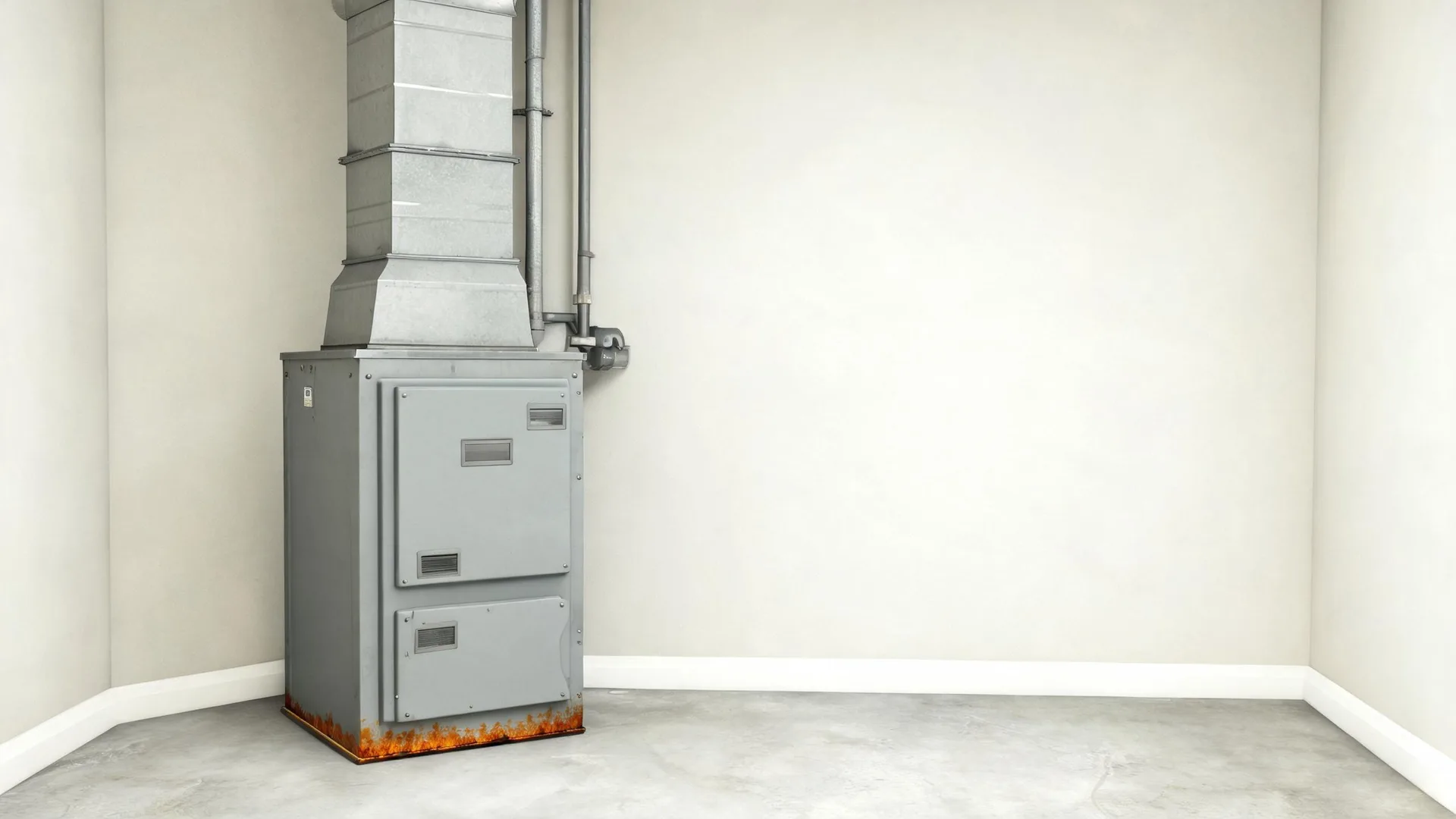
A gray high-efficiency gas furnace installed in an unfinished basement, surrounded by gas lines, a condensate drain, and sheet-metal ductwork.

What to check before you call

Start with the thermostat. Make sure it's set to heat and the target temperature is above room temperature, not just matching it. Go to the breaker panel next and check for a tripped switch. A furnace burns gas but runs on electricity, so a tripped breaker kills the igniter and blower both. Check the filter. A filter packed with dust chokes airflow, and some furnaces shut themselves down rather than let the heat exchanger overheat. Look at the furnace itself for a small blinking light behind the access panel. The pattern of blinks points to what the control board thinks is wrong, and the chart for reading it is usually printed right there on the panel. If the furnace has a standing pilot, check whether it's lit. Most units have relighting steps printed on the cabinet. If it won't stay lit after that, stop and call someone rather than keep trying. Last, check the vent hood outside isn't blocked. A blocked vent will shut the furnace down on its own. None of this means opening the cabinet or touching the gas line. If the furnace still won't run after these checks, the problem is inside it.

What you'll actually notice first

A furnace in trouble rarely just stops. It cycles on and off faster than it used to. The air coming out of the vents feels cooler than it used to, or it takes longer than normal to kick on after the thermostat calls for heat. Some furnaces start making a new sound. A rattle when it starts up. A hard bang from the burner area. A screech from the blower motor. Any change from how it normally sounds and feels is worth paying attention to.

What those signs mean for the repair

Short cycling usually points to a flame sensor that isn't reading the flame right, or a furnace overheating and shutting itself off early. Weak heat often traces back to a burner that isn't firing clean or a blower that isn't moving enough air. A new noise almost always means one part is wearing out, not the whole unit failing at once. Telling the tech exactly what you noticed and when it started helps them check that part first instead of working through every possibility.

An unfinished basement featuring exposed ceiling joists, a metal HVAC unit with round ductwork, a hanging light bulb, and scattered boxes and debris along the left wall.

A new furnace would cut about $200 a year off heating for a typical Lafayette County home.

  • A new high-efficiency furnace$800 a year
  • An older furnace$1,000 a year

Estimates for a typical Lafayette County home, compared with an older unit built to the previous federal minimum, from EIA household energy data, Missouri fuel prices and NOAA climate normals. Your home will differ.

Repair makes sense when one part has failed and the heat exchanger is sound.

Replacement makes sense when the heat exchanger is cracked or the furnace keeps needing parts.

A diagnostic visit starts before the panel comes off. The tech asks what you noticed, when it started, and whether it's gotten worse, because that narrows down where to look first. Then the cabinet comes off and they check what doesn't show from outside. Voltage at the control board. Flame signal at the sensor. Whether the igniter is glowing like it should or barely warming up. They'll watch it run through a full cycle if it'll start at all, since some problems only show up partway through ignition or after the blower kicks on. A furnace that won't start at all gets checked differently than one that starts, runs rough, and shuts off on its own. Once the failing part is found, the tech can tell you whether it's a one-off or a sign of more wear underneath.