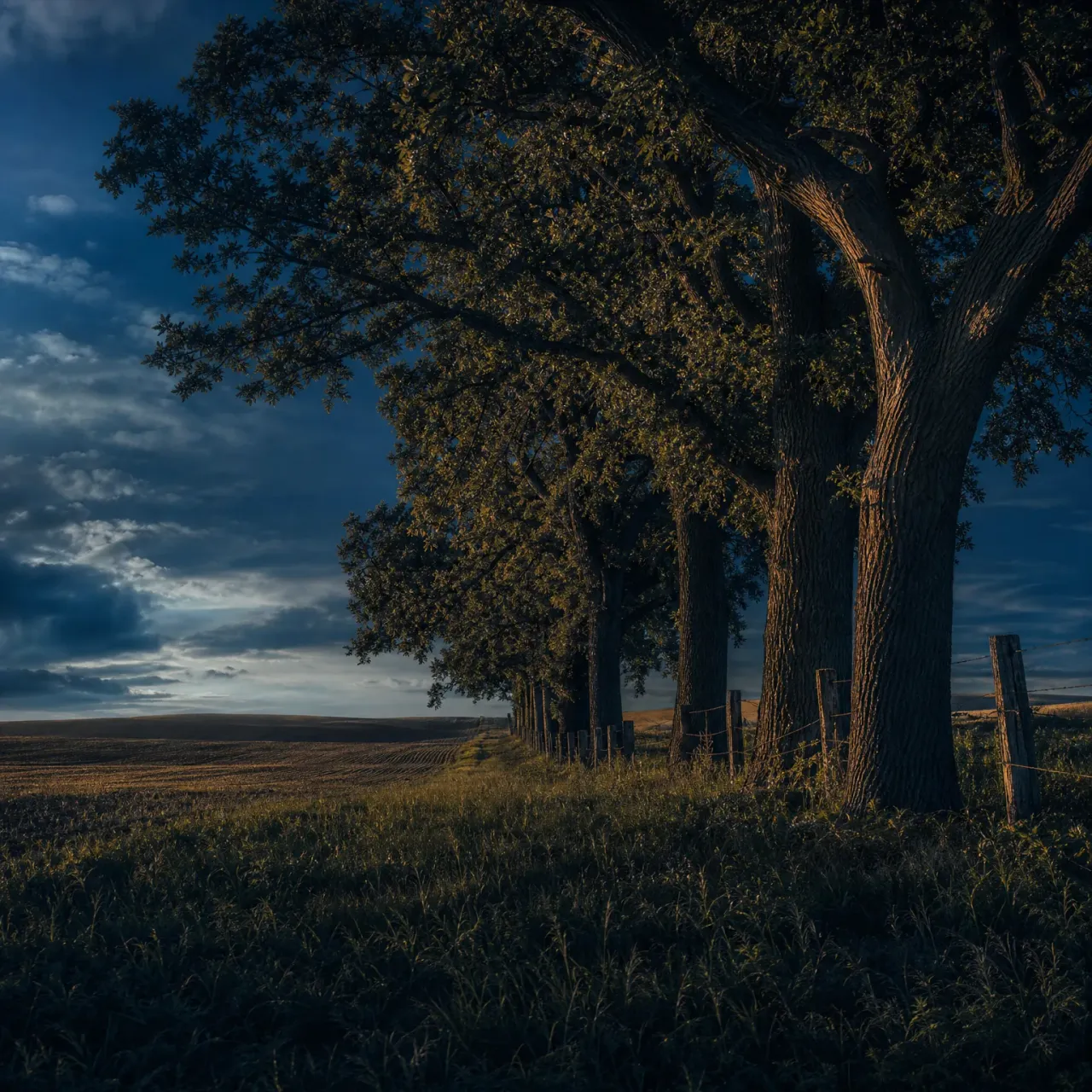
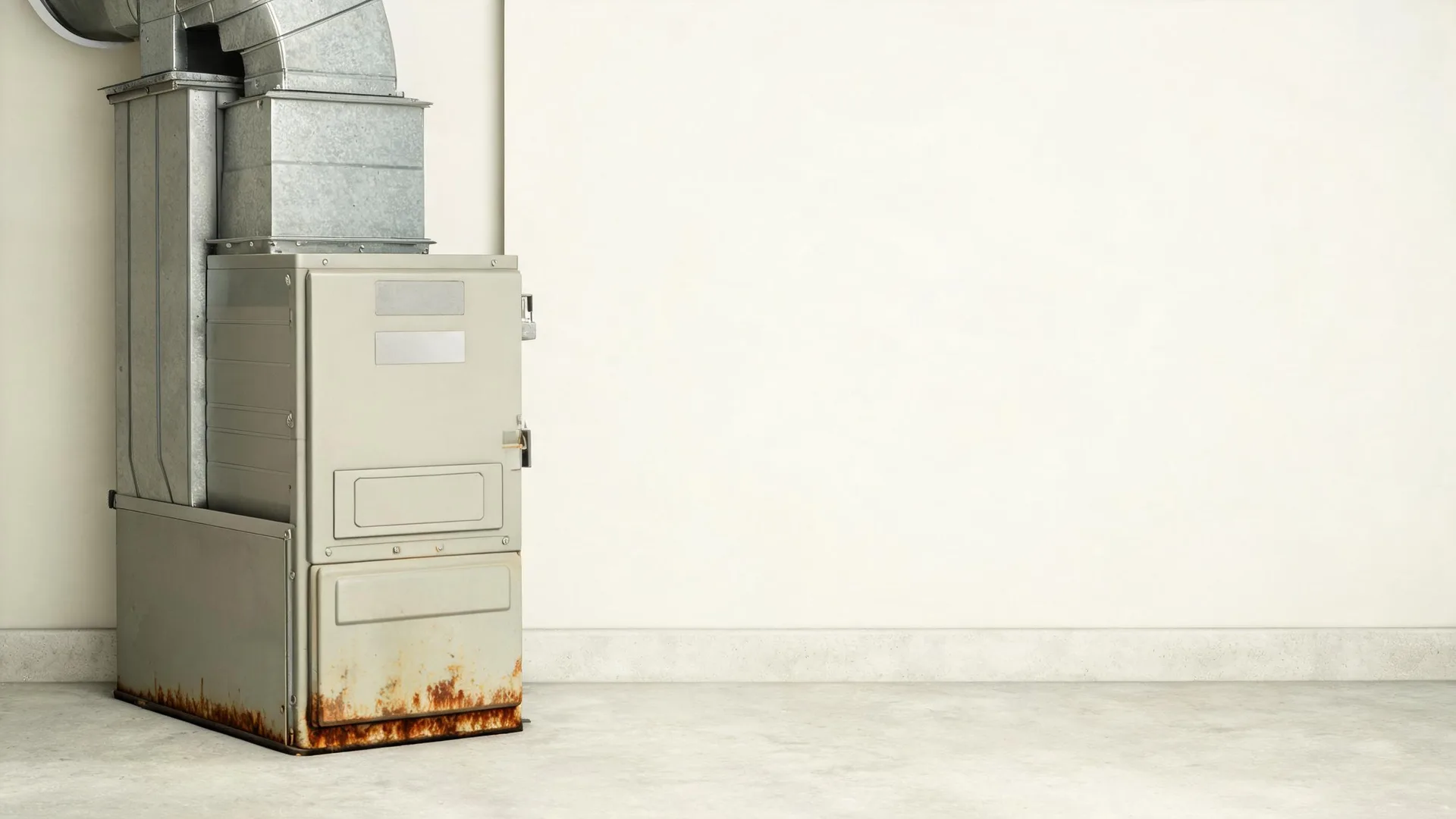
A gray forced-air furnace with metal ductwork stands in an unfinished basement with exposed wooden joists, concrete walls, and a single hanging light bulb.

Furnace Repair in O'Fallon, MO

Tell us about the job

Takes about a minute. No obligation.

RepairFurnace or heatingSt. Charles County, MO
Step 1 of 2

What ZIP code is the job in?

This county sees real storm damage

St. Charles County recorded 141 severe weather events between 2015 and 2024, including 84 damaging wind events, 39 hail events and 9 tornadoes. That's on top of 9 winter storms with heavy snow and ice in the same stretch.

Outages here aren't rare

Almost one in five Missouri households went at least 24 hours without power in 2024. A furnace with an electronic ignition won't run without power, and a long outage in the cold is when that matters most.

7 months
October through April, your furnace is on duty
25°F
the average winter night it heats against
66%
of homes here heat with gas, so most furnaces here burn gas
9 winter storms
in ten years, the nights a failure hurts most
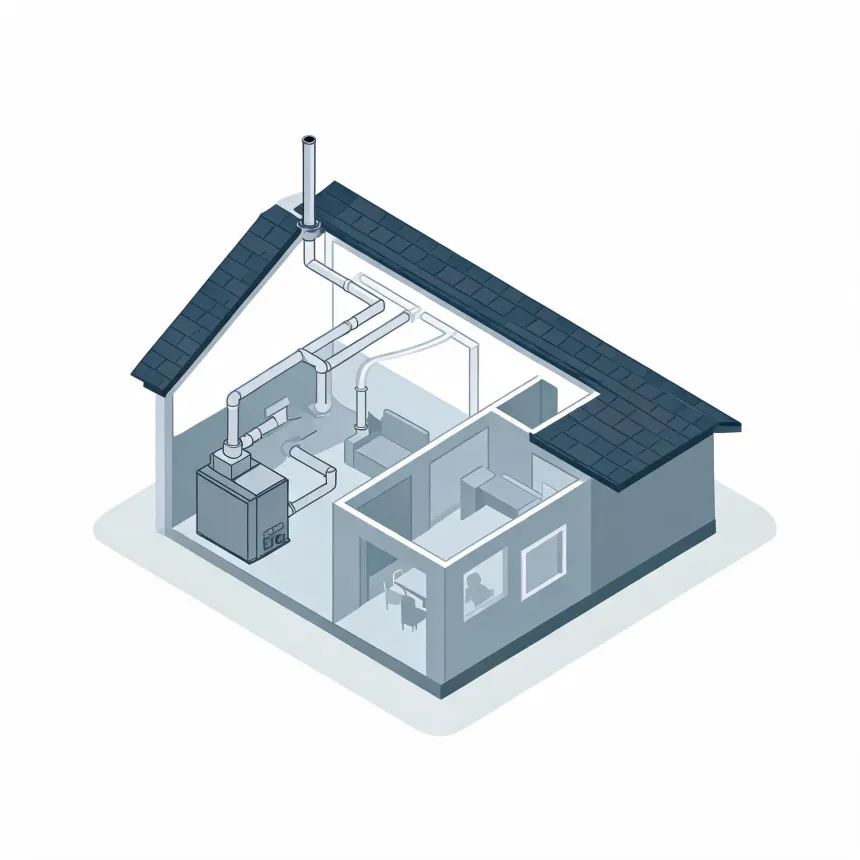
Isometric cutaway illustration of a single-story house showing interior rooms, a furnace unit with connected ductwork, and a flue pipe extending through the dark shingled roof.
Your furnace works hardest from November through March.

NOAA nClimDiv, 1991–2020 normals

An igniter or flame sensor wears out long before the rest of the furnace.

That's usually a quick fix, but only if someone gets to it before the cold does.

Half these homes were built in 1994 or later, and the furnace is often that age too

Half the homes here were built by 1994
Heat runs October through April
Winter nights average 25°F
Furnace season starts in October hereHomes in St. Charles County run heat about seven months a year, and the first cold snap finds the weak part fast

A furnace that came with a newer house usually has a lot of working life left in it. If that's your situation, a repair now is almost always the right call over a replacement. Have the technician check the age of the unit against the house itself, since not every furnace is original to the home. If the ductwork or gas line was put in during that same build, that's worth asking about too. Fixing what's there and getting the heat back on is the straightforward path for most of these houses.

If the last storm hit your unit, don't wait for it to fail

If your outdoor unit took hail or got hit by wind-blown debris this year, have it looked at now, even if the furnace seems to be running fine. A cracked cabinet or a bent fin can turn into a bigger problem once it's working hard through a cold snap.

Find a contractor
A gray high-efficiency gas furnace installed in an unfinished basement, surrounded by gas lines, a condensate drain, and sheet-metal ductwork.

What to check before you call anyone

Before you pick up the phone, there are a few things worth checking. Start at the thermostat. Make sure it's set to heat, not cool, and that the set temperature is actually above room temperature. If it runs on batteries, swap them out even if they look fine. Next, go to the breaker panel and look for a tripped breaker on the furnace circuit. Flip it fully off, then back on. If it trips again right away, stop and leave that to a technician. Check the furnace switch too, the one that looks like a light switch, usually mounted on or near the unit itself. It's easy to bump off by accident. Then look at the air filter. A filter clogged with dust can choke off airflow badly enough that the furnace shuts itself down to protect against overheating. If it's gray and packed solid, replace it. Last, walk around to any supply vents and return grilles and make sure none of them are blocked by furniture or rugs. None of this calls for tools or taking anything apart. If the furnace still won't run, or it runs and shuts off again after a few minutes, that points to something inside the cabinet, and that's where it stops being a homeowner job.

A furnace rarely quits without warning first

Short cycling is usually the first sign, where the burner fires and shuts off again before the house warms up. A flame that burns yellow instead of blue means it's not burning clean. A burning or metallic smell beyond the first few minutes of the season isn't normal, and neither is a furnace that runs long and steady but still leaves the house cold. Banging or scraping when it starts up usually points to the blower or the ductwork flexing, not something that fixes itself.

Waiting turns a repair into an emergency

A furnace that's struggling still runs, until the part that was wearing out finally gives up, usually on the coldest night of the stretch. A cracked heat exchanger or a failing limit switch can also shut the whole system down as a safety measure, which is the furnace protecting the house even if it leaves you without heat. Catching the noise or the smell early is what keeps a repair a repair instead of a no-heat call after hours.

An unfinished basement featuring concrete block walls, exposed floor joists, a bare concrete floor, and a forced-air furnace with a large metal exhaust duct in the corner.

A new furnace would cut about $190 a year off heating for a typical St. Charles County home.

  • A new high-efficiency furnace$750 a year
  • An older furnace$940 a year

Estimates for a typical St. Charles County home, compared with an older unit built to the previous federal minimum, from EIA household energy data, Missouri fuel prices and NOAA climate normals. Your home will differ.

Repair makes sense when one part has failed and the heat exchanger is sound.

Replacement makes sense when the heat exchanger is cracked or the furnace keeps needing parts.

A diagnostic starts before the panels come off. The technician asks what the furnace was doing, when it started, and whether it's happened before, because that narrows things down faster than guessing. Then the cabinet comes open and it's a visual pass first: the burner flame, the wiring, the condensation lines if it's a high-efficiency unit, any scorch marks or corrosion. From there it's testing with meters, checking the igniter's resistance, confirming the flame sensor is reading current, checking that the limit switch and pressure switch are doing their job. Airflow gets checked too, since a weak blower or a blocked duct can cause symptoms that look electrical but aren't. By the end the technician can usually point to the one part that failed and explain why, rather than replacing things to see what helps.