A lit brick residential street at dusk showing a row of two-story homes with covered porches and mature trees.

Furnace Repair in Marshfield, MO

Tell us about the job

Takes about a minute. No obligation.

RepairFurnace or heatingWebster County, MO
Step 1 of 2

What ZIP code is the job in?

Webster County sees its share of storms

Weather tracking shows 190 severe weather events in Webster County between 2015 and 2024, including 103 damaging wind events, 67 hail events, and 6 tornadoes. Winter storms with heavy snow and ice hit the county 12 times in that same stretch.
Outages hit furnaces too

Nearly one in five Missouri households went at least 24 hours without power in 2024. A furnace needs electricity to run blowers and controls even if it burns gas or propane, so a long outage on a cold night leaves a house without heat no matter how the furnace is fueled.

7 months
October through April, your furnace is on duty
25°F
the average winter night it heats against
12 winter storms
in ten years, the nights a failure hurts most
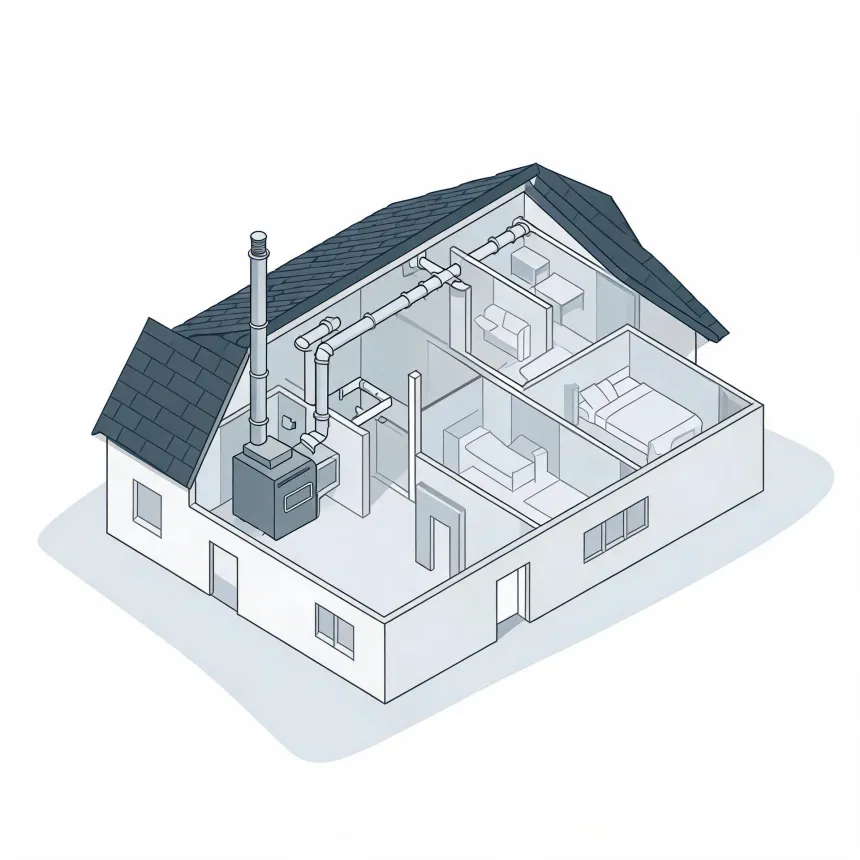
Isometric line illustration of a cutaway house showing interior rooms with furniture and a furnace with ducting and a flue pipe extending through the roof.
Your furnace works hardest from November through March.

NOAA nClimDiv, 1991–2020 normals

Half the homes in Webster County were built in 1991 or later.

A furnace that age still has years in it, which makes repair the call worth checking first.

Electricity here runs $37.84 per million Btu, and a furnace that's struggling burns more of it every day it waits

Climate zone 4A
Heat runs October through April
Winter nights average 25°F

A furnace built alongside a newer house hasn't had to fight through as many winters yet. If yours came with the place and the place is recent, the parts inside are probably original and still within their working life. That matters when a tech tells you what failed, because a cracked heat exchanger on a furnace that old is a different conversation than a flame sensor that just needs cleaning. Most failures at this stage are a single worn part, not the furnace itself giving out. Worth asking when the system went in, if you don't already know, before deciding repair isn't worth it.

Had a storm come through? Get the furnace checked before winter asks more of it.

If your furnace's outdoor components took a hit from wind or hail this year, or if the power's been out long enough to notice, have it looked at even if it's still running. A furnace that checks out fine now is one less thing to worry about when the cold sets in.

Find a contractor
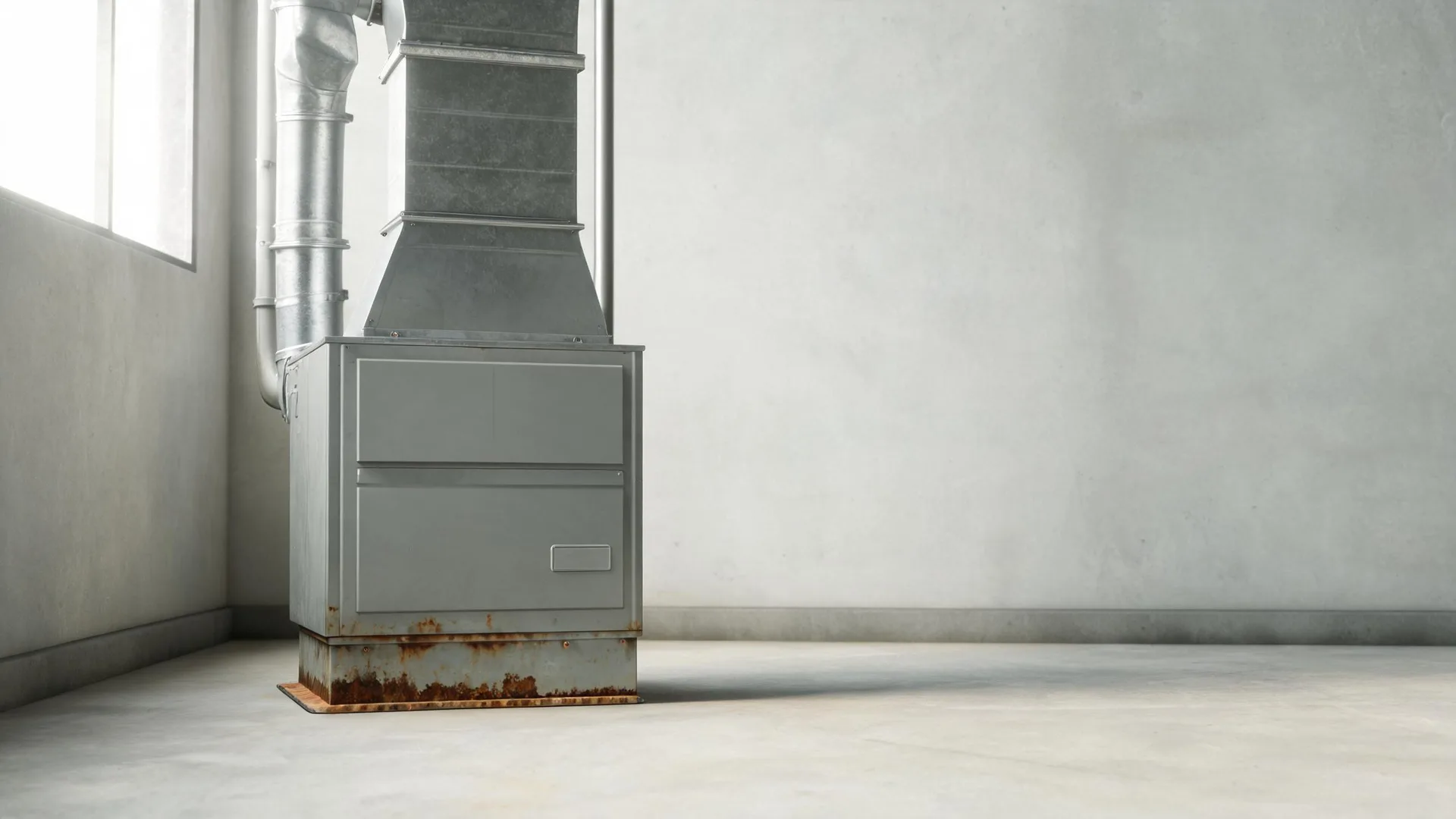
A gray high-efficiency gas furnace installed in an unfinished basement, surrounded by gas lines, a condensate drain, and sheet-metal ductwork.

What actually happens when someone comes to look at it

A diagnostic starts before the panel comes off. A tech asks what it's doing: not heating at all, blowing cold air, cycling on and off, making noise it didn't used to make. Then the panel comes off and the tech watches it try to run. On a gas furnace that means checking for a spark or glow at the igniter, watching whether the burners light and stay lit, and seeing if the flame sensor is reading the flame correctly. A furnace that lights and then shuts itself off is usually doing exactly what it's built to do: the flame sensor can't confirm a flame, so the control board cuts gas to the burners rather than let it run unsafely. The blower gets checked too, since a motor that's weak or a wheel that's caked with dust will choke airflow even when the burners are working fine. A tech will also pull the filter, trace the vent pipe for blockage, and check the pressure switch and the limit switch, since either one can shut the whole system down on its own. Most of what a furnace does is controlled by a circuit board reading signals from these switches and sensors, so part of the visit is electrical: checking voltage, checking connections, checking for a code blinking on the board that points to which part tripped. By the time the panel goes back on, the tech should be able to say which part failed and why, not just that the furnace isn't working.

What's worth checking yourself

Look at the filter first. A filter packed with dust chokes airflow, and a furnace that can't breathe will overheat and shut itself off on the limit switch. Check the thermostat is set to heat and the batteries aren't dead. Make sure the switch on the furnace itself, the one that looks like a light switch, hasn't been bumped off. Check the breaker. And check that the vent pipe outside hasn't gotten blocked, since furnaces with a side-wall vent can shut down if that pipe is covered.

What to leave alone

Don't pull the panel off and start testing the igniter or the flame sensor. Those read correctly only when the furnace is mid-cycle, and the wiring behind that panel carries line voltage. If the furnace lights and then shuts off on its own, that's the control board protecting itself, not a problem you can clear by resetting it over and over. Flip the switch off, call someone, and let a tech find out which part tripped it.

A furnace usually tells you something's wrong before it quits for good. It might take longer to warm the house than it used to, or run in short bursts instead of settling into a steady cycle. A burner flame that should burn blue can turn yellow or flicker, which points to a combustion problem worth having looked at. Noise is another one: a bang at startup, a squeal from the blower, a rattle that wasn't there before. Some of these mean the furnace is still working but wearing out a part. Others, like a burning smell or a furnace that trips its breaker repeatedly, mean stop running it and get it checked before it runs again.

A furnace that's short-cycling or running long to make up for a weak part is pulling more electricity every time it fires. Here that electricity already costs more than it does in most places, so a struggling furnace shows up on the bill before it ever quits outright. Fixing the part now stops that extra draw instead of paying it every month the repair waits. A furnace running through a full winter on a weak igniter or a dirty blower wheel isn't just risking a breakdown, it's running up the cost of heat for as long as nobody deals with it.