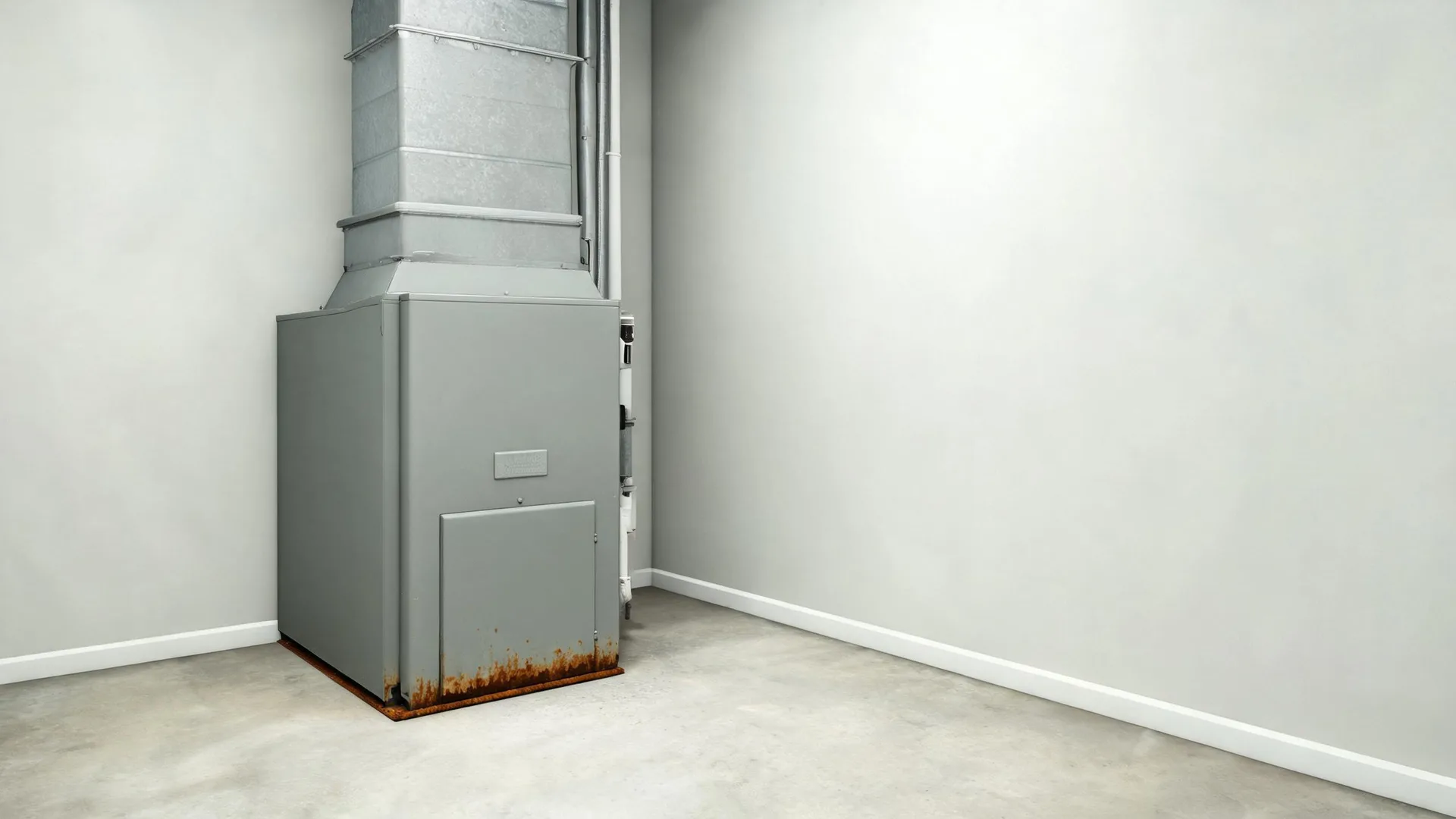
An unfinished concrete basement containing a metal HVAC air handler, exposed wooden ceiling joists with sheet-metal ducts, a hanging bare bulb, copper pipes, and stacked cardboard boxes.

Furnace Repair in Liberty, MO

Tell us about the job

Takes about a minute. No obligation.

RepairFurnace or heatingClay County, MO
Step 1 of 2

What ZIP code is the job in?

Clay County sees real storms

Clay County logged 227 severe weather events between 2015 and 2024, including 116 damaging wind events and 94 hail events. Six tornadoes touched down in that same stretch. A furnace shares the house with an outdoor unit that takes the brunt of that weather.

Power doesn't always hold

Almost one in five Missouri households went at least 24 hours without power in 2024. A gas furnace still needs electricity to run its blower and controls, so an outage can leave a house cold even with gas flowing to the unit.

7 months
October through April, your furnace is on duty
22°F
the average winter night it heats against
67%
of homes here heat with gas, so most furnaces here burn gas
9 winter storms
in ten years, the nights a failure hurts most
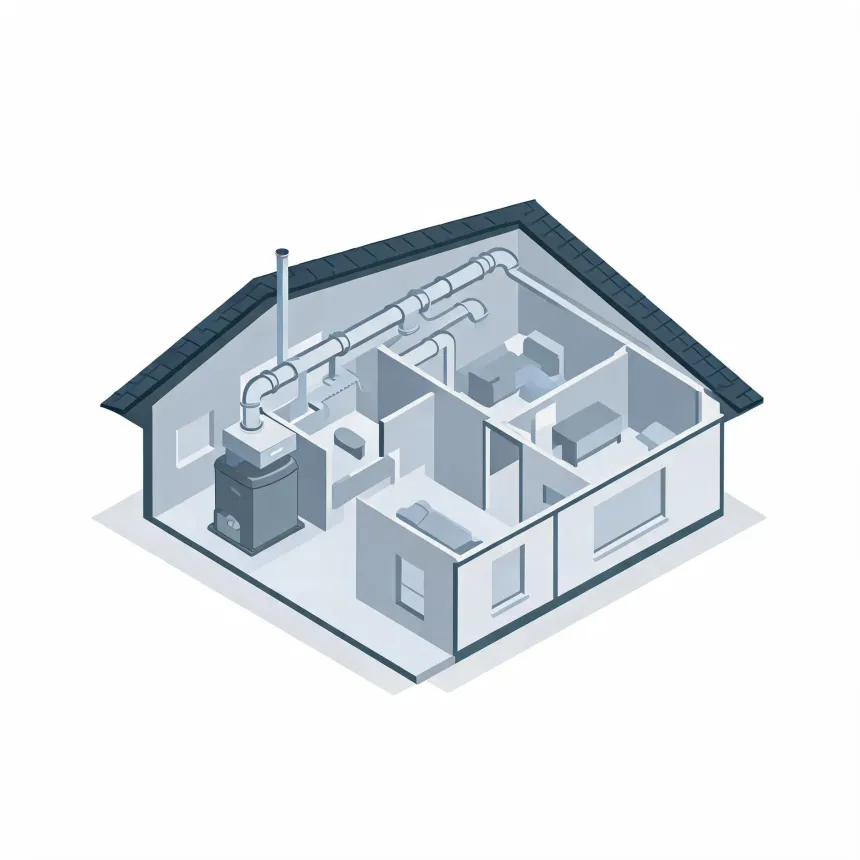
Isometric cutaway illustration of a single-story house showing interior rooms, ductwork running along the ceiling, a flue pipe through the roof, and a dark furnace unit in one corner.
Your furnace works hardest from November through March.

NOAA nClimDiv, 1991–2020 normals

Furnaces in Liberty go back to work in October.

A part that barely made it through last winter is the one that fails in the first cold snap.

Half the homes here were built in 1987 or later

Half the homes here were built by 1987
Heat runs October through April
Winter nights average 22°F

If your furnace came with a newer build here, that's a point in favor of fixing it rather than replacing it. A furnace that age hasn't necessarily put in enough years to justify starting over, and most problems at that stage are a single worn part rather than a system falling apart. A cracked flame sensor, a bad igniter, a failed control board part, these get replaced on their own. Check when your house was built and when the furnace was put in, since the two dates don't always match. If the unit is newer, repair is the call, and there's no reason to think otherwise until a tech tells you different.

After a storm, get the whole system checked, not just the obvious damage

A furnace that took a direct hit isn't the only one worth checking after a storm. Hail and debris reach the outdoor unit too, and a furnace system that looks fine can still have a problem that didn't show up yet. If Clay County weather has come through your yard this year, have a tech look at the whole system, not just the part that seems off.

Find a contractor
A man in a cap, long-sleeved shirt and work pants carries a canvas tool bag up porch steps toward a dark blue front door, beside a blue ceramic planter.
A gray residential gas furnace installed in an unfinished basement, connected to sheet-metal ductwork and PVC pipes.

What your furnace is telling you before it quits

A furnace usually tells you something is wrong before it quits outright. It might take a few tries to light, or the burner flame looks yellow and ragged instead of steady blue. The blower could kick on and run longer than it used to, or cycle on and off more than it should. Some furnaces start putting out air that isn't as warm as it was, even though the thermostat setting hasn't changed. A burning or metallic smell when it first fires up is worth paying attention to, and so is a knocking or screeching sound from the cabinet. None of these mean the whole unit is done. Most of the time it's one part wearing out, like an igniter losing its ability to glow hot enough, or a flame sensor coated with just enough residue that it can't confirm the flame is lit. Left alone, a small problem like that tends to turn into a furnace that shuts itself off mid-cycle as a safety response. That's the control board doing its job, not the furnace failing completely. The sooner a tech sees it, the more likely it's a single part and not a bigger repair.

Most failures are one worn part

An igniter loses the ability to glow hot enough to light the gas. A flame sensor builds up a layer of residue until it can't detect the flame anymore. A limit switch trips from restricted airflow and won't let the burners fire. These parts wear on their own schedule and quit one at a time, which is why a furnace that ran fine all last winter can fail from a single bad part this year.

Airflow problems cause other parts to fail

A clogged filter or blocked vent makes the heat exchanger run hotter than it should, and that heat is what eventually cracks it or burns out a blower motor. Most of what looks like random part failure traces back to something restricting airflow. Keeping air moving freely through the system is what keeps those other parts from wearing out before their time.

An unfinished basement featuring a forced-air furnace, exposed wooden ceiling joists, bare concrete walls, and miscellaneous items including cardboard boxes and coiled cables on the floor.

A new furnace would cut about $200 a year off heating for a typical Clay County home.

  • A new high-efficiency furnace$810 a year
  • An older furnace$1,010 a year

Estimates for a typical Clay County home, compared with an older unit built to the previous federal minimum, from EIA household energy data, Missouri fuel prices and NOAA climate normals. Your home will differ.

Repair makes sense when one part has failed and the heat exchanger is sound.

Replacement makes sense when the heat exchanger is cracked or the furnace keeps needing parts.

Deciding whether a repair is worth it comes down to what broke and what it's connected to. A single part failing on its own, like an igniter or a flame sensor, is a clean repair with a clear end point. The tech replaces that part and the furnace goes back to work like before. It's a different question when the part that failed caused damage elsewhere, like a cracked heat exchanger from years of restricted airflow, or a blower motor that burned out from running too hot for too long. At that point you're not just replacing what broke, you're weighing whether the rest of the furnace is old enough that another failure is close behind. Age matters less than how the furnace was run and maintained. A furnace that's had clean filters and clear vents its whole life can outlast one that's newer but spent years starved for air. If a tech tells you the failure is isolated, that's usually reason enough to fix it. If they're finding heat damage spreading to other parts, that's the furnace telling you it's been struggling for a while.