


A quiet residential street at dusk lined with illuminated two-story brick houses and mature trees.

Furnace Repair in Lebanon, MO

Tell us about the job

Takes about a minute. No obligation.

RepairFurnace or heatingLaclede County, MO
Step 1 of 2

What ZIP code is the job in?

September is worth a look before heat season starts here. Furnaces in Laclede County run from October through April, about seven months straight, and whatever was already weak tends to show up in those first cold weeks. A cracked heat exchanger, a failing igniter, a blower motor on its way out, these don't usually cause trouble sitting idle all summer. They show up when the furnace finally has to run hard. If yours struggled last winter or you noticed something off before it shut down for the season, that same issue is still there waiting.

7 months
October through April, your furnace is on duty
25°F
the average winter night it heats against
7 winter storms
in ten years, the nights a failure hurts most
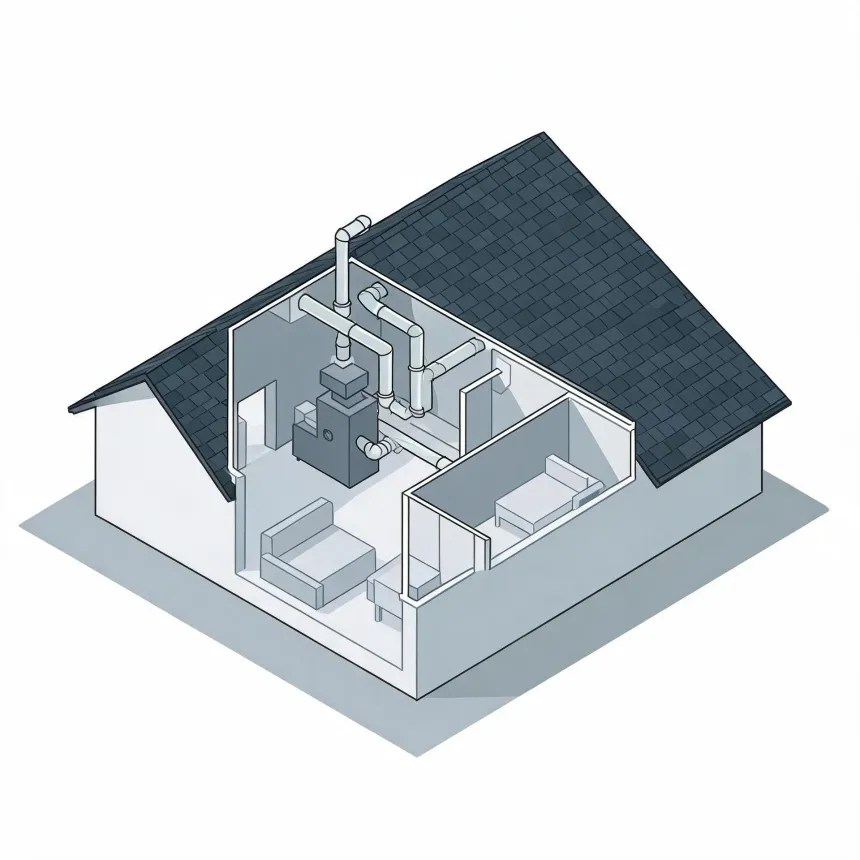
Isometric cutaway illustration of a single-story house with a dark shingled roof, showing interior rooms with furniture and a furnace connected to ductwork.
Your furnace works hardest from November through March.

NOAA nClimDiv, 1991–2020 normals

A dirty filter chokes airflow before anything else goes wrong.

Check it first. Pull it out and hold it to the light. If you can't see through it, that's likely your problem.

Seven months of running heat is normal here. It isn't what breaks a furnace.

Heat runs October through April
Winter nights average 25°F
Climate zone 4A

Most furnace calls come down to a handful of usual suspects. The igniter wears out from constant heating and cooling cycles and eventually stops glowing hot enough to light the gas. A flame sensor coated in a thin layer of residue stops recognizing the flame is there and shuts the whole system down as a safety measure. The blower motor's bearings wear out after years of spinning, and you'll hear it before you feel the lack of warm air. A cracked heat exchanger is the one that matters most, since it means the metal that separates combustion gas from the air moving through your house has failed, and that furnace needs to stop running until it's replaced. Thermostat wiring and control boards fail too, though less often, and they tend to cause a furnace that won't respond at all rather than one that runs poorly.

A furnace running wrong still runs up your bill

Electricity in Missouri ran $37.84 per million Btu in 2024. A furnace struggling on a worn igniter or a weak blower motor still pulls that power while it underperforms. The cost keeps adding up until the actual problem gets fixed.

Find a contractor
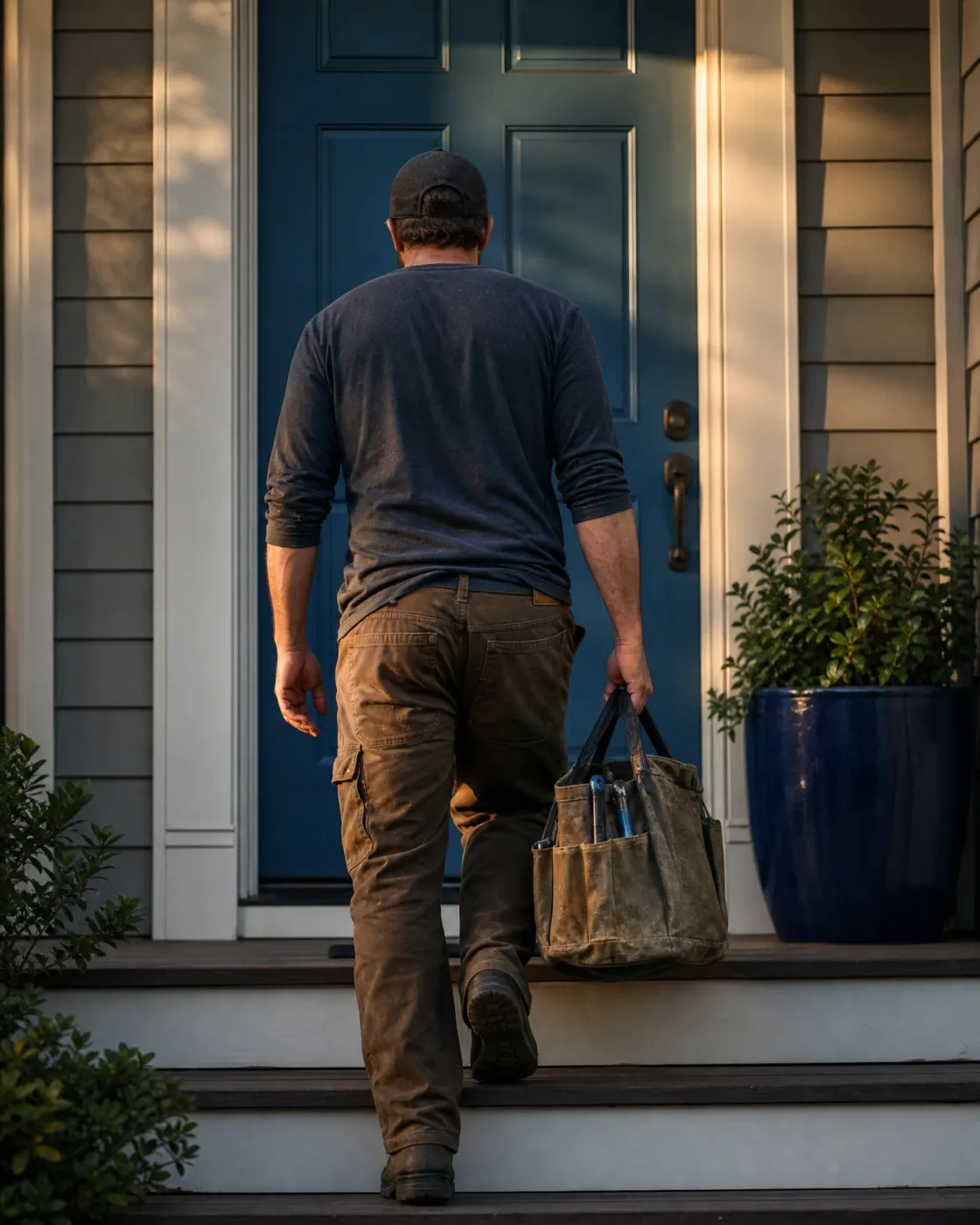
A man in a cap, dark long-sleeved shirt and brown work pants carries a canvas tool bag up porch steps toward a blue front door, with a shrub in a blue planter beside it.
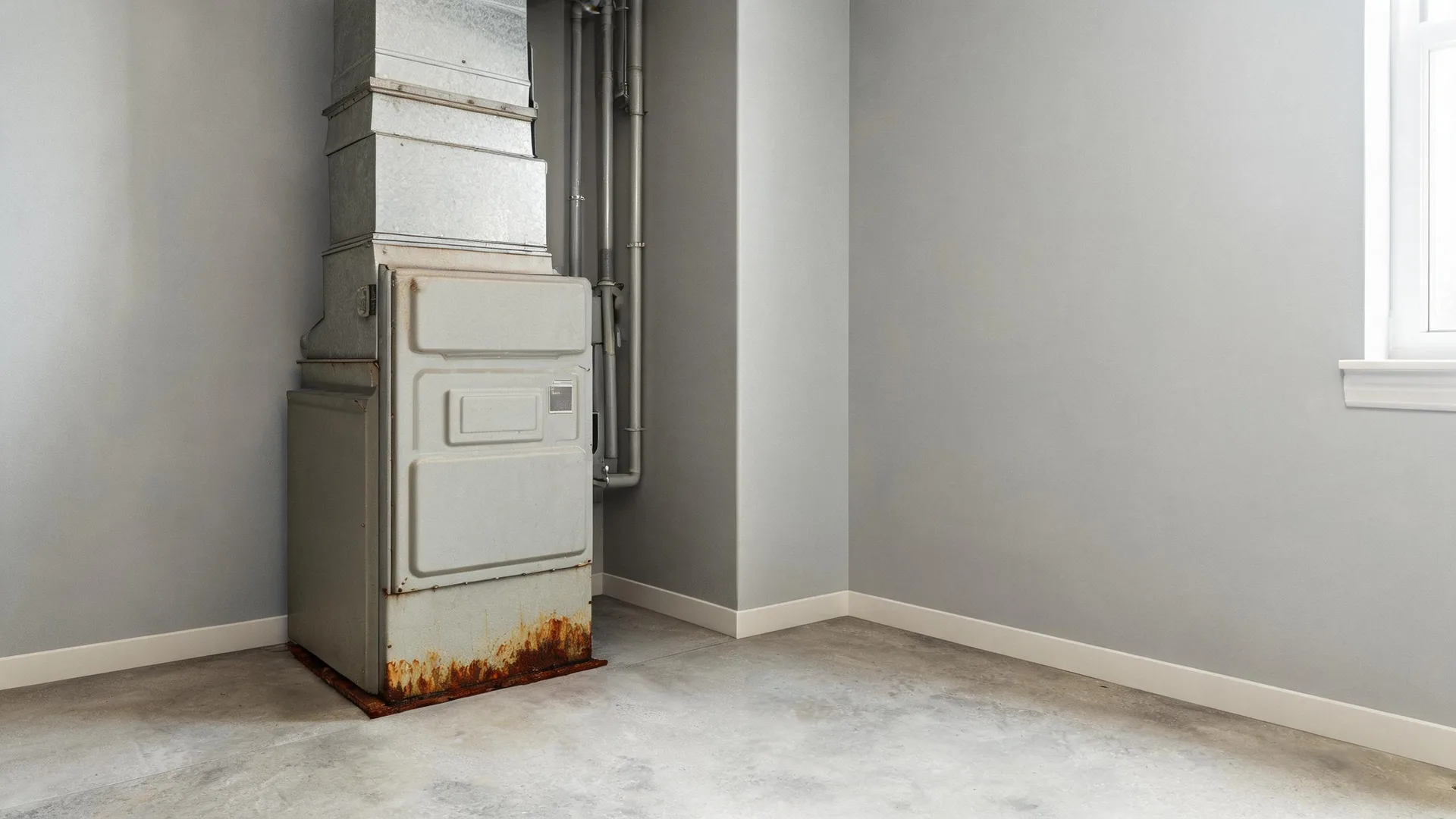
A gray residential gas furnace installed in an unfinished basement, surrounded by ductwork, a metal flue pipe, and a gas supply line.

A newer furnace is usually a fixable one

Half the homes in Laclede County were built in 1984 or later. If yours is one of them, the furnace itself may still be well short of worn out. A cracked heat exchanger or a dying blower motor is often just a part failing, not the system giving out. Worth fixing, not replacing.

A small problem leans on the parts around it

A flame sensor coated in residue makes the furnace try to light, fail, and try again. Each short cycle is more wear on the igniter than a single clean burn would be. A blower motor with worn bearings makes the motor work harder to keep the same air moving, which heats the motor windings more than they're built for. The part that failed first starts taking others down with it.
Some failures turn into a shutdown either way

A cracked heat exchanger won't get worse in the sense of spreading, but running a furnace with one lets combustion gas mix into the air moving through the house, so the furnace needs to shut down regardless of whether the crack grows. A furnace that keeps tripping its limit switch or flame sensor is already shutting itself off for safety. Waiting doesn't buy time there. It just delays the call while the furnace keeps failing to start.

Most people notice the furnace before they notice the problem. It runs longer than it used to, or it short cycles, kicking on and off without ever catching up to the thermostat setting. Some notice a smell instead. Burning dust the first time it fires up is normal enough, but a smell that doesn't fade after a few minutes is not. Others hear it. A scrape or rattle from the blower, a clicking that goes on too long before the flame catches, a boom when the gas finally lights. A furnace that blows cool air isn't warming anything, even if it sounds fine otherwise. Any of these is worth a call. None of them fix themselves by running longer.

A diagnostic visit starts with the thermostat and works back toward the furnace, not the other way around. A tech checks the setting and the response first, then pulls the panel and watches the furnace try to run through a full cycle. The igniter gets tested for resistance, since one that glows weak will still show voltage but won't heat enough to light the gas. The flame sensor gets checked next, and often just cleaned on the spot, since residue is more common than a failed sensor. If the furnace is short cycling, the limit switch and the flame sensor are the first things ruled out. A cracked heat exchanger gets checked with a camera or a combustion analyzer, not by eye, since the crack that matters usually can't be seen without pulling the burners. Airflow gets checked too, since a weak blower or a blocked duct can mimic a failing part that's actually fine.