




A nighttime street view of several illuminated two-story red brick homes with front porches, flanked by a large tree.

Furnace Repair in Joplin, MO

Tell us about the job

Takes about a minute. No obligation.

RepairFurnace or heatingJasper County, MO
Step 1 of 2

What ZIP code is the job in?

Jasper County saw 232 severe weather events between 2015 and 2024. That includes 124 damaging wind events, 82 hail events, and 9 tornadoes. Hail and wind-blown debris hit outdoor equipment, including anything tied to your furnace's blower or heat pump components if you have a dual system. A furnace that still fires up fine after a storm can have damage you won't see from the ground. Nationally, winter storms and ice added to the count here too, with 9 recorded in the same stretch. If your system took a direct hit from a recent storm, that's worth having looked at even if nothing seems wrong yet.

7 months
October through April, your furnace is on duty
27°F
the average winter night it heats against
9 winter storms
in ten years, the nights a failure hurts most
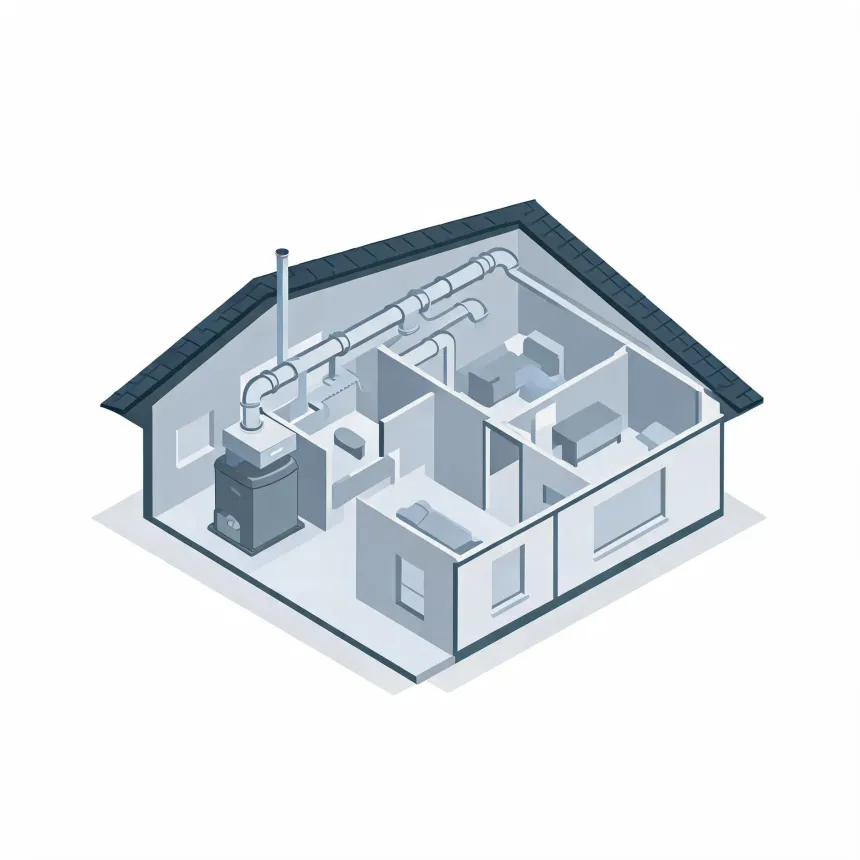
Isometric cutaway illustration of a single-story house showing interior rooms, ductwork running along the ceiling, a flue pipe through the roof, and a dark furnace unit in one corner.
Your furnace works hardest from November through March.

NOAA nClimDiv, 1991–2020 normals

A cracked heat exchanger lets exhaust mix with the air your furnace blows through the house.

Shutting it down until someone checks it is safer than hoping the smell or the headache goes away on its own.

Half these furnaces are younger than the house next door's roof

Half the homes here were built by 1986
Climate zone 4A
Heat runs October through April
Built for seven months of heat, not one easy winterHeat goes on in October and runs through April here, and whatever was already weak in your furnace shows up fast once it does.

A repair is worth making when the failed part is cheap next to the system it's keeping alive. An igniter, a flame sensor, a capacitor, these cost little and don't tell you anything about the rest of the furnace. A cracked heat exchanger is a different question, because that's the part that can't be patched, only replaced, and on an older unit the labor to get at it can cost more than the part itself. Age matters less than what's already failed once. A furnace that's needed two or three different repairs in as many years is wearing out in general, not just unlucky. One that's run for a decade with nothing but a filter change doesn't become a bad bet just because a blower motor finally gives out. Ask what broke and why before asking whether it's worth fixing.

Get it checked before the next storm, not after

If a storm came through recently and your furnace shares a cabinet or ductwork with outdoor equipment, don't wait for it to act up. Have it checked now, while you still have heat to lose.

Find a contractor
A man in a dark T-shirt, backwards cap and brown work pants, seen from behind, climbs porch steps toward a blue paneled front door while carrying a canvas tool bag, with a potted shrub in a blue planter to the right.
A gray gas furnace with attached ductwork and piping installed in an unfinished concrete basement.

What the furnace is telling you before it quits for good

Short cycling is one of the first things you'll notice. The furnace fires up, runs for a couple minutes, shuts off, then starts again before the house has warmed at all. That's usually a flame sensor that's coated and can't tell the burner is lit, or a flue restriction tripping the limit switch. Either way, the furnace is protecting itself by shutting down, and it'll keep doing it until someone clears whatever's causing it. A furnace that runs constantly without ever reaching the thermostat setting is telling you something different. Airflow is restricted somewhere, or the heat exchanger has lost its ability to transfer heat the way it should. Listen for the sounds it makes at startup and shutdown too. A hard bang when the burners light usually means gas is building up before it ignites, which points to a dirty burner or an igniter that's delaying the light. A screech points to the blower motor bearings or belt wear on older units. Rattling that comes and goes with the blower running is loose ductwork or a panel that's not seated right. None of these fix themselves, and most get worse the longer the furnace keeps running that way.

Most failures start with ignition, not the furnace itself

An igniter wears out from repeated heating and cooling cycles, the same way a light bulb filament eventually gives out. A flame sensor builds up a film from the burner flame itself until it can't detect current anymore. Both are small, inexpensive parts, and both are the single most common reason a furnace won't light or won't stay lit.
The parts that move or burn wear out first

A blower motor runs for hours at a stretch every time the thermostat calls for heat, so its bearings are the first thing to go on an older unit. A heat exchanger cracks from years of expanding when hot and contracting when cold. Neither failure happens overnight. Both show warning signs, usually noise or short cycling, well before they fail completely.

Check the thermostat first. Make sure it's set to heat, not cool, and that the set temperature is actually above room temperature. A dead or miscalibrated thermostat looks exactly like a dead furnace from where you're standing. Next, check the air filter. A filter clogged with dust and pet hair starves the furnace of airflow, which can trip the limit switch and shut the whole thing down. Look at the furnace switch too, the one that looks like a light switch on or near the unit, and make sure it hasn't been bumped off. If you have a gas furnace, check that the gas valve is turned to the on position. Last, go to your breaker panel and see if the breaker feeding the furnace has tripped. None of this requires opening the cabinet or touching anything near the burners or flame sensor. If all of that checks out and the furnace still won't run, the problem is inside the unit, and that's a call for someone who can get the panel off safely.

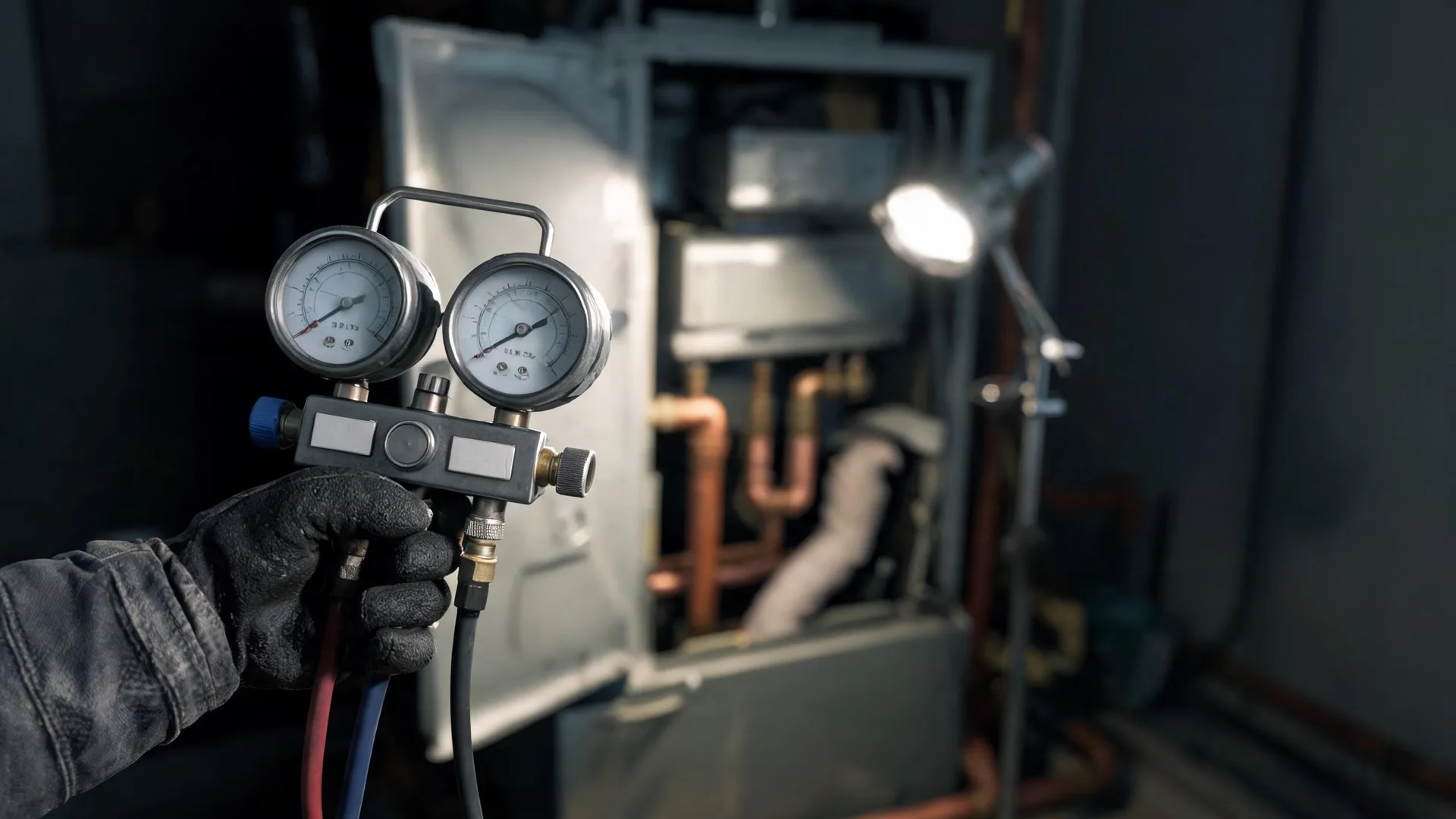
A diagnostic visit starts before the panels come off. A tech will ask what the furnace was doing right before it quit, and what sounds or smells showed up along the way, because that narrows down where to look first. Then comes a visual check of the burners, the flame, and the wiring, followed by testing with a meter rather than guessing. Gas pressure gets checked, the flame sensor gets tested for microamp output, and the limit switches get verified against what they're supposed to be doing. A combustion analyzer can check the exhaust itself, which is the only real way to confirm a heat exchanger is doing its job. None of this is quick, because skipping a step is how a bad call gets made. The furnace gets run through at least one full cycle before anyone calls the job done, so an intermittent problem has a chance to show itself.