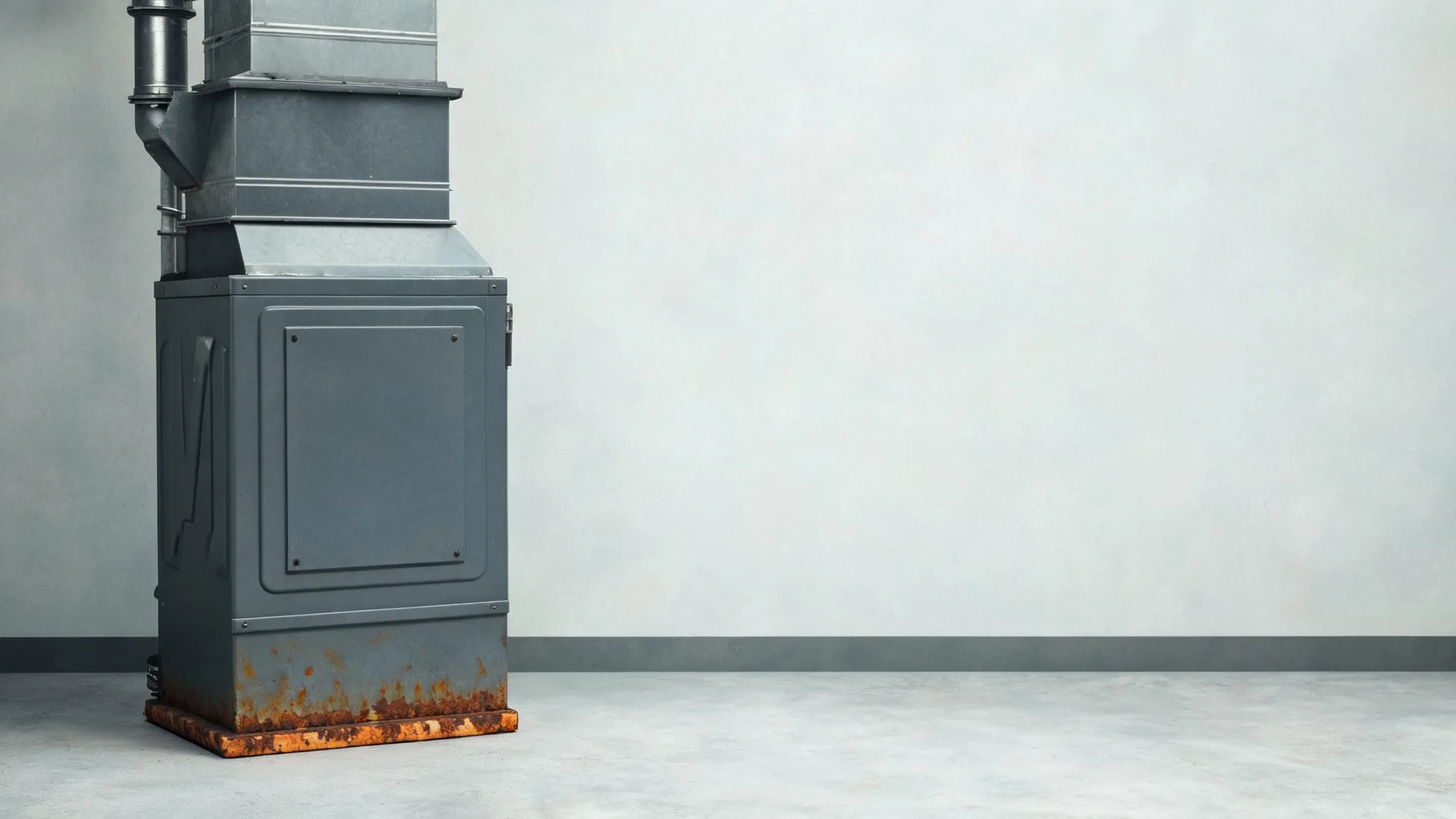
September is the month to get it looked at
Furnaces in Cole County start running in October. The weeks right before that, in September, are when it still makes sense to have a problem checked before the cold sets in and you need the heat every day.
Takes about a minute. No obligation.
Furnaces in Cole County start running in October. The weeks right before that, in September, are when it still makes sense to have a problem checked before the cold sets in and you need the heat every day.
A furnace that sat quiet since spring gets asked to run hard once October comes. Whatever was already weak, a cracked igniter, a failing inducer motor, a bad flame sensor, tends to give out right then, not in the middle of winter.
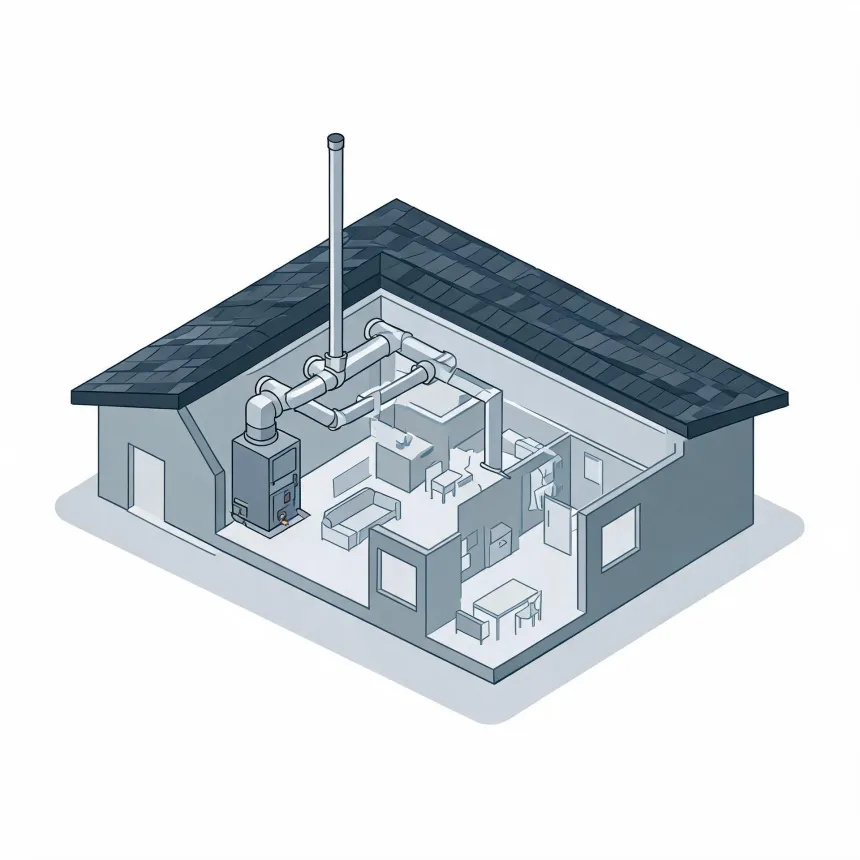
NOAA nClimDiv, 1991–2020 normals
Furnaces here run from October through April, about seven months straight.
A furnace with a weak part usually shows it in the first few weeks of running, not months in.



Half the homes in Cole County were built in 1982 or later. If yours is one of them, the furnace inside it hasn't necessarily been run into the ground. A newer house doesn't rule out a furnace with plenty of working life left in it, and a broken igniter or a bad flame sensor doesn't change that either. Fixing the part that failed usually makes more sense than replacing the whole unit.
If your house was built in 1982 or later, there's no reason to assume the worst about what's wrong with it. Have the actual problem diagnosed before anyone talks replacement.
Find a contractor
A furnace that's struggling doesn't fix itself by staying on. A cracked heat exchanger gets worse under heat and cooling, cycle after cycle, until it cracks further. A flame sensor coated in residue reads weaker each time it fires, until the furnace stops holding a flame at all. An inducer motor straining on bad bearings keeps straining, and heat is hard on worn bearings. Short cycling wears the ignition system down faster than steady running does. None of this slows down because you need the heat. It runs on its own clock, and leaving the furnace running doesn't pause it.
Look at the thermostat first. Make sure it's set to heat and set above room temperature, and check the batteries if it uses them. Check the furnace switch, the one that looks like a light switch near the unit, and make sure it's on. Look at the breaker panel for a tripped breaker. If you have a gas furnace, make sure the gas valve is open and that any other gas appliance in the house is getting gas. Pull the filter and hold it up to a light. If you can't see light through it, that alone can cause the furnace to shut down or blow cold air.
Don't open the burner compartment or touch the flame sensor or igniter. These sit close to a live flame or a hot surface and they're easy to damage by hand. If you smell gas, don't flip any switches or try to relight a pilot. Leave the house and call the gas company from outside. If the furnace trips a breaker more than once, stop resetting it and get it looked at. A breaker that keeps tripping is telling you something is drawing too much current, and running it again won't tell you what.
Most furnace failures trace back to a handful of parts. The igniter is one. It's a thin strip that glows hot enough to light the gas, and that cycle of heating and cooling makes it brittle over time until it cracks and stops glowing at all. The flame sensor is another. It's a thin rod that proves to the control board that a flame is actually burning, and residue builds up on it until it can't sense the flame anymore, so the furnace shuts itself down as a safety measure. The inducer motor pulls exhaust out before the burners fire, and its bearings wear down from years of heat until it struggles to start or runs loud. A cracked heat exchanger is the one that matters most, since it means combustion gases can mix into the air the furnace is heating, and once it cracks it doesn't seal itself back up. Most of these fail from age and ordinary wear, not from anything the homeowner did or didn't do.
A diagnostic visit starts with what you noticed. No heat, cold air, a smell, a noise, a breaker that keeps tripping. The tech checks the control board first, because most furnaces store a fault code even after the power's been reset. From there it's a sequence. Gas pressure, airflow, whether the igniter is glowing the way it should, whether the flame sensor is reading a steady flame, whether the inducer is pulling exhaust properly. Each check rules something in or out. The heat exchanger gets checked no matter what brought the furnace down in the first place, because a crack there is a safety problem even if it has nothing to do with why you called. By the end you get a straight answer. What failed, why it failed, and what it takes to fix it.