




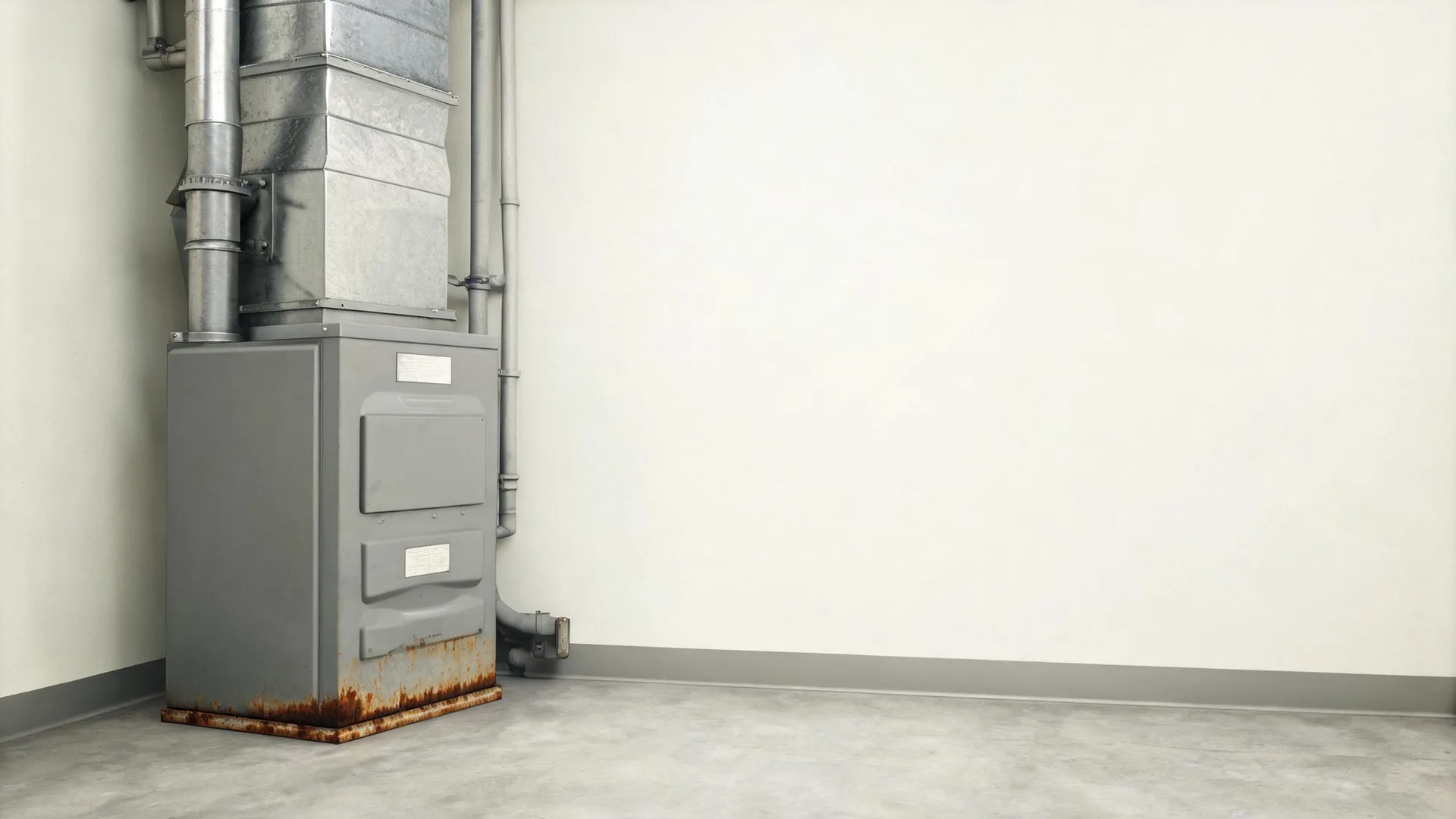
A gas furnace with sheet-metal ductwork and PVC pipes installed in an unfinished basement.

Furnace Repair in Hannibal, MO

Tell us about the job

Takes about a minute. No obligation.

RepairFurnace or heatingMarion County, MO
Step 1 of 2

What ZIP code is the job in?

Furnaces in Marion County start their work in October and keep running through April. That first cold snap in September, or whenever your heat first kicks on for the season, puts load on parts that sat idle all summer. An igniter or flame sensor that was already going weak often won't make it through that first real test. If your furnace is acting up now, it's worth having someone look at it before you're relying on it every day for the next seven months.

7 months
October through April, your furnace is on duty
22°F
the average winter night it heats against
55%
of homes here heat with gas, so most furnaces here burn gas
10 winter storms
in ten years, the nights a failure hurts most
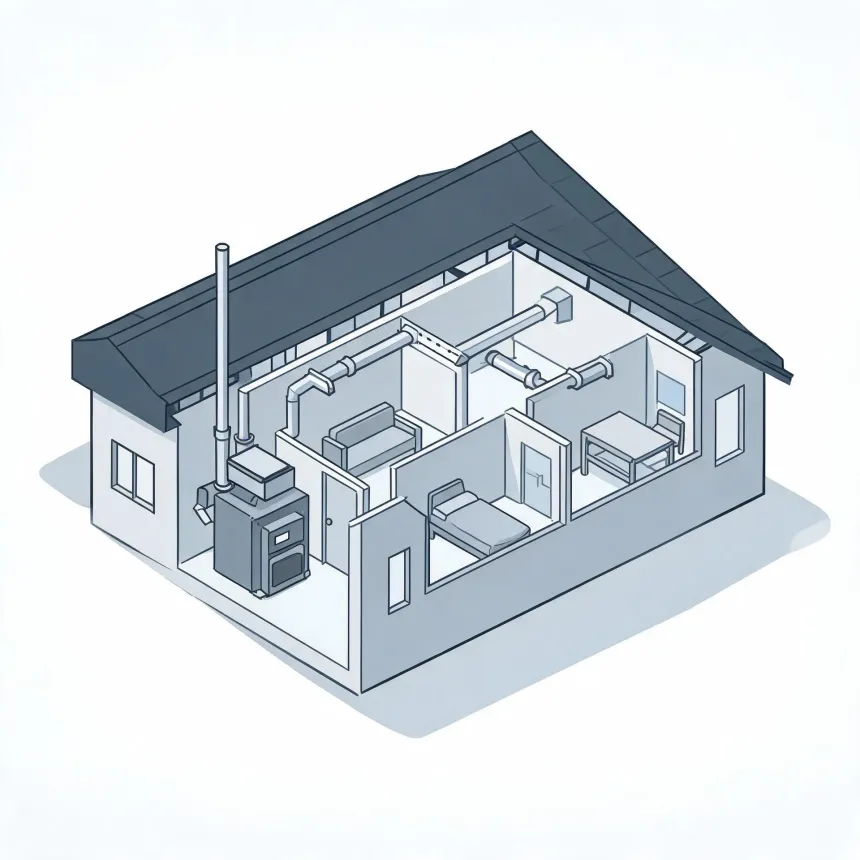
Isometric cutaway illustration of a single-story house showing interior rooms with furniture, overhead ducting, a flue pipe, and a furnace unit against an interior wall.
Your furnace works hardest from November through March.

NOAA nClimDiv, 1991–2020 normals

Furnaces here run from October through April, about seven months straight.

A furnace that struggles now has seven months to get worse, so the fix matters more than the timing.

Half the homes in Marion County were built in 1971 or earlier

Half the homes here were built by 1971
Heat runs October through April
Winter nights average 22°F

A furnace acting up in Hannibal is almost never a sign of something unusual going on with the house or the weather here. It's one part wearing out, same as it would anywhere else gas heat runs hard all winter. Missouri households paid $16.49 per million Btu for natural gas in 2024, so a furnace that's cycling more than it should, or running longer to hit the same temperature, is costing more while it's doing it. That's reason enough to find the actual cause rather than wait it out. A contractor can usually tell within a few minutes whether it's a worn igniter, a dirty flame sensor, or something further along, and from there it's a question of whether to repair it or plan for something bigger.

Ask how much life is left before you pay for the repair

If your furnace came with the house, its age is worth knowing before you pay for a repair. Half the homes in Marion County were built in 1971 or earlier, and if yours is one of them, the furnace may be old enough that the money is better spent planning for a replacement. A contractor can tell you how much life the unit has left before you decide.

Find a contractor
A gas furnace with attached ductwork, gas piping, and condensate lines installed in a concrete-block basement.

What to check yourself first

Before anyone comes out, check the simple things first. Make sure the thermostat is set to heat and the temperature is actually above room temperature, not just sitting where it always sits. Go to the furnace and check the power switch, it looks like a light switch on or near the unit, and make sure it hasn't been bumped off. Check the breaker too. If your furnace has a standing pilot, look for the small flame through the viewing window, if it's out, there's usually a relight procedure printed right on the unit. Change the air filter if you can't remember the last time you did, a clogged filter chokes airflow and can cause the whole system to shut itself down as a safety measure. Look at the vent hood outside and clear away anything blocking it, leaves, snow, a nest. If the furnace is running but the air feels cool, let it run a few minutes before judging, it takes time to warm up. None of this fixes a cracked heat exchanger or a failed control board, but it rules out the things that aren't actually broken.

Short cycling wears out the parts that are already weak

A furnace that turns on, runs briefly, then shuts off is usually tripping a safety switch somewhere in the sequence. A cracked heat exchanger, a dirty flame sensor, or a blocked vent can all cause this. Each short cycle puts another load on the igniter and blower motor, so the problem tends to get worse the longer it runs this way.

Sounds and smells tell you where to look

A metallic screech points to the blower motor or its bearings. Banging at startup usually means gas is building up before it lights, which is a job for a contractor, not a homeowner. A burning dust smell on the first run of the season is normal and clears on its own. Any smell of gas means shutting the furnace off and getting it checked before using it again.

An unfinished basement featuring a forced-air furnace, exposed wooden ceiling joists, bare concrete walls, and miscellaneous items including cardboard boxes and coiled cables on the floor.

A new furnace would cut about $210 a year off heating for a typical Marion County home.

  • A new high-efficiency furnace$860 a year
  • An older furnace$1,070 a year

Estimates for a typical Marion County home, compared with an older unit built to the previous federal minimum, from EIA household energy data, Missouri fuel prices and NOAA climate normals. Your home will differ.

Repair makes sense when one part has failed and the heat exchanger is sound.

Replacement makes sense when the heat exchanger is cracked or the furnace keeps needing parts.

A contractor starts by asking what you noticed and when it started. That often points to the problem faster than the inspection itself. Then they'll run the furnace through its cycle and watch each step. Does the igniter glow. Does the gas light off it. Does the blower kick on when it should. A multimeter checks whether the igniter and flame sensor are working within range, since both wear down slowly and can look fine while barely holding on. They'll pull the panel and look at the flame itself. A steady blue flame is normal. Yellow or flickering points to a combustion problem that needs more than a quick fix. If the furnace is short cycling, they'll check the safety switches to see which one is tripping and why. By the end you should know which part failed, not just that something did.