





A quiet residential street at dusk lined with illuminated two-story brick houses and mature trees.

Furnace Repair in Bolivar, MO

Tell us about the job

Takes about a minute. No obligation.

RepairFurnace or heatingPolk County, MO
Step 1 of 2

What ZIP code is the job in?

Polk County saw 190 severe weather events between 2015 and 2024. Damaging wind caused 99 of those, hail another 72, and 12 tornadoes touched down in that same stretch. A furnace sits inside, so it's the outdoor equipment tied to your heating system that takes the brunt of this, along with the power lines feeding your house. Statewide, close to one in five households went at least a full day without power last year. None of that means your furnace is damaged. It means a system that's been through wind and hail is worth having looked at, even if it's still firing up fine.

7 months
October through April, your furnace is on duty
25°F
the average winter night it heats against
7 winter storms
in ten years, the nights a failure hurts most
Isometric cutaway illustration of a small house showing a furnace unit connected to ductwork and a vertical flue pipe extending through the dark shingled roof, with sparse furniture in the rooms.
Your furnace works hardest from November through March.

NOAA nClimDiv, 1991–2020 normals

Half the homes in Polk County were built in 1987 or later.

A furnace that age still has years in it, so a repair call is usually the right one.

October asks the most of a furnace that sat quiet since spring

Heat runs October through April
Winter nights average 25°F
Climate zone 4A
A furnace running badly here costs you more every monthMissouri electricity ran $37.84 per million Btu in 2024, and most homes in Polk County heat with it.

If your furnace came with a newer build, call a repair tech before you call anyone about replacement. A furnace with years left in it is worth fixing when something goes wrong, whether that's a cracked heat exchanger scare that turns out to be something smaller, or an igniter that just needs swapping. Ask the tech for the age of the unit if you don't know it, it's usually stamped on a plate inside the cabinet. That number tells you more than how the system sounds when it kicks on.

Get the furnace checked, and the outdoor unit while they're there

If your outdoor equipment took wind or hail this year, that same storm likely isn't why your furnace is acting up now, since the furnace itself sits inside. But it's worth having a tech look at both while they're out. Get the furnace diagnosed and ask them to check the outdoor unit too.

Find a contractor
A gas furnace with attached ductwork, gas piping, and condensate lines installed in a concrete-block basement.

What to check before you pick up the phone

Before a tech comes out, there are a few things worth checking yourself. Start with the thermostat. Make sure it's set to heat, not just fan, and that the setpoint is actually above room temperature. A dead thermostat battery stops the call from ever reaching the furnace, and that looks exactly like a broken system from where you're standing. Next, find the furnace switch, it looks like a light switch on or near the unit, and make sure nobody bumped it off. Check the breaker at the panel too, since a tripped breaker shuts the whole system down with no warning sound at all. If you have a gas furnace, look for a gas valve near the unit and confirm it's turned to on. Pull the filter and hold it up to a light. If you can't see light through it, that alone can cause shutdowns, weak airflow, or a furnace that runs but never warms the house. None of these checks require opening the cabinet or touching anything electrical beyond a switch. If the furnace still won't run after all that, or if it runs but you smell gas, leave it off and call someone. A gas smell isn't a troubleshooting step, it's a reason to stop checking and get a tech out.

Most calls come down to a handful of parts

An igniter cracks or weakens and stops glowing hot enough to light the gas. A flame sensor coats with residue and can't tell the control board a flame is lit, so the system shuts itself down as a safety measure. A pressure switch sticks or fails and the furnace won't start a cycle at all. These are wear parts, not signs of a dying furnace, and a tech can test each one in a single visit.
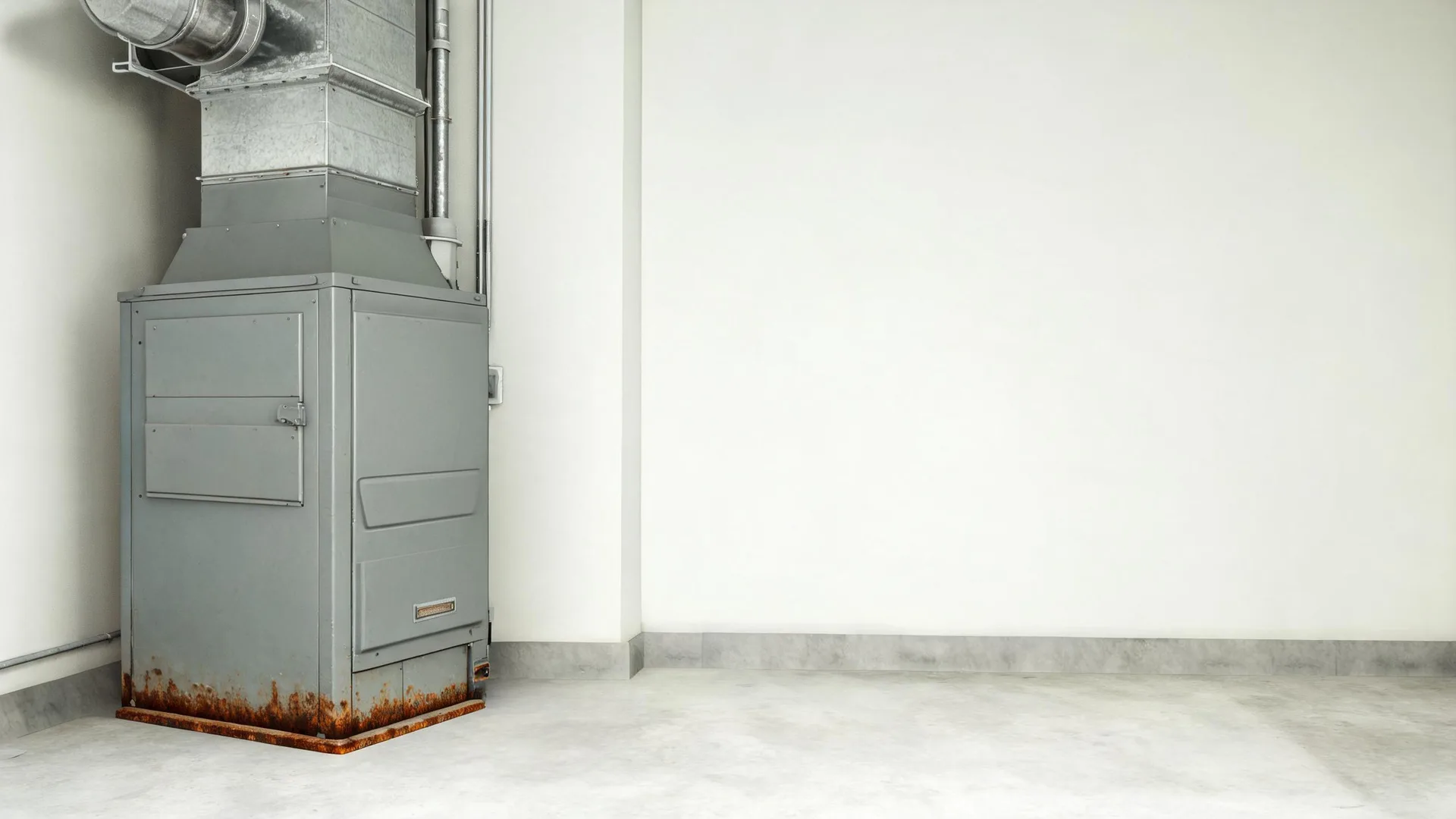
A dirty filter causes problems that look like something else

When airflow is choked off, the heat exchanger runs hotter than it should and the furnace can shut down on a high limit switch, or the blower can run long after the burners stop. People call that a cracked exchanger or a bad blower motor before anyone checks the filter. A clean filter is the cheapest thing to rule out before anything gets taken apart.

A furnace that short cycles or runs long to hold the house at temperature draws power the whole time it struggles. At $37.84 per million Btu, that adds up fast when most of Polk County heats with electricity in the first place. A pressure switch that sticks, or a blower that won't shut off, doesn't just mean an uncomfortable house. It means the meter keeps turning while the system fights itself. Getting it looked at now stops that drain before the furnace is running every day without a break.

A diagnostic visit starts with the tech asking what you've noticed, since a smell, a sound, or a pattern of shutting off tells them where to look first. From there they'll check the thermostat call, confirm the igniter is glowing and lighting the burners, and watch the flame to see if it's steady or if it's rolling away from the burner. They'll pull the filter and look at it, because restricted airflow shows up as half a dozen other problems before anyone traces it back. A combustion analyzer or a simple visual check tells them whether the flame is burning clean. They'll check the pressure switch and the limit switch, since either one can shut the system down without any damage having happened at all. Most of this gets done with the cabinet open and the furnace running, so the tech can watch it go through an actual cycle rather than guess from a cold unit.