October starts the season here
Furnaces in St. Louis city switch on in October and keep running through April. That is seven straight months of work once the season starts.
Takes about a minute. No obligation.
Furnaces in St. Louis city switch on in October and keep running through April. That is seven straight months of work once the season starts.
A furnace sitting unused since spring needs a check before it has to carry the house through winter. September gives a contractor time to look it over before October's first cold snap puts it to work.
A cracked heat exchanger doesn't announce itself, you won't smell it or hear it.
A tech checks it every visit because that crack is the one thing in your furnace that can hurt someone.



Gas heats 66.8% of homes in St. Louis city. That means a flame, not just a blower. A gas furnace draws air for combustion and vents what it burns outside through a flue. A tech checks that the burner lights clean, that the flue is drafting the way it should, and that the safety controls shut the gas off if something goes wrong. None of that has anything to do with the filter. A new filter keeps the air moving. It tells you nothing about whether the gas side is safe to run through the winter.
It starts running hard in the first month of the season here. Book the check the month before.
Find a contractorA furnace usually tells you something before it quits. The burner flame should burn blue and steady. If it's flickering yellow or orange, the burner is dirty or not getting the air it needs to burn clean. A furnace that short cycles, kicking on and off every few minutes instead of running a full heating cycle, is working against a clogged filter, a bad flame sensor, or a blocked vent. Listen for a boom when it lights. That's gas building up before ignition catches it, and it means the burner needs cleaning. A blower that runs but never seems to put out warm air often has a cracked heat exchanger pulling heat away before it reaches the vents, or a failing limit switch cutting the burner off too soon. Any of these is a reason to get it looked at before you're depending on it every day.
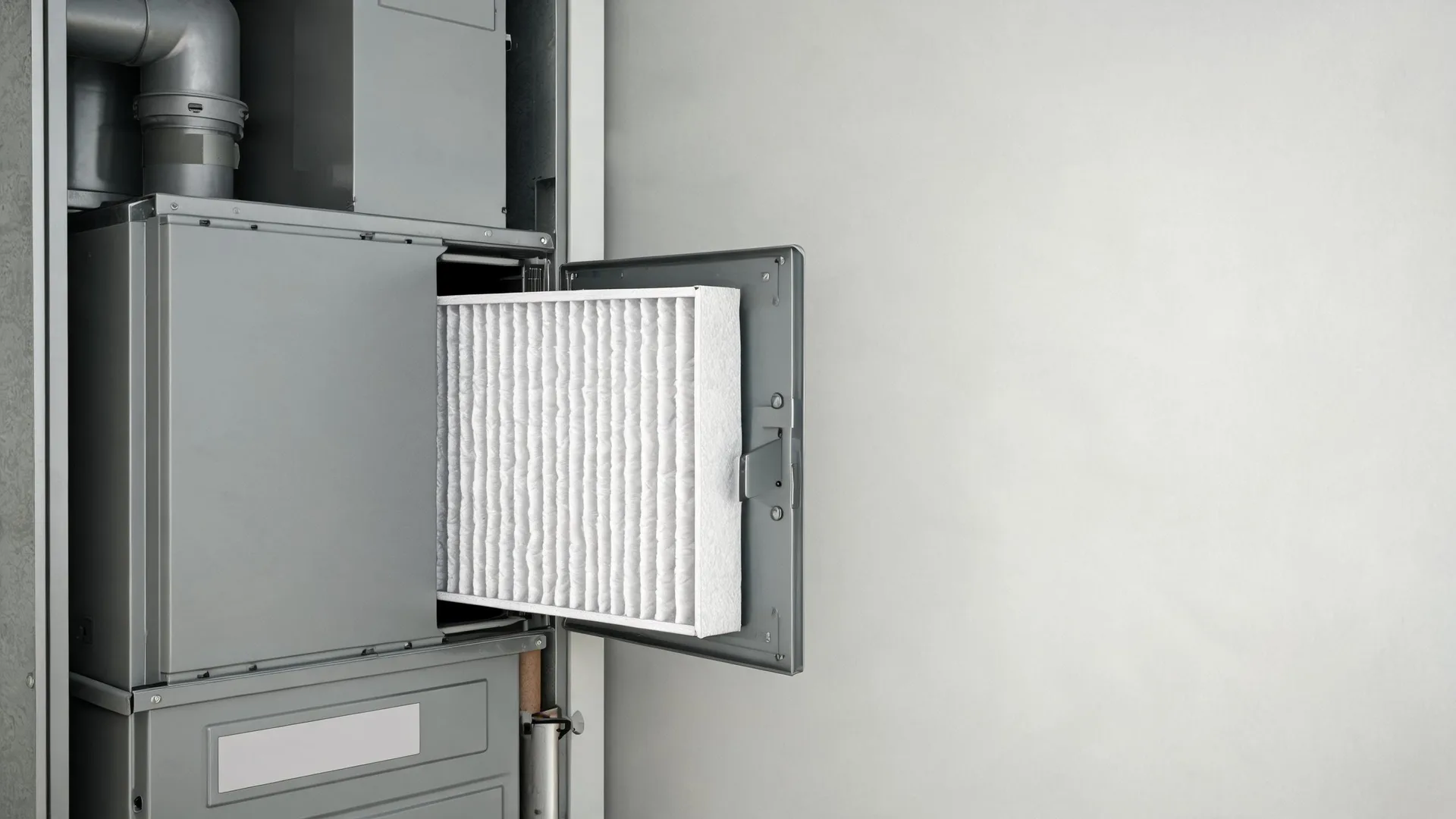
A dirty filter chokes airflow across the blower and the heat exchanger. The furnace works harder to push air through it, and the motor runs hotter than it should. That strain is what shortens a blower's life. Swapping the filter is the easiest part of furnace care, but it has no bearing on the burner, the flue or the gas side of the system.
The evaporator coil and condensate drain do their work when the system is cooling, not heating. A furnace with a cracked coil or a clogged drain will still light and run fine through winter. A tech looks at them anyway during a furnace visit because trouble sitting there all winter, a slow drain or a dirty coil, turns into a bigger job once the system switches back to cooling.
Skip the yearly check and nothing happens right away. A furnace with a dirty burner or a weak flame sensor will still light and still heat the house, maybe for the whole season. That's what makes skipping it easy to get away with and hard to notice. The wear doesn't go away though. A burner that's been running dirty carbons up more each month, and a flame sensor coated in residue eventually stops sensing the flame at all, which shuts the furnace down rather than leaves it running unsafe. A blower motor straining against a clogged filter runs hotter every cycle until it's the thing that fails, usually on the coldest week it's working hardest. None of this shows up as a sudden break. It shows up as a furnace that was fine early in the season and isn't later on, because whatever was already wrong had the whole winter to get worse.
A tune-up starts with the burner. A tech pulls it to clean off rust and scale, then checks that the flame lights even and blue across the whole burner, not just at one end. The flame sensor gets cleaned or replaced if it's worn, since that part is what tells the furnace to keep running once it's lit. The igniter gets checked too, because a weak one takes longer to light the burner each time, and that delay is often the first sign it's going out. From there it's the blower motor and belt if it has one, checked for wear and for the strain a dirty filter puts on them. Gas pressure gets tested, the flue gets checked for a clean draft outside, and the heat exchanger gets inspected for cracks since that's the one check no homeowner can do alone.