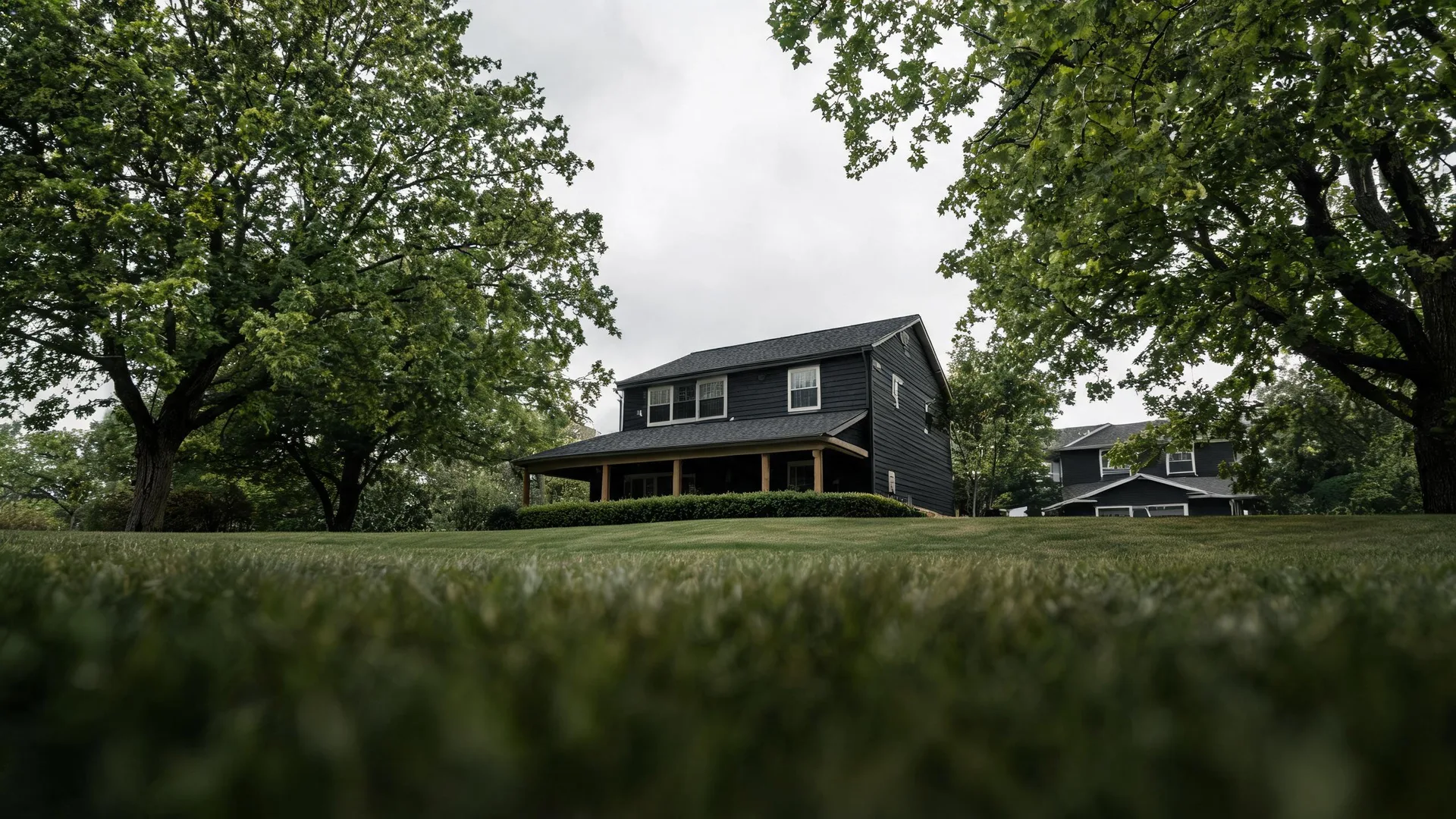


A low-angle view across a mown lawn toward a two-story dark-sided house with a covered front porch, flanked by large green trees under an overcast sky.

Furnace Maintenance in St. Joseph, MO

Tell us about the job

Takes about a minute. No obligation.

Tune-up, service, or cleaningFurnace or heatingBuchanan County, MO
Step 1 of 2

What ZIP code is the job in?

Furnace here starts running in October and goes through April, about seven months straight. September is when to get it checked, before it has to work. A technician can catch a cracked heat exchanger or a weak igniter while the furnace is still sitting idle, not after it's already running every day. Wait until October and you're booking the check at the same time everyone else in St. Joseph is calling because their furnace won't start.

A quick tune-up checks that the furnace turns on and blows warm air.

A thorough one pulls the burners, checks flame sense, and tests the heat exchanger for cracks before any of it fails on a cold morning.

Most of St. Joseph heats with gas, so the furnace check has to cover the burner and venting, not just the filter

53.8% of homes heat with gas
Heat runs October through April
Winter nights average 21°F

Half the homes in Buchanan County were built in 1964 or earlier. A furnace that old has usually been replaced at least once, but the ductwork and gas line it ties into are often original to the house. That matters more than the furnace's own age. A yearly check is what catches a cracked heat exchanger or a loose gas connection before it becomes a safety issue instead of a repair. If your system came with the house, there's no way to know its history just by looking at it, so the check is how you find out.

Book it before the season

It starts running hard in the first month of the season here. Book the check the month before.

Find a contractor
A gray gas furnace with attached ductwork and piping installed in an unfinished concrete basement.

Make it a yearly habit, not a one-time check

Put the same check on the calendar every year, not just once. The furnace itself may be newer, but the ductwork and gas line it runs through usually aren't, and a yearly check is the only way to see them before one of them fails instead of just ages.

Dirt and dust build up where you can't see them

A furnace left alone collects dust on the burners and the flame sensor. A dirty flame sensor can't tell the gas is lit. So the furnace shuts itself off, sometimes a few minutes into every cycle. That's not a part failing. That's a part doing its job with a dirty signal.

Small problems turn into no-heat calls

A cracked heat exchanger starts as a hairline. A loose wire at the igniter starts as a bad connection. Left alone through a few months of daily cycling, either one tends to end the same way. The furnace won't start, usually on the coldest morning of the week.

A furnace usually tells you before it quits. The flame sounds different, a low rumble instead of a steady whoosh, or it clicks a few times before it catches. Some furnaces short cycle, running a few minutes then shutting off, which usually means a dirty flame sensor or a limit switch tripping. A burner flame that's yellow or flickering instead of steady blue means it's not burning clean. A new smell when it first kicks on each season is normal for a day. One that lingers, or smells sharp instead of dusty, is not. Any of these on their own is worth a call before the next one shows up with it.

A proper tune-up starts with the burners, not the filter. The technician pulls them out, cleans off any rust or dirt, and checks that the flame is steady and blue across each one. Flame sensor gets cleaned too, since a thin film of residue on it is enough to make the furnace shut off mid-cycle. The heat exchanger gets inspected for cracks, usually with a camera, because that's the one part you can't see or reach once the cabinet's closed back up. The technician also checks the venting, to make sure exhaust is actually leaving the house instead of backing up, and tests the gas pressure at the valve. Last thing is cycling the furnace a few times to confirm it starts clean, runs steady, and shuts off the way it should.