A row of dark-sided single-story houses with gray shingled roofs behind large leafy trees, a trimmed hedge at left and mown lawn with a narrow walkway in front.

Furnace Maintenance in Rolla, MO

Tell us about the job

Takes about a minute. No obligation.

Tune-up, service, or cleaningFurnace or heatingPhelps County, MO
Step 1 of 2

What ZIP code is the job in?

Electric heat here runs on expensive power

Missouri electricity ran $37.84 per million Btu in 2024. Most homes around Rolla heat with it, and that furnace runs hard through a cold winter. A unit working harder than it needs to burns through that power faster.


A dirty or worn furnace wastes what it pulls

A clogged filter, a dirty blower wheel, or a furnace that's never been checked all make the system work harder to push out the same heat. Every bit of that extra work shows up on the electric bill, and in Rolla that bill is already higher than most places.

Most furnaces around Rolla run on electricity, not gas.

A tune-up here means checking the heat strips and blower, not a burner or a flue.

A newer furnace still earns its yearly check

Half the homes here were built by 1984
Heat runs October through April
Winter nights average 25°F
Get it checked in SeptemberFurnace season starts in October and runs seven months here, through April.

A furnace with years left in it is worth keeping that way. Yearly service is what does it. A tech checks the heat strips, cleans the blower wheel, and makes sure the system isn't drawing more power than it should to push out the same heat. Catching a worn part early means it gets replaced on your schedule, not in the middle of a cold snap. Skip that check for a few winters and small wear turns into a bigger repair, or a furnace that doesn't make it as long as it should have. If yours came with a newer build, a yearly visit is what keeps it running like one.

A tune-up keeps that power bill from climbing

A furnace pulling more power than it needs to will do it all winter, and here that power isn't cheap. A yearly check catches the dirty blower wheel or worn heat strip before it makes the system work harder than it should. Get it looked at before the cold sets in.

Find a contractor
A gas furnace with attached ductwork, gas piping, and condensate lines installed in a concrete-block basement.

What's working against your furnace, every time it runs

A furnace moves air, and everything in its path either lets it move freely or makes it work harder. A dirty filter is the usual culprit. As it loads up with dust, the blower has to pull harder to push the same air through, and that strain lands on the motor. A furnace with electric heat strips depends on steady airflow across those strips to carry the heat away. Restrict that airflow and the strips run hotter than they should, which shortens their life. The blower wheel itself collects a film of dust and grime over time, and once it does, it moves less air even at full speed. None of this shows up as a sudden breakdown. It shows up as a system that runs longer to do the same job, cycle after cycle, all winter.

Change the filter

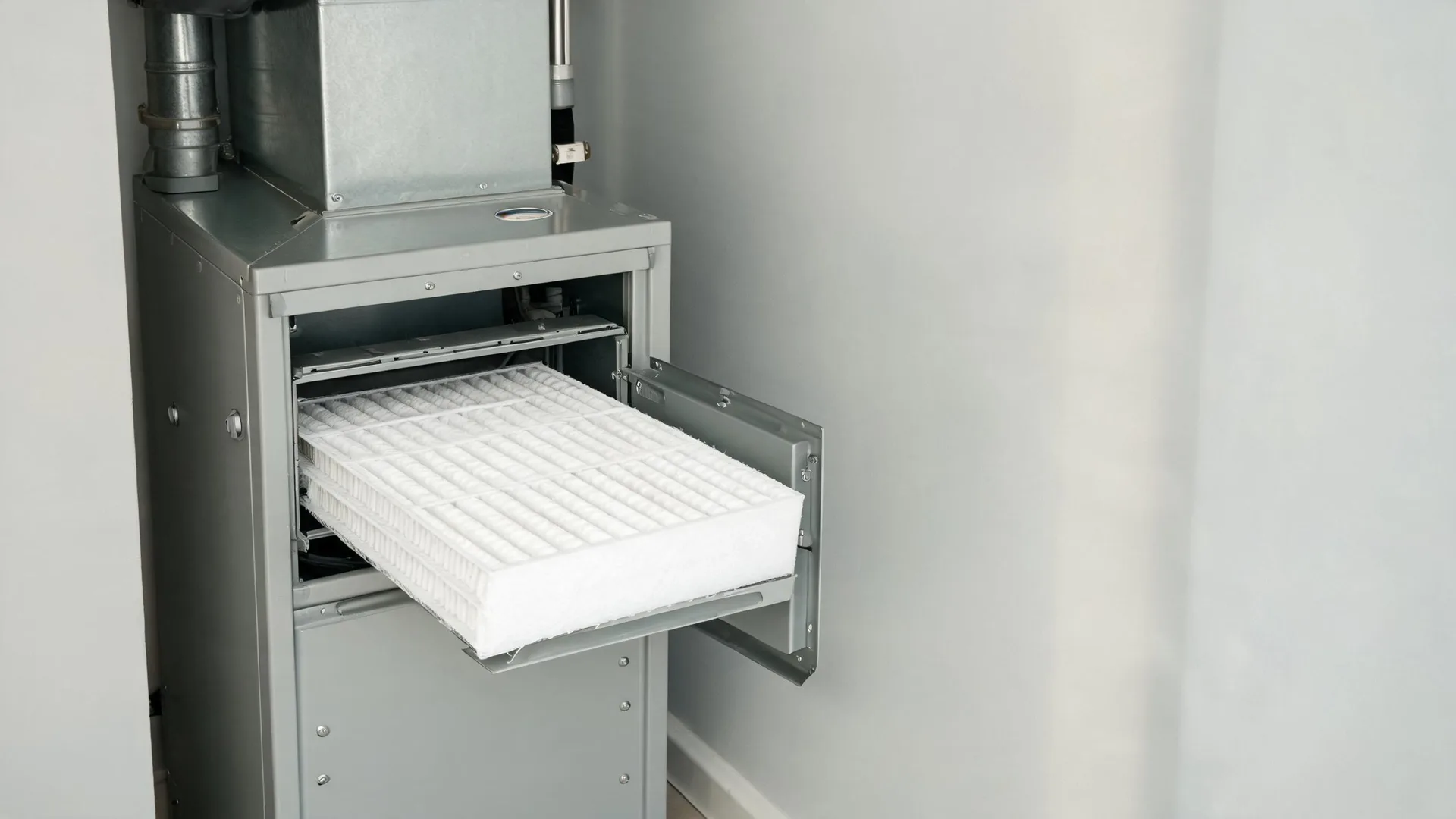
A dirty filter is the one thing worth checking yourself, and the easiest to forget. Hold it up to a light. If light doesn't pass through, it's done. A filter left too long starves the blower of air and makes the whole system work harder to push out the same heat.

Know what to leave alone

The blower wheel, the heat strips, and the wiring behind the panel aren't a homeowner job. Opening that panel without knowing what you're looking at risks a shock or a bent part that was working fine before you touched it. Swap the filter, keep the area around the unit clear, and leave the rest for the yearly visit.

A furnace usually tells you something is off before it quits outright. It might take longer to bring a room up to temperature than it used to, even though the thermostat is set the same. It might cycle on and off more than it needs to, running short bursts instead of one steady stretch. You might notice a burning smell when it first kicks on, which can mean dust baked onto the heat strips, or it might mean something sitting too close to them. A furnace that hums or clicks but takes a moment longer to actually push out warm air is worth a look too. None of these mean it's about to fail. They mean it's working harder than it should to do the same job, and a yearly check is what catches that before it turns into a bigger repair.

A proper tune-up starts with the filter and works inward. The tech checks airflow first, because every heat strip and every bearing in that furnace depends on air moving the way it was designed to move. The heat strips get inspected for hot spots or scorching, signs that air isn't carrying the heat away fast enough. The blower wheel comes next, checked for the film of dust that builds up on the blades and cuts down how much air it can push even when the motor is working fine. Electrical connections get checked too, since a loose wire or a corroded terminal behind the panel is one of the more common reasons a furnace stops mid-cycle. The tech also checks that the system cycles the way it should, coming on, running a full steady stretch, and shutting off clean, instead of short-cycling or running longer than it needs to. None of this is guesswork. It's the same handful of checks, done the same way, because those are the parts that wear and the ways they show it.