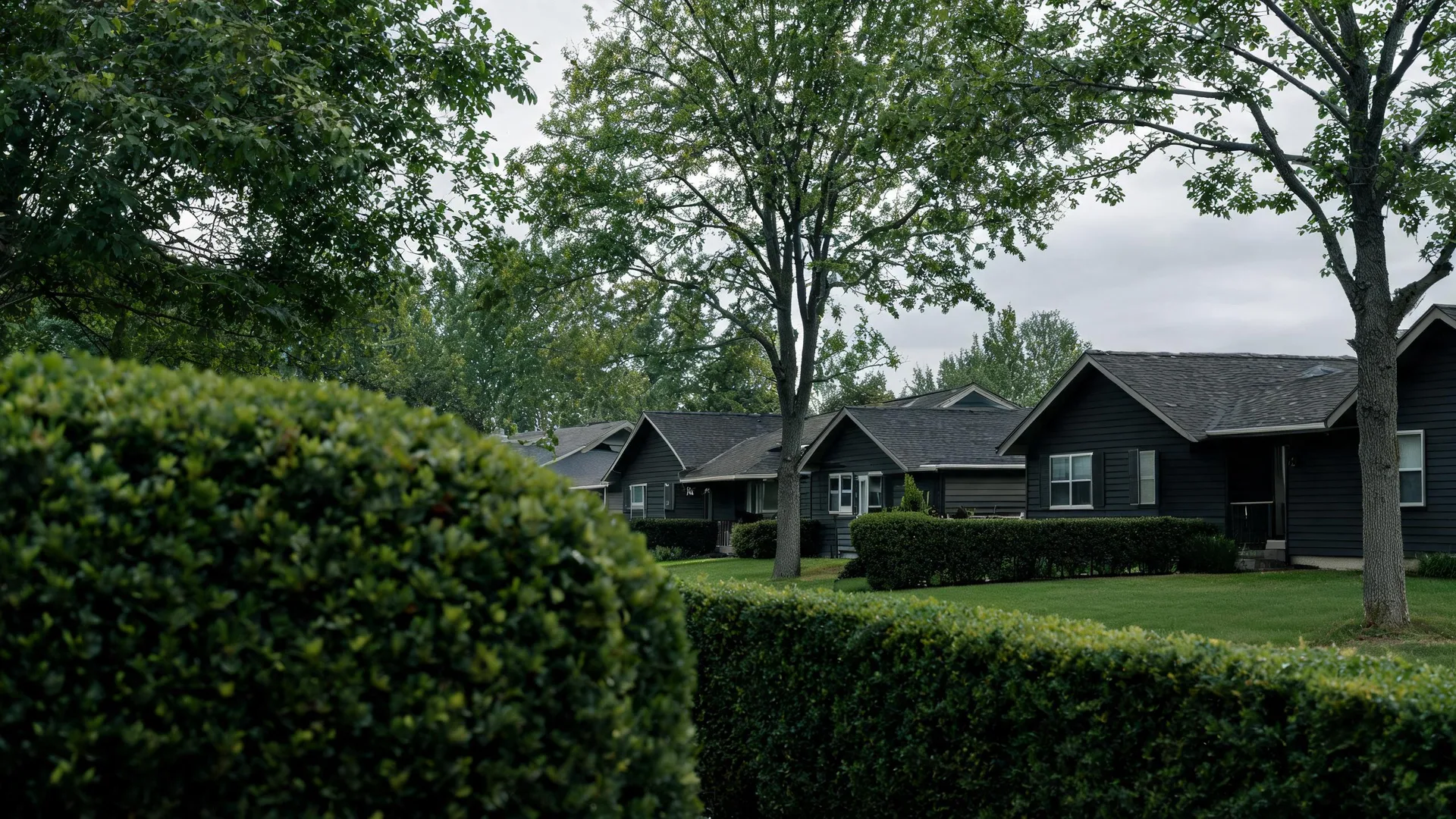
A row of dark-clad single-story houses with gabled roofs behind trimmed hedges, lawn and leafy trees under an overcast sky.

Furnace Maintenance in Marshfield, MO

Tell us about the job

Takes about a minute. No obligation.

Tune-up, service, or cleaningFurnace or heatingWebster County, MO
Step 1 of 2

What ZIP code is the job in?

Weather here takes a toll

Webster County logged 190 severe weather events between 2015 and 2024, including 103 damaging wind events, 67 hail events and 6 tornadoes. A furnace doesn't sit through that untouched, especially anything mounted outside or exposed through the roofline.


Power doesn't always hold

Nearly one in five Missouri households went at least a full day without power in 2024. A furnace that depends on electricity to run needs to be in good shape before that happens, not checked out after the lights come back on.

Half the homes in Webster County were built in 1991 or later.

A furnace that age still has years ahead of it, and a yearly check is what gets it there.

October is when it starts working. Have it checked in September.

Heat runs October through April
Winter nights average 25°F
12 winter storms from 2015 to 2024
What Kind of Furnace, What Kind of Check42.2% of homes here heat with electricity. Most of the rest burn gas or propane.

A furnace that's dirty or out of tune has to run longer to put out the same heat, and most homes here heat with electricity. Electricity in Missouri ran $37.84 per million Btu in 2024. That rate stays the same whether the furnace is clean or clogged, but how long it has to run does not. A furnace that's been checked and tuned burns less of it to do the same job. Skip the tune-up and that extra runtime shows up on every bill all winter.

Get it checked before the next storm takes the power out

A furnace that's been through a storm season without a look can be carrying damage nobody's seen yet, especially if any part of it sits outside or ties into the roofline. A tune-up now is when a contractor can catch that, while the furnace is just sitting idle and not yet carrying the house through a cold night.

Find a contractor
A gray residential gas furnace installed in an unfinished basement, surrounded by ductwork, a metal flue pipe, and a gas supply line.

Built in 1991 or later. Keep it that way.

A yearly check is maintenance, not a repair bill. A contractor tests the ignition, checks the heat exchanger and makes sure the furnace is reading the thermostat right, the kind of look that catches a small problem while it's still small. For a furnace that's still within its working life, that's what keeps it there. Skip a year and nothing happens right away. Skip it for several winters running and small wear turns into a part that fails on the coldest night of the year.

A furnace gives warning before it quits

A burner that clicks several times before it lights, a flame that burns yellow instead of steady blue, a blower that runs louder than it used to, or a smell of burning dust each time it kicks on. None of these stop the furnace from running that day. They're the furnace telling you a part is wearing down before it picks the worst night to fail.

Short cycling wears it out faster

A furnace that shuts off a few minutes after starting, then kicks back on again and again, isn't resting between cycles the way it should. That pattern strains the ignition system and the blower motor every time it happens. Left alone, it turns one weak part into a breakdown instead of a quick fix.

A quick tune-up means someone swaps the filter, glances at the burner, and leaves. A thorough one means they pull the burner assembly and look at the flame itself, not just whether it lights. They check the flue for a solid connection and proper draft, since a furnace venting wrong can put carbon monoxide into the house instead of outside it. They test the limit switch, which is what shuts the furnace off if it overheats. They check amp draw on the blower motor, because a motor pulling more current than it should is wearing out even if it still runs fine today. They clean the flame sensor, a small rod that tells the control board the burner actually lit. A dirty one is behind most of the nuisance shutdowns that get called in as a broken furnace when nothing failed yet. If the visit is done in a few minutes with no panels off, it wasn't a real inspection.

A tune-up is where that runtime gets dealt with, not just explained. A contractor cleans the burner and the flame sensor, checks the blower amp draw, and tightens what's worked loose, the kind of wear that makes a furnace run longer than it needs to. None of that shows up by looking at the furnace from across the room. Book it before cold weather sets in, while a contractor still has time on the schedule and the furnace isn't yet carrying the house through a cold night. A furnace running clean from the first cold morning through the last one in spring is the cheapest way to get through a Marshfield winter on electric heat.