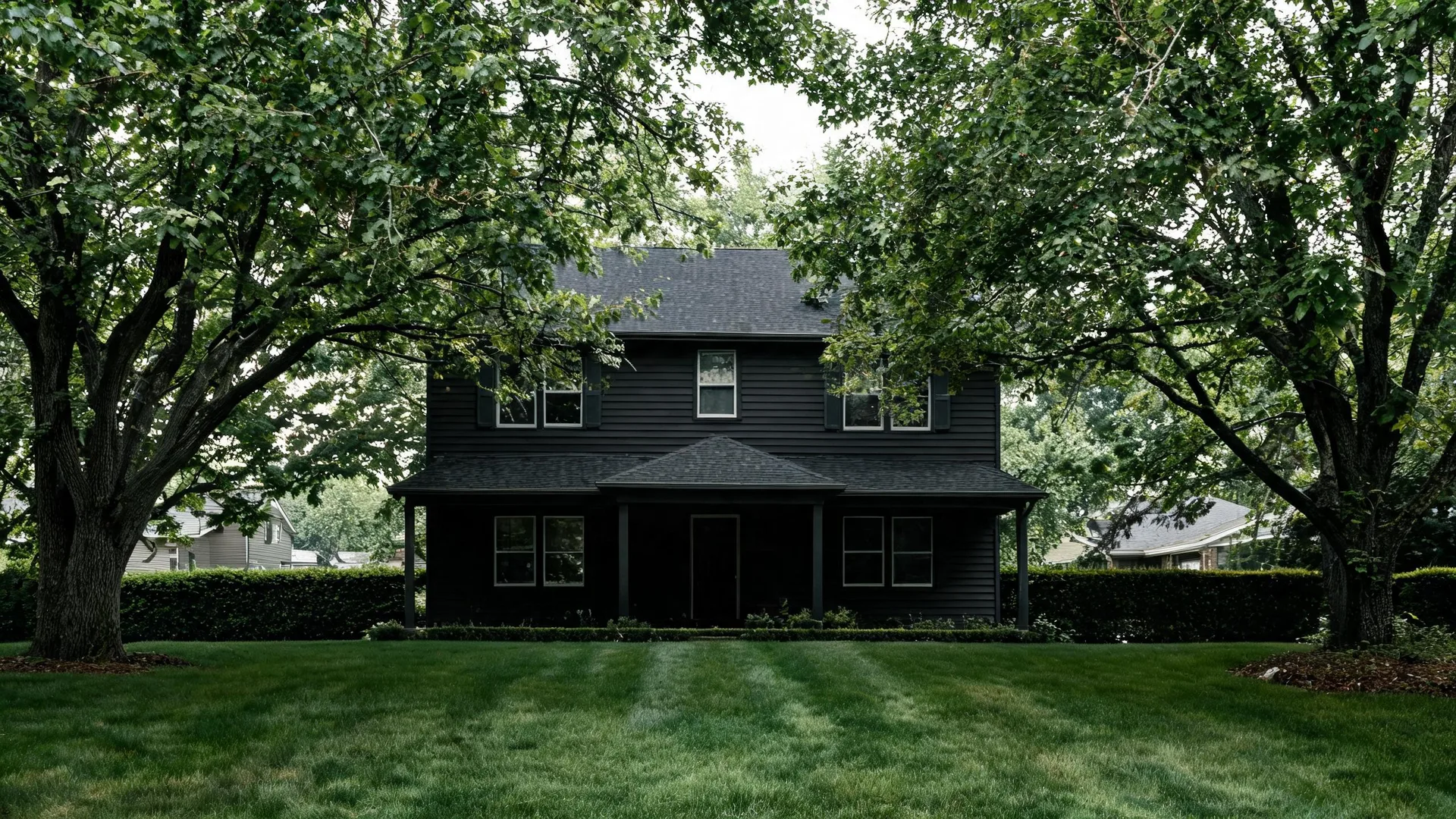
A two-story black-painted house with a covered front porch and gray shingled roof, framed by large deciduous trees and fronted by a mowed lawn and trimmed hedge.

Furnace Maintenance in Liberty, MO

Tell us about the job

Takes about a minute. No obligation.

Tune-up, service, or cleaningFurnace or heatingClay County, MO
Step 1 of 2

What ZIP code is the job in?

Clay County sees its share of severe weather

Clay County recorded 227 severe weather events between 2015 and 2024, including 116 damaging wind events and 94 hail events. Six tornadoes touched down in that same stretch. Weather like that doesn't skip over furnaces.

Power doesn't always hold through it

Close to one in five Missouri households went at least 24 hours without power in 2024. A furnace needs electricity to run even when the fuel is gas, so a long outage means no heat no matter what's in the tank or the line.

Two out of three homes in Clay County heat with gas.

A gas furnace has a burner, a vent and safety controls to check, not just a filter to swap.

Half the furnaces here are still well within their working life

Half the homes here were built by 1987
Heat runs October through April
Winter nights average 22°F
Get it checked before OctoberFurnaces here run from October through April, about seven months of the year. September is when to have it looked at.

A furnace that's still within its working life is worth keeping that way. A yearly check catches the small stuff before it becomes the reason you're without heat on a night you needed it most. The technician cleans the burner, tests the igniter, checks the vent for a blockage, and makes sure the safety controls shut things off when they're supposed to. None of that takes long when the furnace is in good shape to start with. Skip it a few years running and small wear turns into the kind of failure that picks its own timing, usually the coldest night of the stretch.

Check the furnace before storm season tests it

A tune-up gives a technician a chance to check the furnace's electrical connections and controls before winter, not after a storm has already knocked out power. That's the better time to find a loose wire or a worn part, while the furnace is still running fine and there's no rush about it.

Find a contractor
A gray high-efficiency gas furnace installed in an unfinished basement, surrounded by gas lines, a condensate drain, and sheet-metal ductwork.

The filter does more work than it looks like

A furnace has a filter, not a coil or a drain line, that's the owner's job to watch. Air conditioning has the coil and the condensate drain. On a furnace what matters is the air filter and the flame. A dirty filter chokes airflow across the heat exchanger. The burner still fires, but the heat can't move into the house the way it should, so the exchanger runs hotter than it was built to. Over time that heat cycling stresses the metal and shortens its life. A clogged filter also makes the blower work harder to pull air through, which wears the motor down faster than it should. Some furnaces sit on the same air handler as the air conditioner, so the coil and drain for cooling are right there too. If that coil is caked with dust or the drain is slow, it's worth a look even in heating months, since blocked airflow anywhere in the system backs up on the furnace behind it. Checking a filter is simple. Hold it up to a light. If light barely gets through, air barely does either.

A furnace rarely fails without a warning first

A furnace that's about to give trouble usually says so first. A burner flame that's yellow or flickering instead of steady blue points to a combustion problem. A blower that cycles on and off too fast, or runs longer than it used to, is working harder to move the same air. A burning smell that doesn't fade after the first few minutes, rattling that wasn't there last year, or a pilot and igniter that take a few tries to catch are all worth a call before the furnace is asked to run every day.

A check works because nothing is broken yet

The point of a yearly check isn't to fix something, it's to catch what's wearing down before it fails. A technician can see a cracked heat exchanger, a weak flame sensor, or corrosion on a connection while the furnace is still heating the house just fine. Once one of those parts actually fails, the furnace usually picks the night it's working hardest to do it.

A quick tune-up and a thorough one can look the same on the invoice but not in the furnace cabinet. A tech who only swaps the filter and glances at the flame hasn't checked the furnace, just the easy parts of it. A real tune-up means pulling the burner assembly and cleaning it, not just looking at it through the viewport. It means checking the flame sensor for corrosion and the igniter for cracks, testing the pressure switch and the limit switch, and inspecting the heat exchanger for rust or hairline cracks that a flashlight catches but a glance misses. The vent and flue get checked for blockage or separation, since a vent pipe that's come loose vents exhaust into the house instead of outside. A thorough check also means verifying the gas pressure at the manifold and confirming the blower amp draw matches what the furnace was built for. If the whole visit takes less time than it takes to clean a burner properly, something on that list got skipped.

A tune-up only matters if the furnace comes apart far enough to find the wear. Cleaning the burner means pulling it out, not brushing off what's visible from the front. The flame sensor gets removed and the oxide layer scraped off, since a sensor that's coated enough will still work right up until the morning it doesn't. The igniter gets checked under load, because a hairline crack can hold together cold and fail the second it's asked to glow. Belts don't come into it on a furnace like this one, the blower motor drives the wheel directly, so what wears is the motor bearing itself and the capacitor that starts it. Gas pressure gets checked at the manifold with a manometer, not guessed at by the look of the flame, since a flame can look fine and still be burning rich or lean. None of this takes long to do right. It takes long to do carelessly, which is the part that's easy to skip.