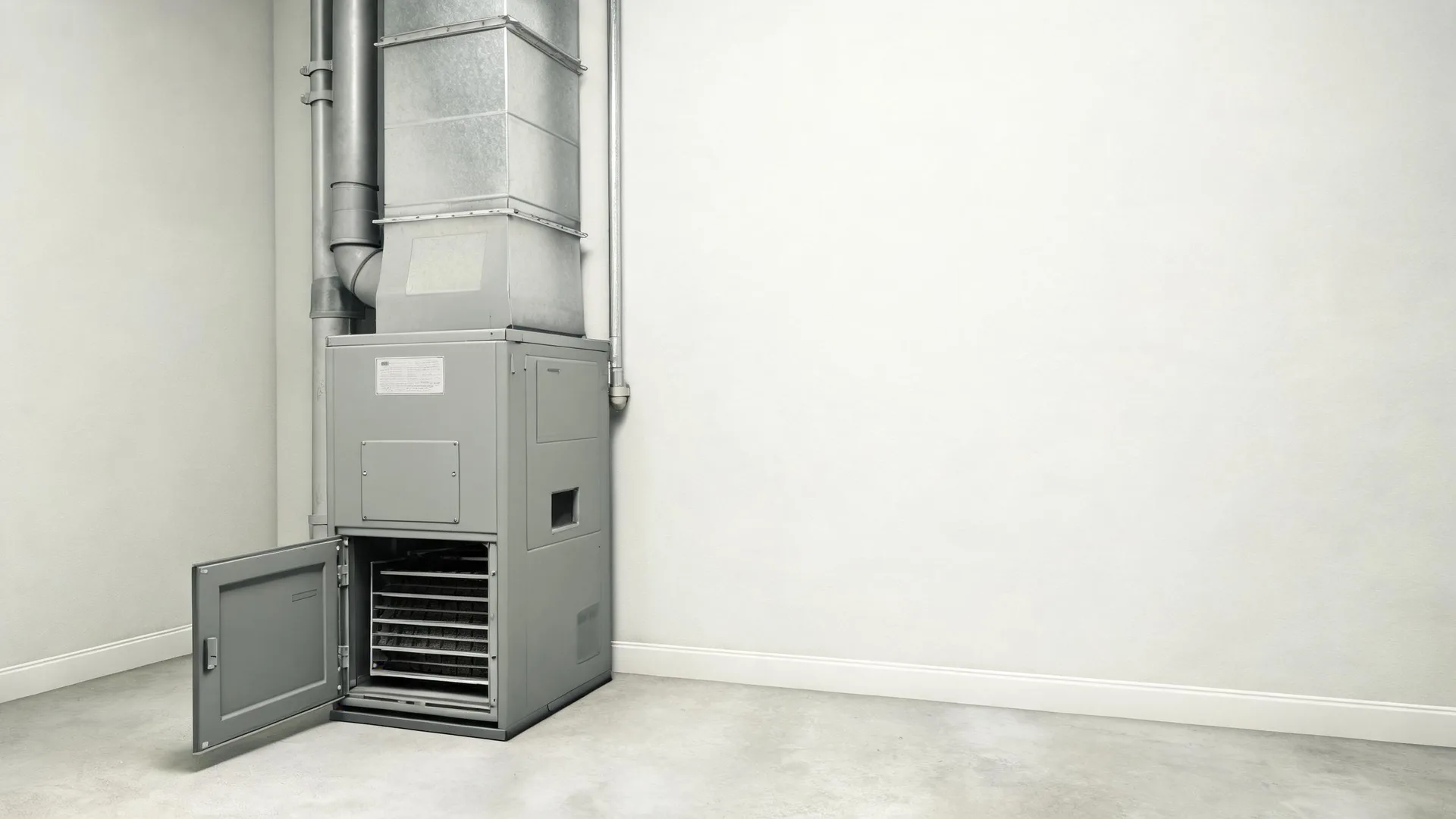
Polk County sees its share of storms
Polk County recorded 190 severe weather events between 2015 and 2024, including 99 damaging wind events and 12 tornadoes. Statewide, almost one in five households went at least a full day without power in 2024.
Takes about a minute. No obligation.
Polk County recorded 190 severe weather events between 2015 and 2024, including 99 damaging wind events and 12 tornadoes. Statewide, almost one in five households went at least a full day without power in 2024.
Wind and hail reach whatever sits outside, and a long outage shuts down the furnace along with everything else it powers. A tune-up is the time to have the system checked over before the next storm comes through.
Electricity heats 68.0% of homes in Polk County, with LP gas a distant second at 20.8%.
Most tune-ups here are on an electric furnace, where the job is the heating elements and airflow, not a burner.



An electric furnace that has lost efficiency just pulls more power to make the same heat. Electricity in Missouri ran $37.84 per million Btu in 2024, and that cost lands on every household heating with it, including most homes in Polk County. A dirty filter or an element losing contact makes the furnace run longer to reach the same setting on the thermostat. That difference shows up on the bill month after month, all winter long. A tune-up catches that drag before it adds up.
Have the furnace checked over as part of the same visit, not just the filter and elements. A tune-up is the chance to catch storm debris or hail damage around the outdoor parts before the system has to work through the next outage.
Find a contractor
Half the homes in Polk County were built in 1987 or later. If yours is one of them, the furnace is likely a more recent model too, maybe original to the house. A yearly check is what keeps a furnace that age running the way it's supposed to, for the years it has left to give. Skip it long enough and small problems, a clogged filter, a sensor out of adjustment, turn into the reason the system fails early.
A dirty filter is the one thing worth checking without waiting for a visit. Pull it and hold it up to a light. If light barely gets through, swap it. A filter that's choked off restricts airflow across the heat exchanger, and that makes the furnace run longer and run hotter than it should.
Don't open the furnace cabinet or touch the heating elements. Electric furnaces carry high voltage at the element connections, and a loose wire or a cracked element isn't something to find by hand. Keep the area around the furnace clear of boxes and clutter, and let the tune-up cover the rest.
The filter does more work than most people think on an electric furnace. Airflow across those heating elements is what keeps them from overheating, and the filter sits right in that path. When it's clogged, the elements can cycle on heat high enough to trip a limit switch, and the furnace shuts itself down mid-cycle to protect itself. That's not a broken furnace, that's a furnace doing what it's designed to do when it can't move enough air. Coils come into this too, though on a straight electric furnace there's no outdoor coil to worry about the way a heat pump has. The drain matters more if your system pairs with an air conditioner and shares that cabinet, since a clogged condensate line can back up and trip a float switch the same way a dirty filter trips the limit switch. Either way, the furnace is telling you something's blocking it before it tells you something's broken.
A tune-up is where that drag gets caught. The technician checks the elements for a loose connection or a hot spot before it costs a winter's worth of extra runtime. Airflow gets checked too, since that's what decides whether the elements heat the house or just heat themselves. None of this shows up by looking at the thermostat. It shows up on the bill, or it shows up when a technician has the panel open.