




An unfinished concrete basement containing a metal HVAC air handler, exposed wooden ceiling joists with sheet-metal ducts, a hanging bare bulb, copper pipes, and stacked cardboard boxes.

Furnace Installation in West Plains, MO

Tell us about the job

Takes about a minute. No obligation.

New system or replacementFurnace or heatingHowell County, MO
Step 1 of 2

What ZIP code is the job in?

Howell County saw 183 severe weather events between 2015 and 2024. Most of that was wind, with 100 damaging wind events over the same ten years, plus 66 hail events and 5 tornadoes. Ten winter storms brought heavy snow, ice or blizzards through the county in that span. Statewide, close to one in five Missouri households went at least a full day without power in 2024. A furnace needs electricity to run even if the heat itself comes from gas, so when the power goes out in a county that gets hit this often, the house goes cold until it comes back on.

7 months
October through April, your furnace is on duty
26°F
the average winter night it heats against
80% AFUE
the federal minimum any new unit must meet
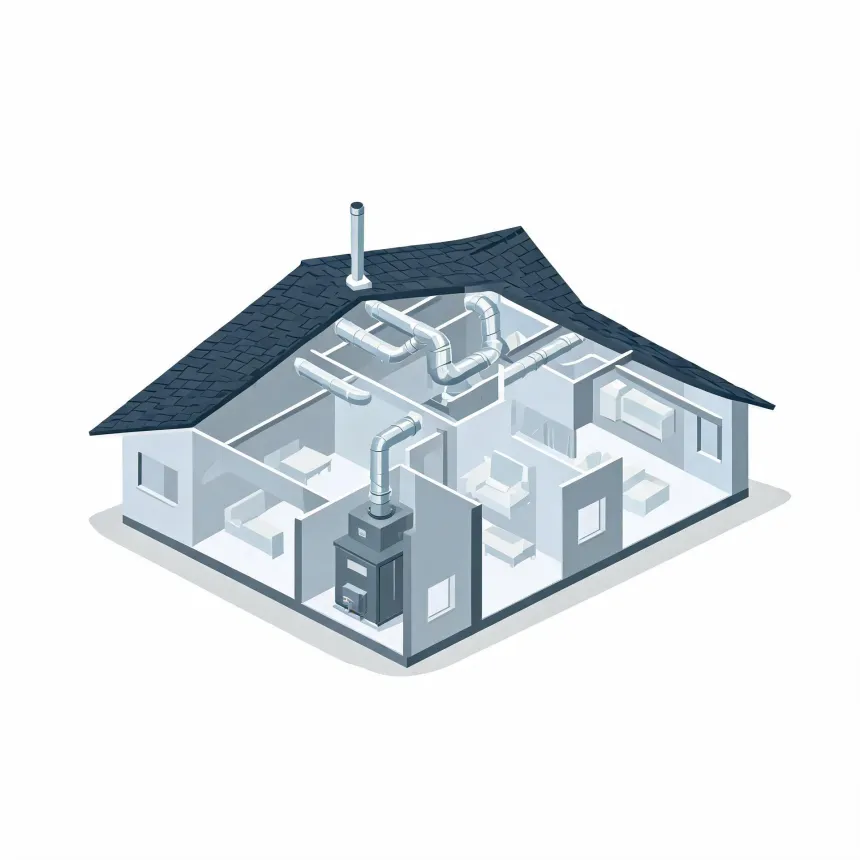
Isometric cutaway illustration of a single-story house showing interior rooms with furniture, a metal ductwork network, and a furnace unit connected to a vertical flue through the dark shingled roof.
Your furnace works hardest from November through March.

NOAA nClimDiv, 1991–2020 normals

Furnaces here start running in October.

A new furnace put in before September is already proven before that first cold night.

Almost half the homes around West Plains already heat with electricity

47% of homes heat with electricity
Heat runs October through April
Winter nights average 26°F

Howell County falls under zone 4A, which asks real work of both heating and cooling. Any gas furnace installed here has to clear a federal efficiency floor to be sold at all. Furnaces built from November 19, 2015 on have to turn at least 80 percent of the gas they burn into heat over the winter. That floor jumps to 95 percent for units built on or after December 18, 2028. A new installation now means picking from what's rated to meet the current standard. There's also a federal tax credit available for qualifying high-efficiency furnaces, worth checking against the unit you're considering before you decide.

Plan the install around the power going out, not just the cold

A furnace installed now is still a furnace that stops when the power does. If the outdoor work or the install plan accounts for where the unit sits and how the house keeps heat in an outage, that gets settled before the first storm this winter, not during one.

Find a contractor
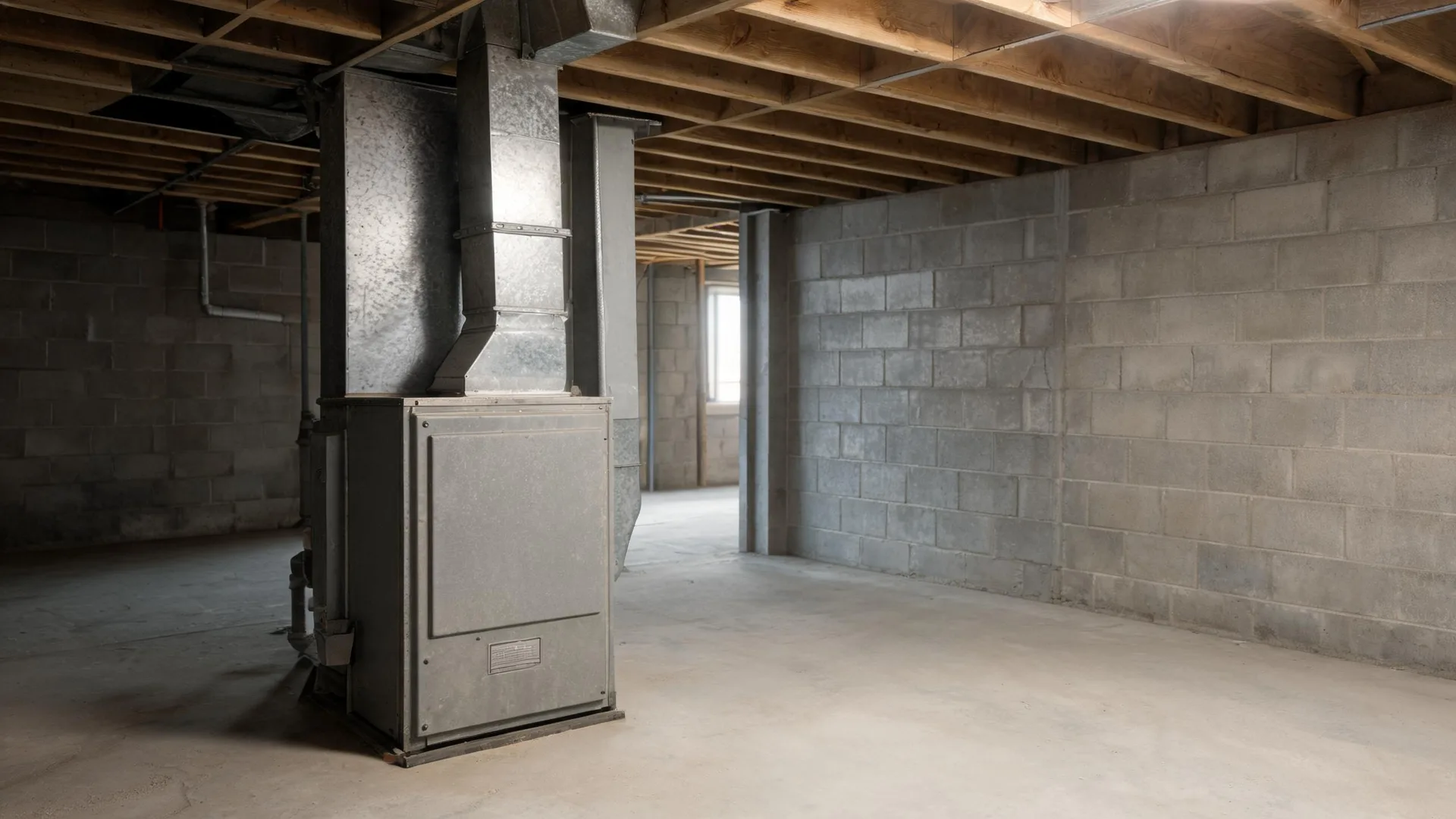
A gray gas furnace with attached ductwork and piping installed in an unfinished concrete basement.

What you're actually paying for

The furnace itself is only part of what you're pricing. Sizing drives most of it. A contractor has to work out how much heat the house actually loses before they can tell you what size unit it needs, and that means looking at the square footage, the insulation, the windows, the ceiling height. Get the size wrong and you've either bought more furnace than the house needs or one that runs constantly and still can't keep up. The ductwork matters just as much. If the existing ducts are sized right and sealed well, a new furnace can usually tie into them. If they're leaky, undersized, or built for a different kind of system, that work gets added to the job before the furnace ever gets set. Venting is its own question too. A higher efficiency furnace condenses exhaust gas into water and vents through PVC pipe, not a metal flue, so switching efficiency tiers can mean running new venting through a wall or the roof. The cabinet and blower have to match the furnace's output, and if the existing ductwork was built around an older, lower output unit, the blower speed and static pressure need rechecking so the system isn't straining. None of this shows up until someone actually looks at the house, which is why two installs that look the same on paper can come back priced differently.

The old furnace doesn't get reused

Once a new furnace goes in, the old one comes out for good. The heat exchanger has been through years of heating and cooling cycles, and that metal fatigues over time, so there's no putting it back to work somewhere else. A contractor will disconnect the gas line, pull the venting, and haul the unit away as part of the job.
The old vent and gas line don't always carry over

A furnace being replaced often means the connections around it need a second look too. The gas line gets checked for the new unit's input rating before it's hooked back up. If the new furnace vents differently than the old one did, through PVC instead of a metal flue, that old vent path gets capped or removed rather than left in place.

Sizing a furnace starts with how fast the house loses heat, not how big the house is. A contractor works out a heat loss number room by room, factoring in square footage, ceiling height, window area, and how well the place holds heat. That number points to a furnace output, measured in BTUs, that matches what the house actually needs. Go bigger thinking it's safer and the furnace short cycles, turning on and off in quick bursts instead of running a steady, longer cycle. That shortens the life of the heat exchanger and leaves rooms farther from the furnace colder than the ones nearby. Go too small and the furnace runs constantly through the coldest stretches and still can't hold the temperature. The right size isn't the biggest unit that fits the space. It's the one matched to how much heat the house loses on the coldest day.

Install day starts with the old furnace coming out, not the new one going in. The gas gets shut off and the line disconnected before anything else moves. If the new unit vents through PVC instead of a metal flue, that new vent pipe has to be run to the wall or roof before the furnace is even set in place. Once the furnace is set, it gets connected to the gas line, the vent, the ductwork and the electrical, then the gas line gets pressure tested before anything is lit. The system runs through a full cycle at the end, checking the temperature rise, the airflow, and the burner flame, so any adjustment happens while someone's still there to make it.