Three lit brick homes on a tree-lined residential street photographed at dusk.

Furnace Installation in Dexter, MO

Tell us about the job

Takes about a minute. No obligation.

New system or replacementFurnace or heatingStoddard County, MO
Step 1 of 2

What ZIP code is the job in?

Stoddard County sees its share of severe weather

Stoddard County recorded 143 severe weather events between 2015 and 2024, including 110 damaging wind events, 13 hail events, 8 tornadoes and 12 winter storms with heavy snow or ice. Statewide, 19% of Missouri households lost power for 24 hours or more in 2024.

A furnace install here has to plan for outages

A new furnace needs to work the day it's installed and still work when the power drops for a day. Wind and ice take down lines in this county more than in most, and a furnace that runs on electric heat stops cold without it.

7 months
October through April, your furnace is on duty
29°F
the average winter night it heats against
80% AFUE
the federal minimum any new unit must meet
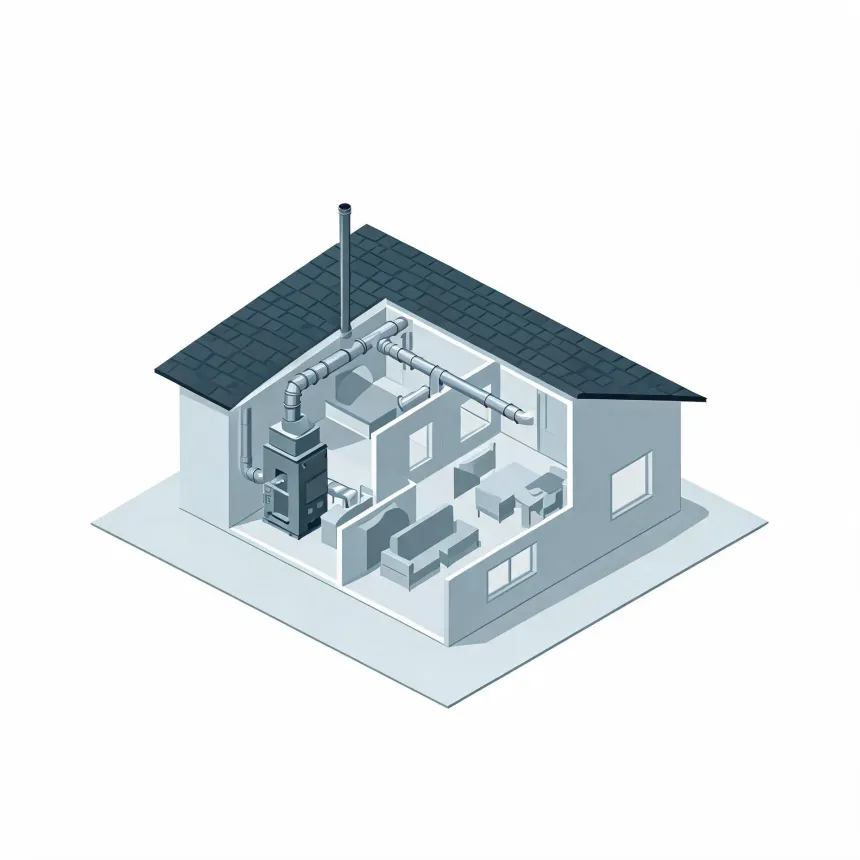
Isometric cutaway illustration of a single-story house with a dark shingled roof, showing a furnace with a flue pipe and branching ductwork running through interior rooms furnished with a sofa, table and chairs.
Your furnace works hardest from November through March.

NOAA nClimDiv, 1991–2020 normals

Furnace replacement by September beats a breakdown in January.

Heat runs here from October through April, so a working furnace can't wait.

Most homes here heat with electricity, and that's exactly what can't lose power

50.6% of homes heat with electricity
Climate zone 4A
Heat runs October through April

Stoddard County falls under climate zone 4A, which asks real work of both heating and cooling systems. Any gas furnace installed here has to clear a federal efficiency floor: units built on or after November 19, 2015 must turn at least 80 percent of the gas they burn into heat over the winter. That rule narrows what a contractor can legally put in your house, whatever the price tag says. A new standard arrives December 18, 2028, pushing that minimum to 95 percent for furnaces made from that date on. If your install falls before then, the 80 percent floor still applies, but it's worth asking what you're getting against what's coming.

Plan your furnace install around the outages, not just the cold

Talk through where the new furnace and any electric backup go before install day. Ask what happens to your heat the next time wind or ice takes the power out for a day, and what a surge protector costs you up front versus a damaged board later.

Find a contractor
A gray residential gas furnace installed in an unfinished basement, connected to sheet-metal ductwork and PVC pipes.

The right size isn't a guess

A furnace that's too big for the house short cycles. It heats the air fast, hits the thermostat setting, and shuts off before it's pulled moisture out of the air or warmed the walls and furniture, not just the air in the room. Then it cools off fast and fires up again. That start-stop pattern wears on the igniter and the blower motor, and it leaves rooms feeling clammy even though the thermostat says the temperature's right. A furnace that's too small just runs and runs, straining to keep up on the coldest days, and never quite gets there. Sizing a furnace right means a contractor works out how much heat the house actually loses on a cold day, room by room, counting windows, insulation, ceiling height and how the house is laid out. That's a heat load calculation, and it's not a guess based on square footage alone. Two houses the same size can need different furnaces depending on how they're built. Done right, the furnace matches the house closely enough that it runs in long, steady cycles that hold a room at an even temperature instead of swinging hot and cold.

Ask what fuel each quote assumes

A gas furnace quote and an electric furnace quote aren't the same job. Gas needs a vent for exhaust and a gas line sized to the unit. Electric needs circuits and breakers sized to the furnace's draw. Ask what the quote includes beyond the furnace itself, because venting and wiring work can cost as much as the unit.

Ask about the blower and the ductwork, not just the furnace

A furnace moves air through a blower motor, and that air has to travel through the existing ducts. If the ducts are too small or leaky for the new furnace's output, the house won't heat evenly no matter how good the unit is. Ask whether the contractor checked the duct system or just measured for a box to replace the old one.

The efficiency rating on a furnace tells you how much of the fuel it burns actually turns into heat in your house, and how much goes out the flue. A furnace rated higher wastes less. That number matters every time the furnace runs, not just on the coldest day of the year. It won't tell you how big a furnace you need or how evenly it will heat the place. A high rating on a furnace that's the wrong size for the house still leaves you with rooms that won't hold temperature. The rating is about how the unit burns fuel, not whether it's the right unit for your house.

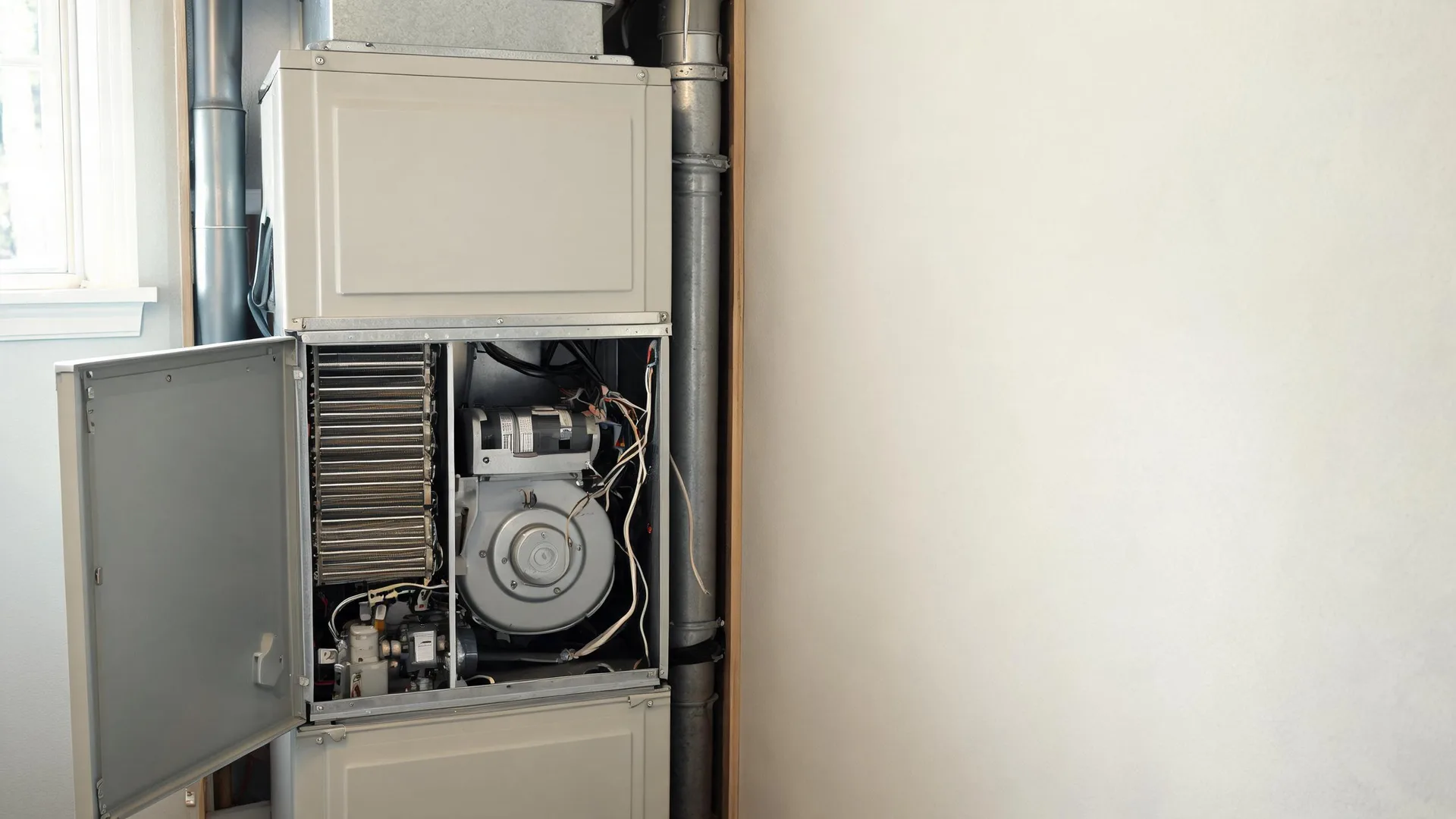
Installation starts with the old furnace coming out, and if it's a straight swap, the crew disconnects the gas line or the electric circuit, pulls the unit, and checks the venting and ductwork that stay behind. A new furnace gets set in place, leveled, and connected to the supply and return plenums. Gas units get a flue run and a gas line hookup, then a pressure test before anything fires. Electric furnaces get wired to a breaker sized for the unit's draw. Once it's connected, the contractor fires it up and checks the temperature rise across the heat exchanger against what the manufacturer specs, because too high or too low both point to an airflow problem. The thermostat gets wired in and tested through a full cycle. Before anyone leaves, the system should run long enough to prove it holds a steady temperature and shuts off on its own instead of short cycling.